
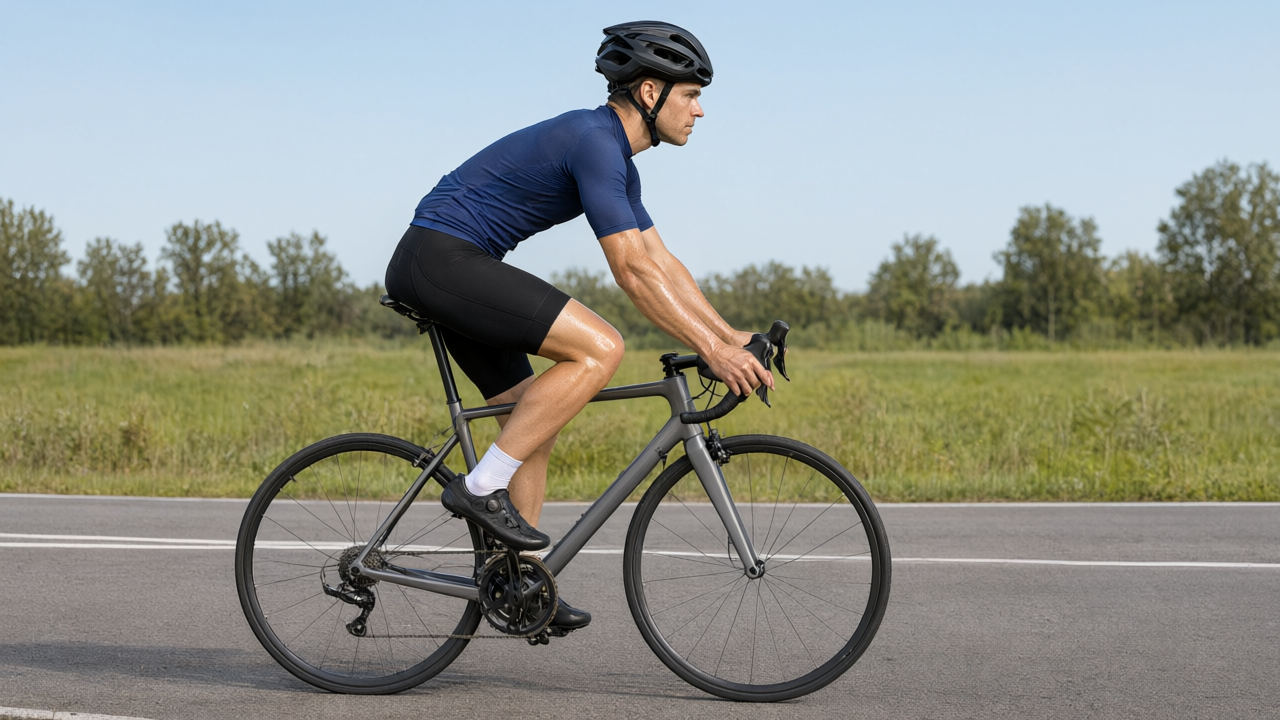
Road Bike Endurance Ride
road-bike-endurance-ride
Ten cuidado con
- caution · Cardiac condition (un-cleared) — Prolonged steady-state cycling elevates cardiac demand continuously, which may exceed safe limits for unmanaged conditions. Instead, obtain medical clearance and begin with shorter, supervised bouts.
- caution · Acute lower back injury — The sustained forward-leaning posture on a road bike places continuous static load on the lumbar spine. Instead, ensure a professional bike fit raises the handlebars or substitute a recumbent cycle.
When I cue you into this endurance ride, I want you settling onto your road bike for a long, steady effort. This is your aerobic foundation work, performed at a conversational pace where breathing stays controlled. You will maintain a smooth cadence in an easy gear on mostly flat or rolling roads. It builds the cardiovascular base that every harder session relies upon, teaching your body to use fuel efficiently over time.
Si eres nuevo en esto
The most common error I see first-timers make is riding far too hard, too soon. You might feel eager to push a heavy gear or chase faster riders, but this defeats the purpose of an endurance ride. If you cannot speak in full sentences, you are going too fast; shift into an easier gear immediately and slow your breathing. Another frequent mistake is gripping the handlebars tightly with locked elbows, which sends road vibration straight into your neck and shoulders. Keep your fingers light and your elbows bent like shock absorbers. The effort should feel almost surprisingly gentle, a rhythmic spinning sensation in your quads rather than a burning strain. Your breathing will be elevated but entirely manageable. Stop the ride if you feel sharp joint pain, dizziness, or unusual chest tightness. For your first few attempts, aim for forty-five minutes and build duration gradually as your comfort on the road bike improves.
Ir más allá
Once you can sustain two hours comfortably at zone two, begin extending your longest weekly ride by ten to fifteen minutes per week. Maintain a cadence of eighty-five to ninety-five revolutions per minute, focusing on perfect circular pedal strokes rather than just pushing down. To progress the stimulus without increasing intensity, introduce subtle rolling terrain while strictly capping your heart rate in zone two; resist the urge to surge over crests. Alternatively, practise single-leg pedalling drills for thirty seconds per side during the warm-up to address muscular imbalances. When your aerobic base feels robust after eight to twelve weeks, transition one weekly session to structured hill repeats on your road bike. Fuel strategically: consume thirty to sixty grams of carbohydrates per hour during rides exceeding ninety minutes to preserve power output late in the effort.
Errores comunes
Riding above zone two is the primary error, turning a recovery-building session into a fatiguing threshold effort that compromises subsequent training days. Monitor your breathing constantly; if speech becomes fragmented, shift to an easier gear immediately. Gripping the drops or hoods too tightly locks out the elbows, transmitting road shock directly into the wrists, shoulders, and cervical spine. Consciously relax your hands every few minutes and shake out one arm at a time. Pedalling at too low a cadence in a heavy gear places excessive torque on the knee joints and prematurely fatigues the quadriceps. Spin lighter and faster instead. Finally, neglecting hydration and nutrition on longer efforts leads to a sudden drop in power and concentration, increasing crash risk. Drink before you feel thirsty and eat small amounts frequently once past the sixty-minute mark.
Rutina
- Sets
- 1
- Reps
- 45–120 minutes
- Rest
- 0s
- Tempo
- steady 80–95 rpm
- RPE
- 3
- Frecuencia
- 2
increase duration by 10–15 minutes weekly, then progress to hill repeats
Cues
Cardio
- Style
- steady
- Duración
- 90 min
- Zone
- 2
Músculos
- Cardiovascular
- Quadriceps
- Glutes
- Hamstrings
- Calves
Equipo
- Road bike
- 1
Mount your road bike and adjust your hands to the hoods with a relaxed grip and soft elbows.
- 2
Position your feet securely on the pedals, keeping your spine neutral and your eyes looking ahead down the road.
- 3
Select an easy gear that allows you to spin comfortably without straining your legs or hips.
- 4
Begin pedalling smoothly, building your cadence to between eighty and ninety-five revolutions per minute.
- 5
Settle into a steady rhythm where you could hold a full conversation without gasping for breath.
- 6
Maintain this even pace on flat or gently rolling terrain, keeping your upper body quiet and relaxed.
- 7
Drink water regularly throughout the ride, adding nutrition if you plan to pedal beyond sixty minutes.
- 8
Gradually reduce your pedalling effort over the final five minutes to let your heart rate drift downward.
- 9
Come to a complete stop, unclip your feet from the pedals, and dismount your road bike safely.