
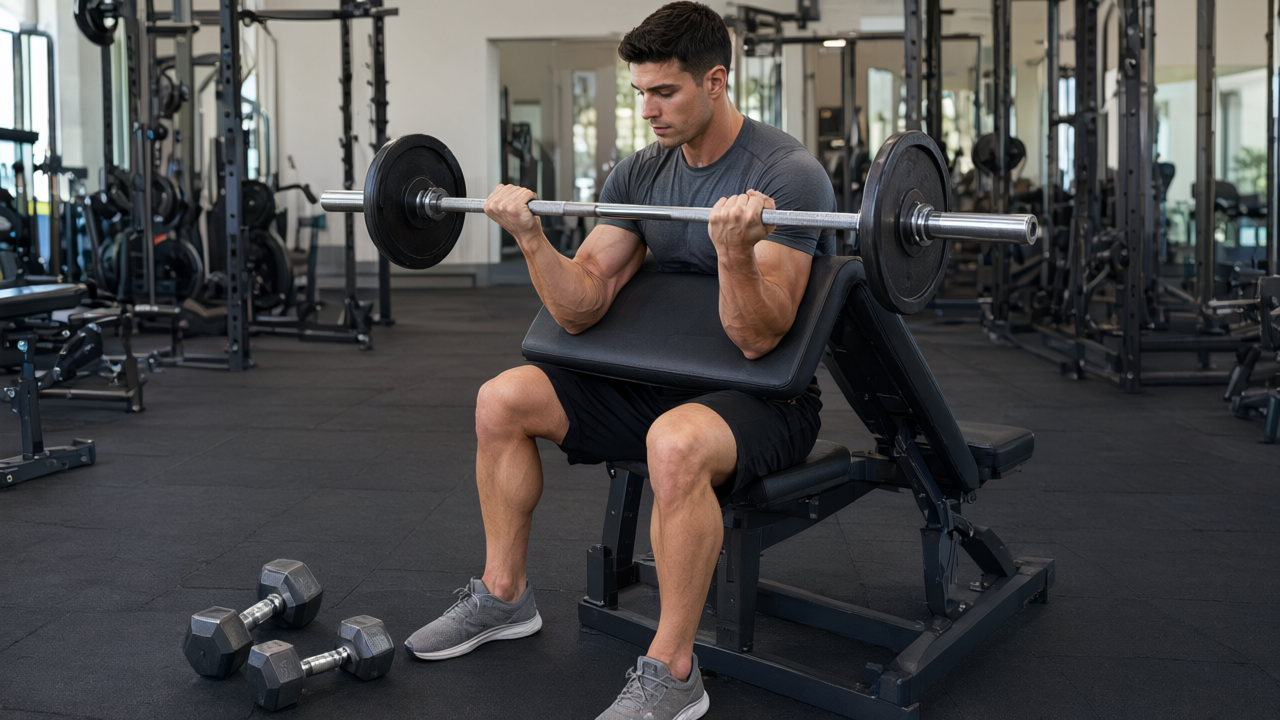
Preacher Curl
preacher-curl
Ten cuidado con
- caution · Uncontrolled hypertension — Deep bracing and sustained isometric tension during the curl can spike blood pressure. Instead, perform seated dumbbell curls with continuous breathing to reduce cardiovascular strain.
- caution · Acute knee injury — Stepping forward into the bench and stabilizing the lower body under load can stress an injured knee. Instead, perform standing cable curls where foot placement can be adjusted freely for comfort.
When you settle into the preacher curl, I want you to feel a deep, isolated burn along the front of your upper arm. The padded armrest locks your elbows into place, stripping away momentum and forcing the biceps to handle every ounce of tension. Focus on a slow, controlled descent and a deliberate squeeze at the top. Let your breathing stay rhythmic, and trust that strict form will always outperform heavy, sloppy weight.
Si eres nuevo en esto
As a beginner, your primary goal here is mastering the connection between your mind and the muscle. Keep your shoulders relaxed and avoid shrugging toward your ears as you lift. The preacher pad will naturally support your triceps, but you must actively resist letting your upper body rock or your hips slide forward to generate momentum. True muscular failure feels like a deep, localized burn and a gradual loss of speed, not sharp joint pain in the elbow or wrist. Stop immediately if you feel any pinching or if your form breaks down to cheat the weight up. It is completely normal to use lighter loads than you would with standing curls. Embrace the lighter weight, focus on the full stretch at the bottom, and celebrate the strict, controlled reps. Consistency with proper mechanics will build resilient, defined arms far faster than ego lifting ever could.
Ir más allá
To push this movement further, extend your lowering phase to three or four seconds and add a deliberate two-second pause at the bottom, where the biceps are fully lengthened under load. This extended time under tension makes even modest weights feel significantly heavier. The eight-to-twelve rep range remains ideal for hypertrophy, but dropping to sets of six to eight with a slightly heavier barbell builds strength in the shortened position. Add 2.5 pounds only when every rep across all three sets moves without any deceleration beyond what you intend. Once you can handle the barbell strictly for twelve reps with a paused stretch, switch to dumbbells. The dumbbell version lets you supinate fully as you curl, increasing peak contraction, or alternate arms to expose imbalances. If you have exhausted these options, move to an incline dumbbell curl, which places the shoulder in extension and demands even more from the long head of the biceps.
Errores comunes
Most lifters compromise this movement by allowing their torso to swing backward or lifting their hips off the seat to generate momentum, which instantly defeats the purpose of the angled pad. Another frequent error is locking the elbows out completely at the bottom, which transfers dangerous shear force away from the muscle and directly into the joint. Many also rush the eccentric phase, dropping the weight too quickly instead of fighting gravity on the way down. Finally, gripping the bar too tightly or bending the wrists inward recruits the forearms excessively and shortens the biceps range of motion. Keeping a relaxed grip and a neutral wrist ensures the tension stays exactly where it belongs.
Rutina
- Sets
- 3
- Reps
- 8-12
- Rest
- 90s
- Tempo
- 2-0-2-0
- RPE
- 8
- Per set
- ~90s
- Frecuencia
- 2-3x/week
Add 2.5 to 5 pounds once you can complete the top of your rep range with perfect control for all sets.
Cues
Músculos
- Biceps
- Forearms
- Shoulders
Equipo
- Bench
- Barbell
- Dumbbells
- 1
Adjust the preacher bench height so your chest rests comfortably against the pad and your upper arms lay flush along the angled surface.
- 2
Step forward, grip the barbell or dumbbells with an underhand grip, and sit your triceps firmly against the pad.
- 3
Inhale deeply to brace your core, then slowly lower the weight until your arms reach a near-straight position without locking your elbows.
- 4
Exhale steadily as you curl the weight upward, keeping your wrists neutral and your elbows pinned to the pad.
- 5
Pause briefly at the top while squeezing your biceps hard, maintaining full tension without letting the weight rest on your forearms.
- 6
Lower the load under strict control for a two-count descent, resisting the urge to drop it quickly.
- 7
Complete your target repetitions, then carefully place the weight on the floor or rack before stepping away from the bench.