
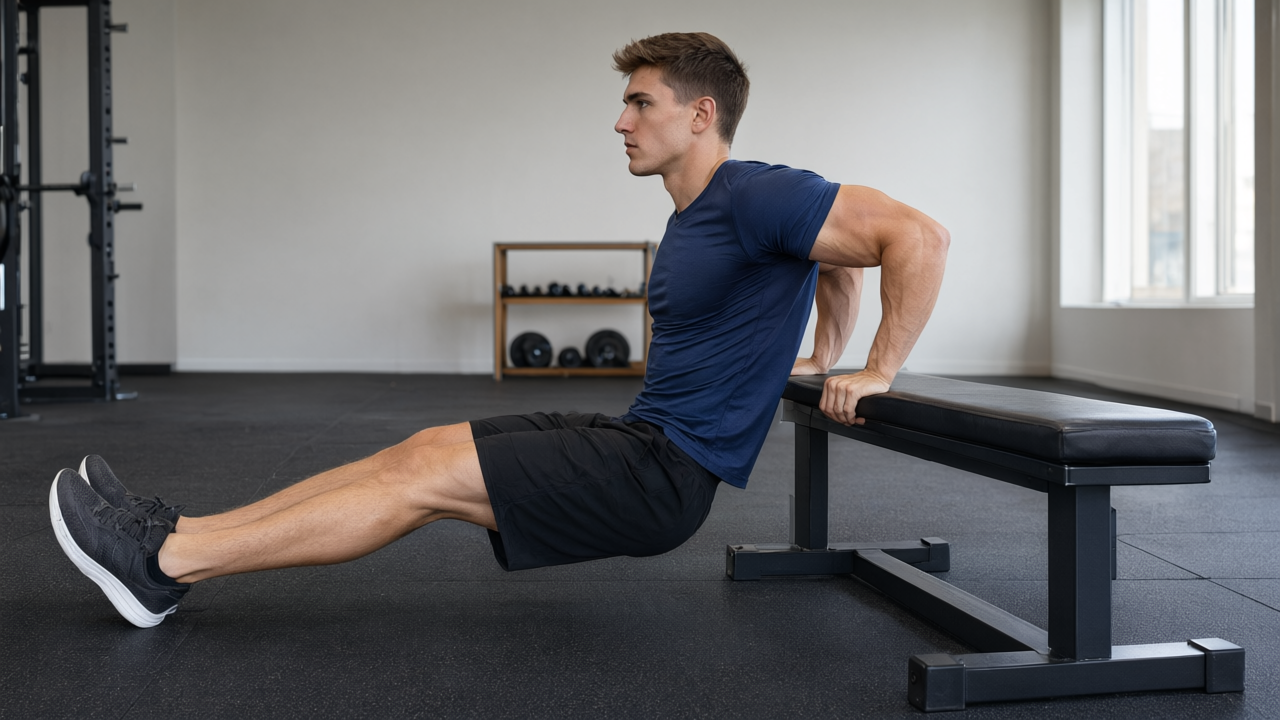
Bench Dip
bench-dip
Ten cuidado con
- avoid · Rotator cuff tear — Bodyweight load transferred through a compromised shoulder joint places dangerous shear force on torn rotator cuff tissue. Instead, use cable triceps pushdowns to isolate the arms while keeping the shoulders safely stabilized.
- avoid · Shoulder impingement — The deep shoulder extension and internal rotation at the bottom position can pinch the rotator cuff tendons. Instead, perform close-grip push-ups to build triceps strength without forcing the shoulder into impingement range.
I designed this movement to build resilient pushing strength without the need for heavy iron. When you execute a clean bench dip, you’ll feel a deep, controlled burn tracing the back of your arms and the lower chest. Focus on keeping your torso upright, your elbows tracking straight back, and your descent slow enough to own the bottom position. Let the triceps do the heavy lifting while your core stays braced.
Si eres nuevo en esto
Start with your knees bent and feet flat on the floor; this shortens the lever arm and makes the initial learning curve much more manageable. Keep your shoulders packed down and back to protect your joints, and never let your elbows flare outward like chicken wings. True failure here means your shoulders begin to shrug upward or your lower back starts to round under the load. Stop immediately if you feel sharp pinching in the front of your shoulder joint, as this signals compromised positioning. Focus on smooth, controlled tempo rather than rushing through repetitions. Many beginners compensate by leaning their torso too far forward, which shifts the workload away from the triceps and strains the lower back. Keep your chest proud and your gaze forward. Breathe steadily through each rep, and remember that mastering the full range of motion with perfect alignment will yield far better long-term strength gains than grinding through sloppy, half-range reps.
Ir más allá
Once your feet are flat and the standard tempo feels manageable, slow the lowering phase to three or four seconds and add a distinct one-second pause at the bottom. This removes any elastic rebound and forces the triceps to generate force from a dead stop. Press up with intent but without rushing. For hypertrophy, sets of twelve to fifteen work well; for strength, keep reps between six and eight by increasing difficulty rather than simply adding volume. When you can complete three clean sets of fifteen with straight legs, elevate your heels onto a second bench to lengthen the lever. If that becomes comfortable, place a weight plate across your lap. Making this movement harder means manipulating leverage, time under tension, or external load, never sacrificing depth. Once elevated feet plus added weight no longer challenges you in the eight-to-twelve range, transition to parallel bar dips, which allow greater loading and full shoulder extension.
Errores comunes
Most lifters ruin this movement by allowing their shoulders to creep upward toward their ears, which instantly transfers dangerous tension to the rotator cuff instead of the working muscles. Another frequent error is flaring the elbows outward at a ninety-degree angle, placing excessive shear force on the shoulder joint rather than driving through the triceps. Many also rush the descent, bouncing out of the bottom position to cheat momentum, which completely defeats the purpose of controlled strength building. Finally, collapsing the chest and letting the lower back hyperextend creates a compromised spinal position that leads to unnecessary strain. Keep your elbows tucked, your descent deliberate, and your torso rigid to maximize safety and muscle recruitment.
Rutina
- Sets
- 3
- Reps
- 8-12
- Rest
- 90s
- Tempo
- 2-0-2-0
- RPE
- 7
- Per set
- ~90s
- Frecuencia
- 2-3x/week
Gradually increase difficulty by elevating your feet on a second bench or adding a weighted plate across your lap.
Cues
Músculos
- Triceps
- Chest
- Shoulders
- Abs
Equipo
- Bodyweight
- Bench
- 1
Sit on the edge of a sturdy bench with your hands gripping the rim just outside your hips.
- 2
Extend your legs forward, planting your heels firmly on the floor to create a stable base.
- 3
Straighten your arms to lift your hips off the surface, keeping your shoulders down and away from your ears.
- 4
Inhale deeply and slowly lower your body by bending your elbows straight back, stopping when your upper arms reach parallel to the floor.
- 5
Exhale forcefully and press through your palms to extend your arms fully, returning to the starting position without locking your elbows.
- 6
Maintain a neutral spine and engaged core throughout the entire descent and ascent.
- 7
Reset your grip and posture after your final repetition before carefully lowering your hips back onto the bench.