
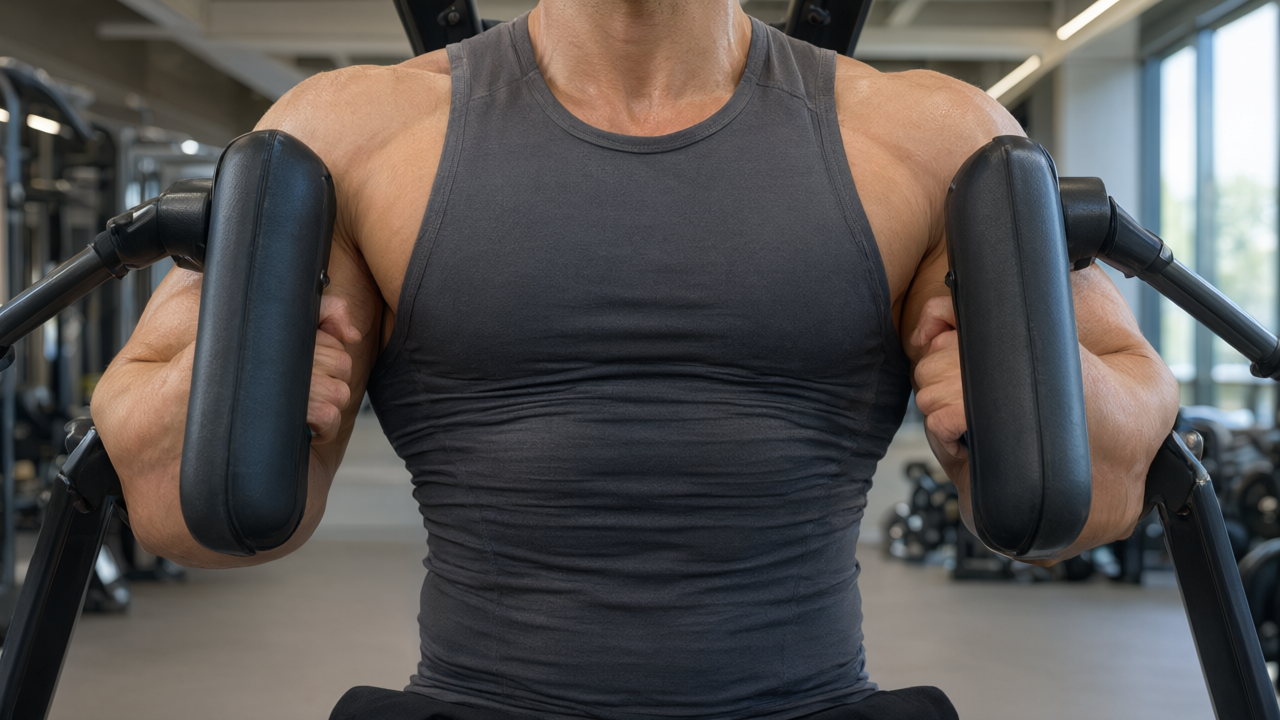
Pec Deck
pec-deck
注意事项
- avoid · Rotator cuff tear — The machine forces arms into a fixed arc that places heavy passive tension on a healing rotator cuff. Instead, use isometric chest squeezes or light floor presses to maintain pressing stimulus without stressing the torn tissue.
- caution · Shoulder impingement — The deep horizontal abduction at the end of the eccentric can pinch impinged shoulder structures. Instead, perform cable crossovers with a limited range of motion to train the chest without forcing the shoulders into extreme stretch.
When you sit into the pec deck, good reps feel like a smooth, controlled embrace of the chest muscles. I want you to focus on the stretch across your sternum at the start and the deliberate squeeze when your hands meet. Keep your shoulders anchored down, breathe steadily, and let the machine guide your path. It’s not about speed; it’s about feeling every fiber of your chest wake up and contract with precision.
新手提示
Start light and prioritize the mind-muscle connection over heavy loading. Keep your elbows slightly bent throughout the entire range of motion to protect your joints and keep tension squarely on your chest rather than shifting it to your triceps. You will know you are working correctly when you feel a deep, burning stretch across your sternum and a firm squeeze when your arms meet. Stop the set immediately if your shoulders begin to creep toward your ears, your lower back arches off the pad, or your wrists start to ache. Common compensations include using momentum to slam the pads together or leaning forward to push heavier weight. If your form breaks down, reduce the resistance and focus on a slow, controlled tempo. Building a strong foundation here will translate directly to better pressing strength and healthier shoulder mechanics down the line. Trust the process and let your chest do the work.
更进一步
Extend the lowering phase to three or four seconds and hold the squeeze for a full count when your hands meet. This added time under tension suits sets of 10–15, which work well here because the pec deck is an isolation movement best loaded for metabolic stress rather than maximal weight. Add 2.5–5 kg to the stack only once you can complete every rep in a set with that longer tempo without your shoulders drifting forward. If you want to bias the upper chest, lower the seat one notch so your arms travel on a slight upward arc; raising it shifts emphasis towards the lower fibres. When you can handle the top of the stack cleanly for three sets of 15 with a deliberate pause at peak contraction, move on to cable crossovers, which demand more stability while following the same adduction pattern.
常见错误
Lifters often sabotage their progress by shrugging their shoulders toward their ears, which shifts tension away from the chest and strains the upper traps. Another frequent error is fully extending or locking out the elbows at the midpoint, turning a chest isolation into a joint-stressing triceps push. Many also rush the eccentric phase, letting the weight stack crash down instead of controlling the return, which robs the muscle of valuable time under tension. Finally, leaning forward off the back pad to force heavier loads compromises spinal alignment and turns a precise isolation movement into a sloppy, momentum-driven effort. Keep your torso anchored, maintain a soft elbow bend, and move with deliberate control for maximum results.
计划
- Sets
- 3
- Reps
- 8-12
- Rest
- 90s
- Tempo
- 2-0-2-0
- RPE
- 8
- Per set
- ~90s
- 频率
- 2-3x/week
Add 5-10 pounds to the stack once you can comfortably complete all sets with perfect form and controlled tempo.
Cues
肌肉
- Chest
- Shoulders
器具
- Pec deck machine
- 1
Adjust the seat height so the handles align with the middle of your chest and your feet rest flat on the floor.
- 2
Sit back firmly, press your lower and upper back against the pad, and grip the handles with your elbows slightly bent.
- 3
Pull your shoulder blades down and back to set a stable upper body position before initiating movement.
- 4
Exhale smoothly as you bring your forearms together in a controlled arc until your hands touch.
- 5
Pause for a brief moment at peak contraction and squeeze your chest without shrugging your shoulders.
- 6
Inhale deeply and slowly reverse the motion, allowing your arms to open until you feel a gentle stretch across your pecs.
- 7
Maintain tension on the returning phase and stop just before your shoulders roll forward.
- 8
Reset your posture, take a full breath, and repeat for the prescribed repetitions.