
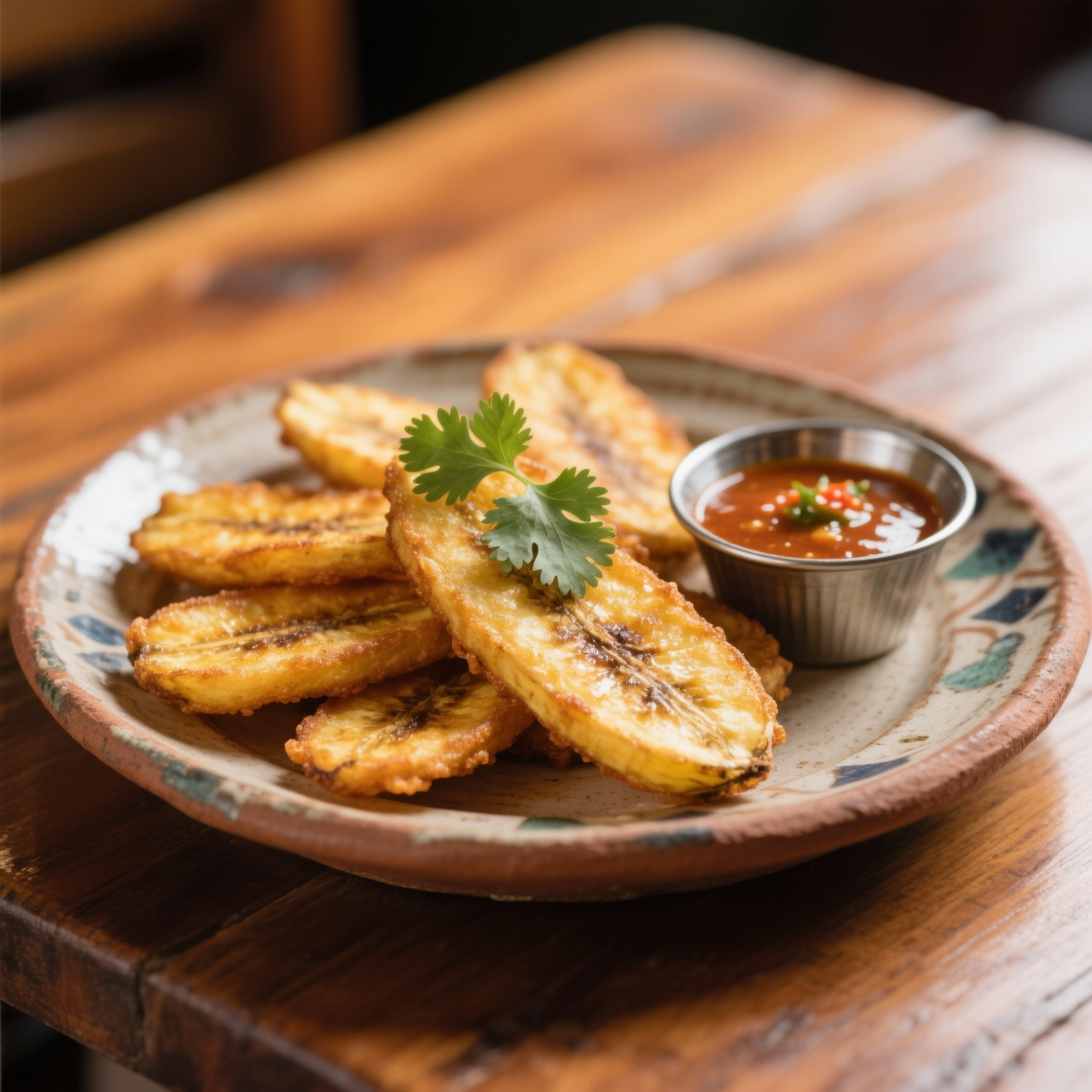
Patacones (fried plantain)
When I think of the vibrant culinary heartbeat of Colombia, my mind immediately goes to patacones. These twice-fried green plantains are far more than just a simple side dish; they are a foundational element of coastal and Caribbean Colombian cuisine, serving as a sturdy edible vessel for everything from shredded beef and hogao to simple guacamole and fresh cheese. The magic of a perfect patacón lies in its brilliant textural contrast: a shatteringly crisp, golden-brown exterior giving way to a tender, slightly starchy interior. To achieve this in under thirty minutes, we rely on the classic double-fry technique, which might seem like a modern shortcut but is actually the deeply traditional method. The first fry softens the plantain, allowing you to smash it flat with a wooden press, while the second fry at a higher temperature creates that irresistible crunch. The most common pitfall I see home cooks make is using yellow, ripe plantains instead of unripe, green ones. Ripe plantains will turn into sweet, mushy discs rather than savory, crispy chips. Another frequent mistake is not letting the oil get hot enough for the second fry, which results in greasy, soggy patacones that absorb far too much oil. By ensuring your green plantains are truly unripe and your oil is properly heated for the second fry, you will master this beloved staple. Whether you are serving them as a crunchy accompaniment to a hearty sancocho or just snacking on them with a little mayo-ketchup, patacones bring an authentic, joyful crunch to any table.
Nutrição
| Por porção | calories | protein | carbs | fat | satFat | fibre | sugar | sodium |
|---|---|---|---|---|---|---|---|---|
| beginner | 691kcal | 2g | 48g | 58g | 8g | 4g | 23g | 490mg |
| intermediate | 691kcal | 2g | 48g | 58g | 8g | 4g | 23g | 490mg |
| expert | 691kcal | 2g | 48g | 58g | 8g | 4g | 23g | 490mg |
Por porção · Estimado pela Ava — um guia, não um valor clínico.
- 3 piecesgreen plantain— peeled and cut into 1.5-inch thick rounds
- 500 mlneutral frying oil— such as canola, vegetable, or sunflower oil
- 1 tspfine sea salt— or to taste
This beginner-friendly version of Colombian patacones focuses on foolproof techniques and stress-free execution, ensuring your first attempt is a crispy, golden success. We bypass the intimidation of deep-frying by using a shallow pan-fry method with just half an inch of oil, making temperature management much easier. The biggest challenge with patacones is the smashing step; to prevent sticking and tearing, we use a simple plastic bag or parchment paper trick with a flat-bottomed cup or plate. We also provide visual and auditory cues for oil temperature, like the wooden spoon test, so you do not need a candy thermometer. Green plantains are starchy and unforgiving if under-ripe, so we include tips on selecting the right ones—look for entirely green skin with no yellow patches. By keeping the oil consistently hot and draining the twice-fried plantains on a wire rack instead of paper towels, you guarantee a crunchy exterior and a tender, savory interior. This approach builds your confidence with hot oil while delivering authentic, restaurant-quality results in under thirty minutes.
Equipment
- Heavy-bottomed skillet— Cast iron or stainless steel holds heat best for frying.
- Flat plate or plantain press— Used for smashing the plantains evenly.
- Wire cooling rack— Prevents the first-fry plantains from getting soggy.
Method
- 1
Peel the green plantains and slice them into 1-inch thick diagonal rounds.
Score the skin lengthwise with a knife before peeling to make it easier.
peeling~ 2 min - 2
Add half an inch of neutral oil to the skillet and heat over medium-high until shimmering.
Test by dipping a wooden spoon; bubbles should form around the edges.
heating~ 5 minTricky bit - 3
Fry plantain slices in batches for 3 to 4 minutes per side until pale golden, then transfer to a wire rack.
Do not crowd the pan, or the oil temperature will drop.
shallow frying~ 6 min - 4
Place a fried slice inside a cut plastic bag and smash firmly with a flat plate into a quarter-inch thick disc.
The plastic bag prevents the starchy plantain from sticking to the plate.
smashing~ 2 min - 5
Increase heat to high and fry the smashed discs for 1 to 2 minutes per side until deeply golden and crispy.
Watch closely during this second fry, as they can burn quickly.
shallow frying~ 4 minTricky bit - 6
Transfer to a paper towel-lined plate and immediately sprinkle with fine sea salt.
Salting while hot helps the salt adhere to the surface.
seasoning~ 1 min
Os tempos de armazenamento são um guia — sempre use seu critério e armazene os alimentos com segurança.