
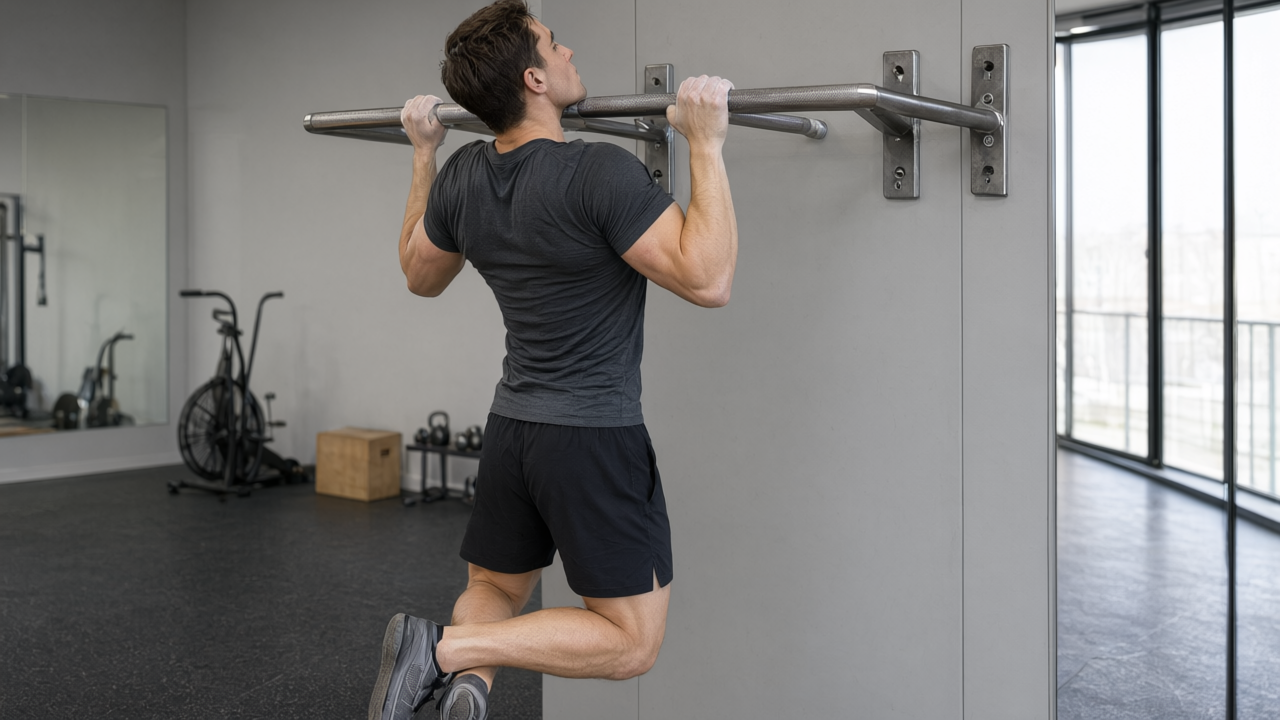
Neutral-Grip Pull-Up
neutral-grip-pull-up
Zwróć uwagę na
- avoid · Uncontrolled hypertension — Forceful exhalation against a braced core during heavy pulling spikes blood pressure dangerously. Instead, perform slow tempo band pull-aparts to train the upper back without extreme exertion.
- caution · Rotator cuff tear — Hanging bodyweight places significant traction on the rotator cuff tendons at full extension. Instead, use a lat pulldown machine with lighter loads to train vertical pulling without stressing the tear.
- caution · Shoulder impingement — Overhead reaching and hanging can compress inflamed subacromial tissues even in a neutral grip. Instead, perform seated cable rows to target the lats without overhead shoulder stress.
When I grip the parallel handles, my shoulders immediately find a natural, relaxed alignment. As I pull, I feel a clean, symmetrical tension running through my lats and biceps, without that familiar shoulder pinch. Each rep should feel smooth and controlled, like drawing a bowstring back with steady, grounded power. I know I’m doing it right when my chest rises effortlessly toward the bar and the descent feels just as deliberate, leaving my back energized rather than strained.
Jeśli dopiero zaczynasz
If you are just starting, focus entirely on scapular control before attempting full repetitions. Practice dead hangs and active hangs until you can reliably pull your shoulder blades down and together without bending your elbows. When you attempt your first full rep, use a box or resistance band to assist your upward drive, ensuring you maintain strict form rather than swinging wildly. Stop your set the moment your shoulders begin to shrug toward your ears, your hips start kicking forward, or your descent turns into an uncontrolled drop. True muscular failure in this movement feels like a heavy, burning fatigue in your lats and arms, not a sharp pinch in your shoulder joints or elbows. Avoid the temptation to half-rep or rush through the bottom position, as those compensations rob you of strength gains and increase injury risk. Build your foundation patiently, celebrate every clean partial rep, and trust that consistent, controlled practice will naturally unlock full, unassisted pull-ups.
Więcej
Once you can complete three sets of twelve with strict form, the most direct progression is adding external weight via a belt. This keeps you in the eight-to-twelve rep range for strength and hypertrophy without altering the movement pattern. If you prefer to stay bodyweight, slow your lowering phase to five seconds or add a two-second pause at the top; both increase time under tension significantly. Pulling faster on the way up while controlling the descent trains rate of force development, which suits lower rep ranges of four to six. When weighted neutral-grip pull-ups become comfortable, move to weighted pronated pull-ups to challenge shoulder mobility and shift more demand onto the upper back. For variation, try archer pull-ups on the parallel handles by straightening one arm as you pull towards the other, increasing unilateral load, or perform L-sit neutral-grip pull-ups to integrate deeper core demand throughout every repetition.
Typowe błędy
Most lifters compromise this exercise by initiating the pull with their biceps instead of driving through their lats, which quickly exhausts the arms and limits range of motion. Another frequent error is allowing the core to go slack, leading to excessive swinging or kipping that turns a controlled strength movement into momentum-driven chaos. Many also rush the eccentric phase, dropping straight down to the bottom hang instead of resisting gravity, which wastes valuable time under tension and increases joint stress. Finally, failing to fully reset the shoulders at the bottom of each rep often results in a shrugging motion that shifts the workload onto the traps and compromises shoulder health.
Plan treningowy
- Sets
- 3
- Reps
- 8-12
- Rest
- 90s
- Tempo
- 2-0-1-0
- RPE
- 8
- Per set
- ~180s
- Częstotliwość
- 2-3x/week
Add external weight via a belt once 3 sets of 12 are achieved with strict form, or increase difficulty with slower eccentrics.
Cues
Mięśnie
- Lats
- Biceps
- Upper back
Sprzęt
- Bodyweight
- Pull-up bar
- 1
Stand directly beneath the bar and grasp the neutral handles with your palms facing each other.
- 2
Step or jump up to fully extend your arms and hang with your shoulders depressed and away from your ears.
- 3
Bend your knees slightly and cross your ankles to stabilize your lower body and prevent swinging.
- 4
Inhale deeply, tighten your abdominal muscles, and drive your elbows straight down to begin lifting your body.
- 5
Exhale forcefully as you pull your chest toward the bar until your chin rises above the handles.
- 6
Pause briefly at the top while keeping your core braced and your neck relaxed.
- 7
Inhale steadily and lower yourself back to a full dead hang over three to four seconds.
- 8
Reset your shoulder blades and re-engage your grip before starting the next repetition.