
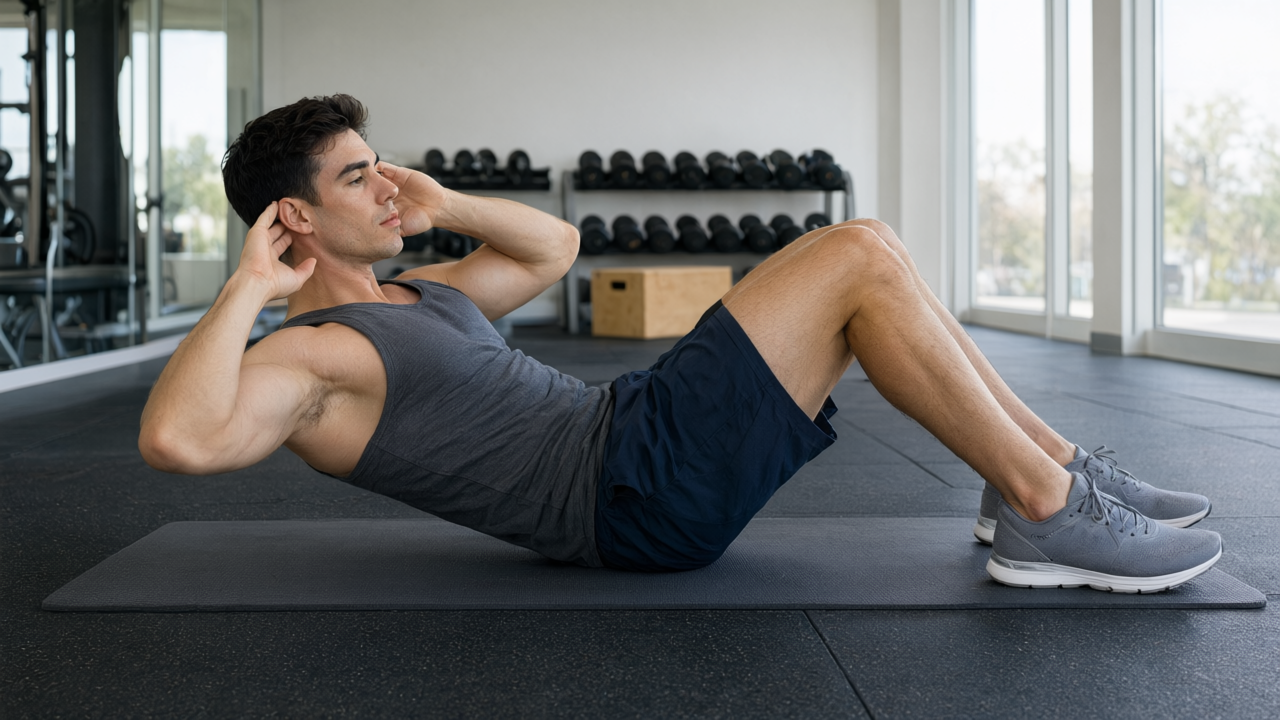
Sit-Up
sit-up
When you nail a sit-up, you’ll feel a deep, steady burn right through your midsection as you peel your spine off the floor. It’s not about yanking your neck or rushing the motion; it’s a controlled, rhythmic pulse that leaves your abs humming with satisfaction. I love how each rep builds that resilient core strength, making everyday movements feel lighter and more grounded. Keep the tempo smooth, breathe through the tension, and let that familiar core fire guide you.
처음이라면
Focus on initiating every repetition from your abdomen rather than yanking yourself upward with your arms. Keep your chin slightly tucked as if holding a small orange between your neck and chest, and let your gaze follow your knees to maintain cervical alignment. True muscular failure arrives as a heavy, trembling fatigue in your midsection, not as a sharp pinch in your lumbar spine or a cramp in your hip flexors. If you feel your lower back arching or your neck taking over the movement, stop the set immediately and reset your positioning. Beginners often compensate by using momentum to swing upward or by gripping the floor with their toes, both of which steal tension from the target muscles and increase injury risk. Start with a smaller range of motion if needed, lifting only until your shoulder blades clear the floor, and gradually build depth as your endurance improves. Progress slowly, celebrate the controlled tempo, and remember that quality always outweighs quantity when you are building foundational core strength.
더 나아가기
To extract more from the sit-up, extend your lowering phase to three or four seconds. That slow eccentric forces your abdominals to resist gravity rather than simply dropping back down. A distinct one-second pause at the top, with your ribs fully drawn towards your pelvis, eliminates momentum and deepens the contraction. Sets of 10–15 remain ideal for building endurance, but if you complete 15 controlled reps without your midsection fatiguing, it is time to increase the demand. Hold a weight plate against your chest, starting light enough to maintain that deliberate tempo. Alternatively, elevate your feet onto a low step; this shifts your centre of gravity and lengthens the lever, making every repetition heavier without external load. Once a plate on your chest feels manageable across all sets, progress to the V-sit, which demands greater range and balance. You might also try crossing your arms over your chest instead of keeping your hands behind your ears, which removes any temptation to assist the lift.
흔한 실수
Most practitioners pull aggressively on their neck or interlace their fingers behind their head, which forces the cervical spine into dangerous flexion and shifts the workload away from the abdominals. Another frequent error is anchoring the feet too heavily or allowing a partner to pin them down, which turns the sit-up into a hip flexor dominant movement rather than an abdominal curl. Lifters also tend to use explosive momentum to bounce off the floor, sacrificing control and reducing time under tension for the core. Finally, many rush through the lowering phase instead of resisting gravity, missing the crucial eccentric contraction that builds real strength and stability.
루틴
- Sets
- 3
- Reps
- 10-15
- Rest
- 60s
- Tempo
- 2-0-2-0
- RPE
- 7
- Per set
- ~90s
- 빈도
- 2-3x/week
Add a weight plate to the chest or elevate your feet to increase resistance.
Cues
근육
- Abs
- Obliques
- Hip flexors
준비물
- Bodyweight
- 1
Lie flat on your back with your knees bent and feet planted firmly on the floor.
- 2
Space your feet hip-width apart and place your fingertips lightly behind your ears.
- 3
Press your lower back into the ground while drawing your navel inward to brace your core.
- 4
Exhale fully as you slowly curl your head, neck, and shoulders upward off the floor.
- 5
Engage your abdominal muscles to lift your ribcage toward your pelvis.
- 6
Keep your elbows wide and avoid pulling your head forward with your hands.
- 7
Pause briefly at the top position while maintaining steady core tension.
- 8
Inhale steadily as you begin lowering your upper back toward the starting position.
- 9
Control the descent by rolling down one vertebra at a time until your shoulder blades touch the floor.
- 10
Verify your spine remains flat against the surface before initiating the next repetition.