
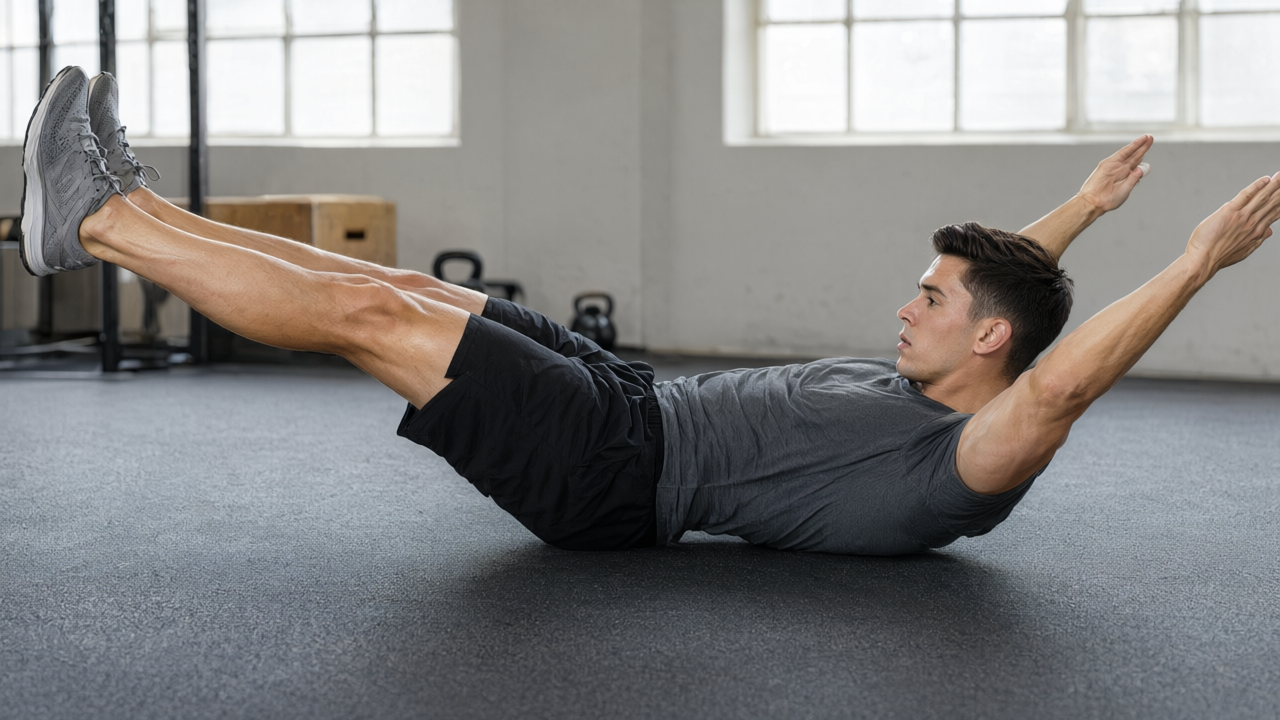
Hollow Hold
hollow-hold
When I lock into a proper hollow hold, my entire midsection wakes into a steady, humming tension. I feel my lower back press firmly into the floor while my shoulders lift just enough to create a smooth curve from fingertips to toes. There’s no frantic shaking or breath-holding—just a quiet, unbroken engagement that builds deep stability. It’s less about brute force and more about finding that perfect, sustained alignment where every muscle works in harmony.
처음이라면
If you are just starting out, prioritize spinal alignment over height. You can bend your knees slightly and keep your arms resting alongside your body to reduce the lever length until your core adapts. The moment you feel your lower back arch off the floor, you have reached technical failure. Stop immediately, reset, and shorten your hold time rather than grinding through compromised form. Beginners often compensate by tucking their chin into their chest, shrugging their shoulders toward their ears, or allowing the pelvis to tilt forward. Keep your neck relaxed, press your shoulder blades slightly into the floor, and maintain that crucial lower-back-to-floor connection. It is completely normal to shake or feel an intense quivering sensation in your abdomen during the first few weeks. That tremor simply means your nervous system is learning to recruit stabilising fibres efficiently. Aim for three sets of ten to fifteen seconds, resting fully between attempts. Consistency will build the foundational endurance you need, and your body will quickly adapt to the demand.
더 나아가기
Once you can hold a clean thirty to forty-five seconds without your lower back leaving the floor, make the position harder rather than simply adding time. Lowering your heels closer to the ground lengthens the lever and increases demand significantly; raising them higher does the opposite. You can also shift your arms further behind your ears or hold a light plate in your hands to challenge your anti-extension capacity. For tempo, spend three to four seconds easing into the hollow shape, pausing briefly at the bottom to confirm your ribs are locked down before settling into the hold. When three sets of forty-five seconds feel controlled at an RPE of seven, progress to hollow rocks, introducing a gentle, rhythmic oscillation that tests your stability dynamically. From there, single-arm or single-leg hollow variations remove points of contact, forcing deeper anti-rotation work while keeping you on the floor with nothing but your bodyweight.
흔한 실수
Most practitioners rush into the position without establishing a neutral spine, allowing the lower back to hyperextend and completely bypassing the core. Others flare their ribs upward in an attempt to lift higher, which shifts tension away from the abdominals and places unnecessary strain on the lumbar vertebrae. Many also hold their breath during the exertion phase, which spikes internal pressure and causes premature fatigue instead of promoting sustained muscular engagement. Finally, dropping the arms or letting the legs drift apart breaks the integrated tension required for the exercise, turning a full-body stabilisation drill into a disjointed, ineffective hold.
루틴
- Sets
- 3
- Reps
- 30-45s
- Rest
- 60s
- RPE
- 7
- Per set
- ~75s
- 빈도
- 2-3x/week
Increase hold duration by 5 seconds weekly, or progress to hollow rocks and weighted variations.
Cues
근육
- Abs
- Hip flexors
- Obliques
준비물
- Bodyweight
- 1
Lie flat on your back with legs fully extended and arms stretched straight overhead.
- 2
Press your entire spine and lower back firmly into the floor to eliminate any arch.
- 3
Inhale deeply through your nose to engage your core muscles.
- 4
Exhale slowly while lifting your head, shoulders, and legs a few inches off the ground.
- 5
Keep your arms extended past your ears with palms facing each other.
- 6
Point your toes forward and squeeze your quadriceps to keep the legs straight.
- 7
Maintain steady, controlled breaths while holding the rigid body position.
- 8
Check that your lower back remains pressed into the floor throughout the hold.
- 9
Inhale deeply as you gently lower your shoulders, arms, and legs back to the starting position.
- 10
Release the core tension completely and rest before repeating.