
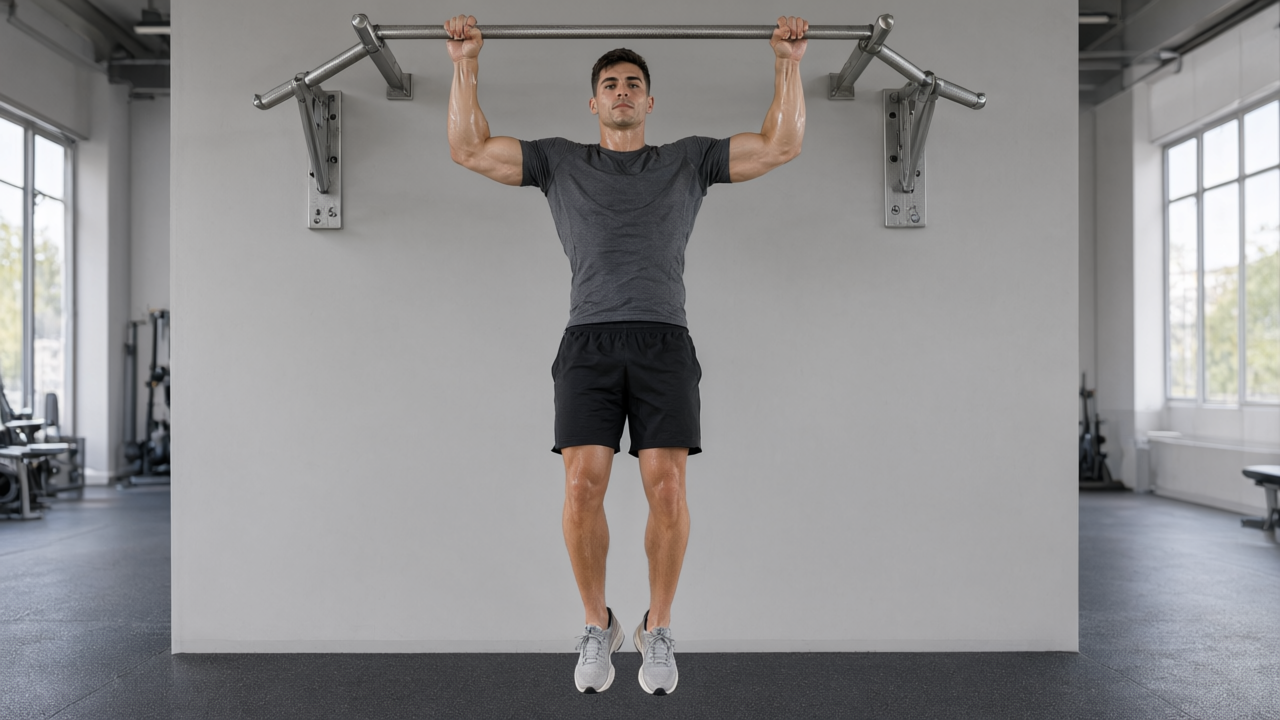
Dead Hang
dead-hang
Faites attention à
- avoid · Rotator cuff tear — Sustained traction on a compromised rotator cuff risks further tearing the healing tissue. Instead, use a lat pulldown machine to control the load and avoid full bodyweight suspension.
- caution · Shoulder impingement — Full overhead suspension can compress irritated subacromial tissues under bodyweight traction. Instead, perform a supported hang with feet on a box to reduce shoulder load while maintaining decompression.
- caution · Pregnancy — Hanging increases intra-abdominal pressure and demands grip endurance that may be compromised by relaxin-driven joint laxity. Instead, perform cat-cow stretches on all fours for spinal decompression without overhead traction.
When I settle into a true dead hang, my shoulders feel long and open while my grip locks in. The weight of my body stretches through my spine, creating a deep decompression that feels both challenging and grounding. I breathe slowly into my ribs, letting gravity do the work while my core stays softly engaged. It is not about fighting the bar; it is about surrendering to the tension and finding stillness.
Si vous débutez
Start by placing a sturdy box or step beneath the bar so you can step into the hang rather than jumping, which protects your shoulders from a sudden jarring load. Keep a soft bend in your elbows to protect the joint if full extension causes discomfort, and actively engage your core to prevent your lower back from overarching. When your forearms begin to cramp or your grip slips, that is your natural stopping point; do not fight through shaking hands or compromised shoulder alignment. Beginners often compensate by hiking their shoulders toward their ears or swinging their legs to generate momentum, both of which defeat the purpose of the exercise. Instead, focus on a slow, deliberate descent from the bar, letting your feet meet the floor with control. Your first hangs will likely last only a few seconds, and that is completely normal. Progress comes from adding two to three seconds to each hold over time, allowing your tendons and grip to adapt safely.
Aller plus loin
Once you can hold a clean sixty-second dead hang, making the exercise harder means adding load rather than simply chasing time. Hang a kettlebell or weight plate from a belt and work in sets of twenty to thirty seconds to build grip strength, or keep the bodyweight and push holds towards ninety seconds for endurance. Slowing your breathing to four or five deliberate cycles per minute increases time under tension without extra kit. When weighted hangs feel secure, progress to scapular pull-ups, where you actively depress and elevate the shoulders while suspended, turning the static hold into controlled movement. You can also shift to a one-arm dead hang, which doubles the demand on each hand and forces your obliques to resist rotation. Alternatively, wrapping a towel over the pull-up bar thickens the grip surface dramatically, shifting the limiting factor entirely to your fingers and forearms.
Erreurs courantes
The most frequent error is shrugging the shoulders upward into the neck instead of actively depressing the scapulae, which places unnecessary strain on the cervical spine. Many lifters also allow their hips to pike forward or their legs to swing wildly, turning an isometric hold into a chaotic momentum exercise that dilutes the intended tension. A passive grip where the fingers merely hook the bar rather than actively squeezing it will rapidly drain endurance and increase the risk of slipping. Finally, holding your breath during the suspension spikes internal pressure and prematurely fatigues the stabilizers, so maintaining a rhythmic breathing pattern is essential for sustained control.
Routine
- Sets
- 3
- Reps
- 30-60s
- Rest
- 90s
- RPE
- 8
- Per set
- ~90s
- Fréquence
- 2-3x/week
Increase hold duration by 5-10 seconds per session until 60 seconds is achieved, then add external weight.
Cues
Muscles
- Forearms
- Lats
- Upper back
- Shoulders
- Traps
- Abs
Matériel
- Pull-up bar
- 1
Stand directly beneath the pull-up bar with your feet shoulder-width apart and toes pointing forward.
- 2
Reach overhead and secure an overhand grip with hands slightly wider than shoulder-width.
- 3
Step off a stable platform or jump lightly to suspend your full body weight from the bar.
- 4
Allow your arms to straighten completely while keeping your core gently engaged.
- 5
Relax your shoulders completely and let gravity pull your torso downward.
- 6
Breathe steadily and rhythmically, inhaling through your nose and exhaling through your mouth throughout the hold.
- 7
Maintain a neutral spine and avoid swinging, kicking, or crossing your legs.
- 8
Hold the suspended position until your target duration is complete or grip strength fades.
- 9
Bend your knees slightly and position your feet directly beneath your center of gravity.
- 10
Release one hand from the bar first, then the other, and land softly on the floor to reset.