
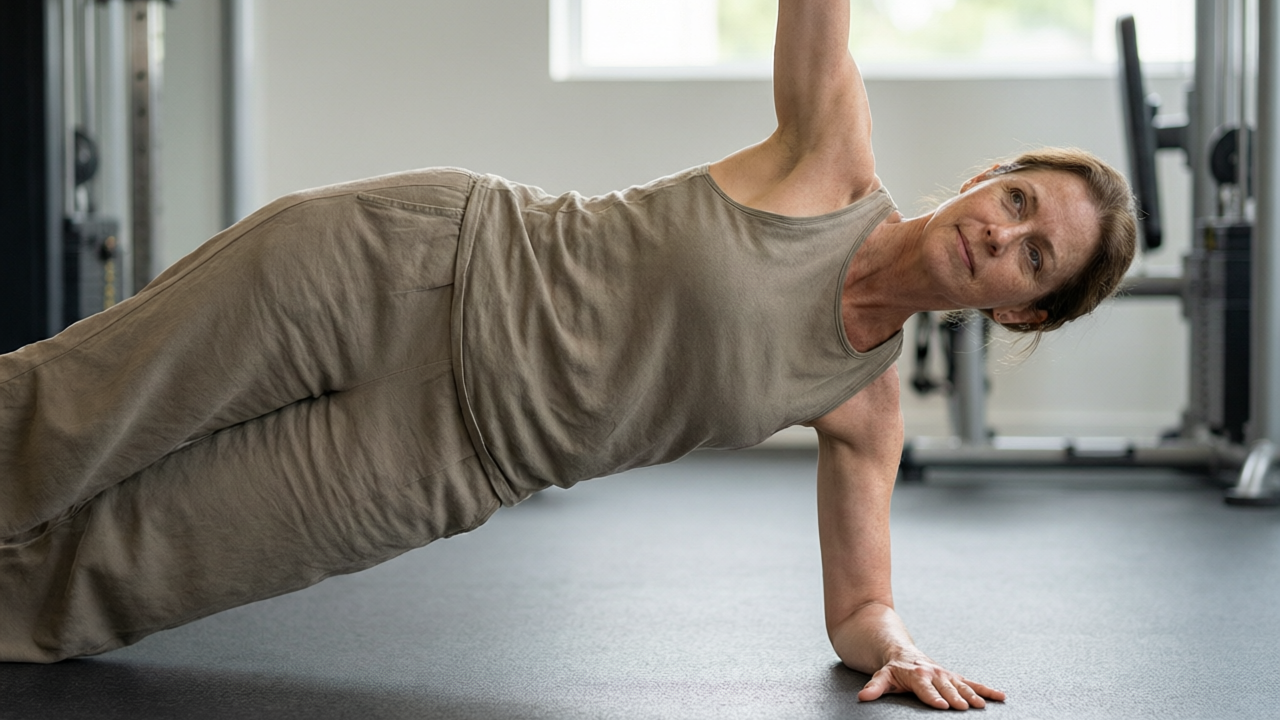
Side Plank
side-plank
When I coach a perfect side plank, I want you to feel a steady, humming tension along your side chain. Your core braces tight like a corset, keeping your hips lifted and spine perfectly straight. There’s no sagging or frantic shaking—just clean, grounded stillness. You’ll breathe steadily while your obliques fire quietly, transforming a simple static pose into a powerful, unwavering test of true stability.
Buna Yeni Başlıyorsanız
As you begin, do not chase duration at the expense of alignment. Start by dropping to your knees instead of your feet, creating a modified side plank that significantly reduces the lever length while preserving the core engagement. Focus on drawing your bottom ribcage down toward your pelvis to prevent the lower back from overarching. You will know you have reached true muscular fatigue when your hips begin to tremble and your shoulder starts creeping toward your ear. This is your cue to lower down safely and reset, rather than pushing through compromised form. A common compensation is letting the top shoulder roll forward or allowing the top leg to drift backward, which immediately offloads the target muscles. Keep your gaze fixed on a single point on the floor, breathe rhythmically, and remember that a crisp thirty-second hold with perfect posture builds far more resilience than a shaky two minutes. Trust the process, respect your current limits, and let the tension build gradually over consistent sessions.
Daha İleri
Once you can hold a clean forty-five seconds per side, extending the clock yields diminishing returns. Instead, make the position harder by elevating your top foot onto a bench or box, which narrows your base and demands more from your obliques, or place a weight plate on your top hip to increase the load directly. You might also try the Copenhagen variation, resting only your top shin on a bench while your bottom leg hangs free, forcing the adductors and lateral core to work together. For tempo, experiment with a slow five-second lift into the hold and a deliberate three-second lowering phase rather than dropping out quickly; this controlled eccentric builds resilience in the shoulder and trunk. If you are chasing dynamic stability rather than pure endurance, transition to side plank hip dips, where you rhythmically lower and raise the hips without losing alignment, turning the isometric brace into a moving challenge that better prepares you for heavier lifts.
Yaygın Hatalar
Most practitioners allow their hips to sag toward the floor, which shifts the stabilizing demand away from the obliques and places unnecessary strain on the shoulder joint and lumbar spine. Others compensate by hiking the top hip upward, creating a lateral arch that shortens the working muscles and defeats the purpose of the isometric tension. A third frequent error involves collapsing the supporting shoulder, letting it sink into the socket rather than actively pressing the floor away and packing the scapula. Finally, many forget to breathe, holding their breath to artificially maintain rigidity, which spikes internal pressure and triggers premature muscular failure. Correcting these alignment faults restores the intended mechanical advantage and ensures every second of effort translates directly to core development.
Rutin
- Sets
- 3
- Reps
- 30-45s per side
- Rest
- 60s
- RPE
- 7
- Per set
- ~75s
- Sıklık
- 2-3x/week
Increase hold duration by 5-10 seconds per side before progressing to elevated feet or added load.
Cues
Kaslar
- Obliques
- Abs
- Glutes
- Shoulders
Ekipman
- Bodyweight
- 1
Lie on your side with legs fully extended and stacked.
- 2
Place your bottom elbow directly beneath your shoulder and flatten your forearm on the floor.
- 3
Align your top foot directly over your bottom foot to create a straight line from head to heels.
- 4
Press firmly through your bottom forearm and outer foot to lift your hips completely off the ground.
- 5
Exhale and draw your navel toward your spine to brace your midsection and lock your torso in place.
- 6
Maintain the rigid position while breathing normally, keeping your shoulders, hips, and ankles perfectly aligned.
- 7
Inhale deeply and slowly lower your hips back to the floor with controlled movement.
- 8
Release core tension and roll onto your back to reset before repeating on the opposite side.