
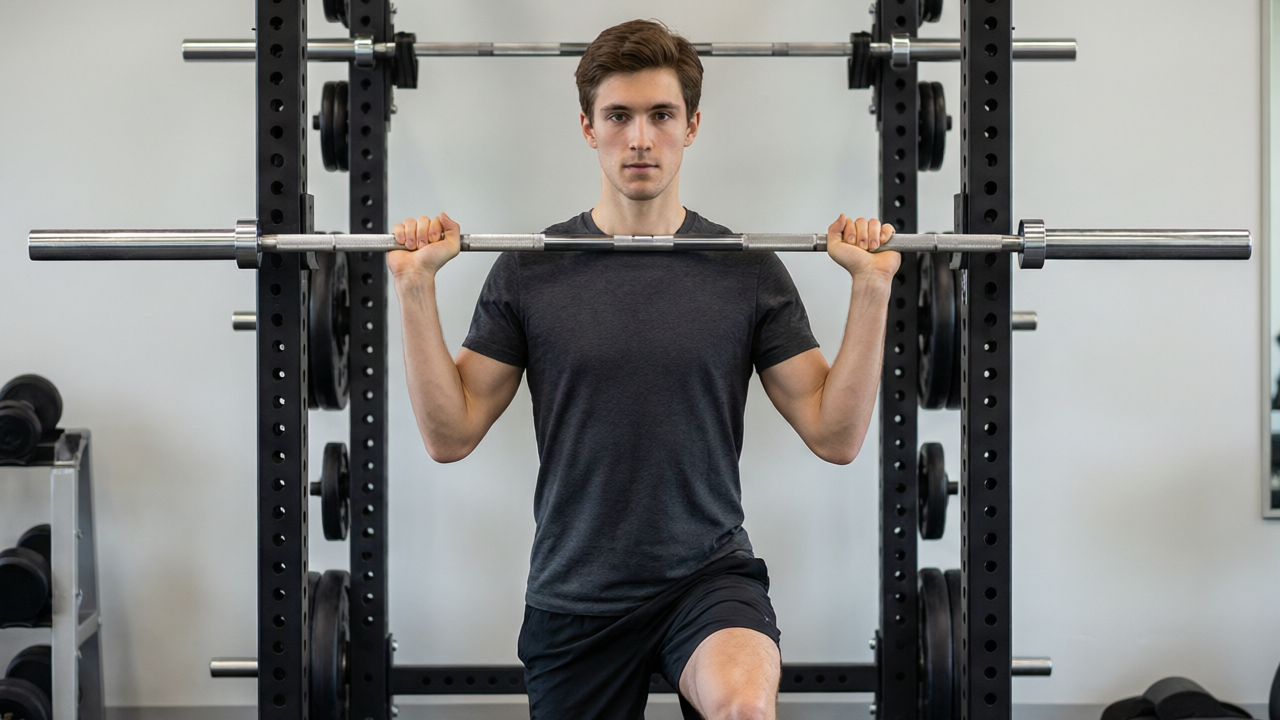
Front-Rack Lunge
front-rack-lunge
ควรระวัง
- avoid · Acute lower back injury — Dropping the elbows forces the torso forward, shifting load from the legs directly into the lower back. Instead, perform belt squats or leg presses to load the legs without spinal stress.
- caution · Acute knee injury — Stepping too far forward places excessive shear force on the front knee joint during the descent. Instead, perform reverse lunges or step-ups to reduce anterior knee stress while loading the quads.
- caution · Shoulder impingement — Sustaining an elevated front-rack position under load can pinch irritated shoulder structures. Instead, perform goblet lunges with a single dumbbell to keep the shoulders in a neutral, pain-free position.
- caution · Pregnancy — Heavy bracing and a loaded front rack compress the abdomen and restrict diaphragmatic breathing. Instead, perform bodyweight lunges or goblet squats to train the legs without abdominal compression.
When I execute a clean front-rack lunge, the barbell sits heavy but stable across my anterior delts, creating a solid anchor for my upper back. Each descent feels controlled and deliberate, with my front heel rooting firmly into the floor while my back knee tracks smoothly toward the ground. The burn is sharp but manageable, spreading evenly through my quads and glutes. Good reps leave me balanced, upright, and ready to drive back up with quiet power.
หากคุณเพิ่งเริ่มต้น
As you learn this movement, treat the front-rack position as your foundation. If keeping your elbows elevated feels uncomfortable, start with a lighter load or practice the rack position without stepping until your wrists and shoulders adapt. Keep your weight centered over your front heel and midfoot, and never let your front knee collapse inward. You will know you are approaching technical failure when your elbows begin to drop, your torso leans forward excessively, or your back foot loses balance. At that point, safely rerack the weight and reset rather than grinding through compromised form. Watch for early compensations like taking overly long steps, which shifts stress away from the quads and onto the knees, or bouncing out of the bottom position, which sacrifices control. Focus on smooth, deliberate descents and full stops at the bottom. Progress slowly, prioritize symmetry between legs, and trust that consistent practice will rapidly improve your balance, mobility, and confidence under load.
ก้าวต่อไป
Slow the lowering phase to three or four seconds while keeping the drive up sharp. Adding a two-second pause at the bottom, with the back knee hovering just above the floor, removes momentum and forces your quads and glutes to restart the movement from a dead stop. The written eight-to-twelve rep range builds muscle, but dropping to six to eight reps with heavier loads shifts the emphasis towards strength; add 2.5 kg to the barbell only when every rep across all sets finishes with your elbows high and torso vertical. If you want more from this pattern without adding weight, try the front-rack walking lunge, which demands continuous balance and coordination by eliminating the reset between steps. Alternatively, perform these inside the squat rack as front-rack reverse lunges, stepping backwards instead of forwards to reduce shear on the front knee whilst placing slightly greater demand on the glutes and hamstrings.
ข้อผิดพลาดที่พบบ่อย
Lifters frequently compromise this exercise by allowing the elbows to collapse, which forces the torso to lean forward and shifts the load away from the legs into the lower back. Another widespread error involves stepping too far forward, turning the lunge into a split squat that places excessive shear on the front knee joint rather than engaging the posterior chain. Many also rush through the transition phase, using momentum or a slight bounce at the bottom instead of controlling the descent and driving upward with intention. Finally, failing to maintain equal step length and depth between sides creates muscular imbalances over time. Keep your chest elevated, step deliberately, control the eccentric, and mirror your movement exactly on each repetition to maximize strength and joint longevity.
ตารางฝึก
- Sets
- 3
- Reps
- 8-12
- Rest
- 90s
- Tempo
- 2-0-2-0
- RPE
- 8
- Per set
- ~150s
- ความถี่
- 2-3x/week
Increase the barbell weight by 2.5-5 lbs once you can complete all sets at 12 reps with strict depth and upright posture.
Cues
กล้ามเนื้อ
- Quadriceps
- Glutes
- Abs
- Upper back
- Traps
อุปกรณ์
- Squat rack
- Barbell
- 1
Clean or lift a barbell into a secure front-rack position with elbows pointing forward.
- 2
Plant your feet shoulder-width apart with toes angled slightly outward.
- 3
Take a deep breath and brace your core tightly to stabilize your spine.
- 4
Step one foot forward and lower your hips until both knees reach ninety-degree angles.
- 5
Maintain a steady exhale while controlling the descent and keeping your torso upright.
- 6
Pause briefly at the bottom to verify that your front knee tracks directly over your midfoot.
- 7
Drive forcefully through the front heel to return to a standing position as you inhale.
- 8
Bring the trailing foot forward to meet the lead foot and reset your base stance.
- 9
Switch legs and repeat the forward stepping pattern for the target repetitions.
- 10
Carefully lower the barbell to the floor or secure rack to complete the set.