
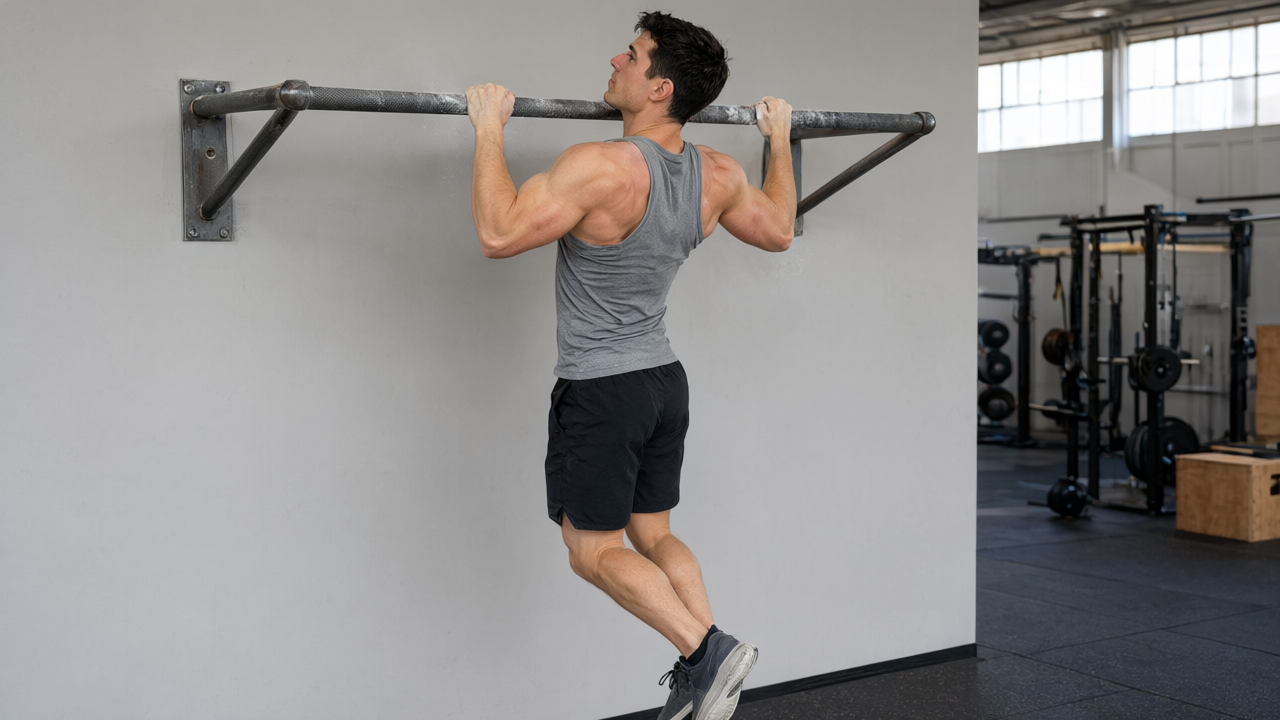
Pull-Up
pull-up
Будьте осторожны с
- avoid · Rotator cuff tear — Supporting full bodyweight in a dead hang places extreme tensile stress on torn rotator cuff tendons. Instead, use seated cable rows to train the back without loading the injured shoulder joint.
- caution · Uncontrolled hypertension — Bracing the core and exhaling against effort during heavy pulling can spike blood pressure dangerously. Instead, perform assisted band pull-ups or lat pulldowns to reduce systemic cardiovascular strain.
When I pull myself toward the bar, it feels like a smooth, powerful conversation between my lats and the steel. There is no frantic swinging or shoulder shrugging, just a deliberate ascent where my back drives the motion and my core stays tightly braced. At the top, I notice a satisfying contraction across my upper back and steady, controlled breathing. Each rep leaves my arms energized rather than strained, proving real vertical strength comes from mindful tension.
Если вы новичок в этом
Start by treating the first few weeks as a skill acquisition phase rather than a test of raw power. Use a sturdy box or resistance band to assist your ascent until you can complete three unassisted repetitions with strict form. Focus heavily on the shoulder blade movement before your arms bend; if you cannot feel that initial scapular depression, pause and reset. True muscular failure arrives as a sudden inability to initiate the upward drive or a noticeable breakdown in spinal alignment. Stop your set immediately when your hips begin to pike, your shoulders creep toward your ears, or your descent turns into a freefall. Many beginners compensate by kipping their legs or jerking their neck to reach the bar, which shifts stress away from the target muscles and into vulnerable joints. Progress slowly, celebrate controlled negatives, and remember that building foundational pulling strength takes consistent practice.
Дальше
Once you own the standard tempo, introduce a two-second pause at the top to intensify the upper back contraction, or slow the lowering phase to four seconds to build eccentric resilience. The eight-to-twelve rep range suits hypertrophy well, but dropping to sets of five or six with added load via a dip belt shifts the emphasis towards maximal strength. Progress to external weight only when you complete twelve strict reps across all three sets without form breaking down; if you prefer bodyweight mastery, make the movement harder by adopting an L-sit position to increase core demand and alter your leverage. When weighted pull-ups feel routine, consider archer pull-ups, which shift more load onto one arm at a time and prepare you for single-arm work. A close-grip variation is also worth practising, as it places greater demand on the biceps and lower lats while changing the line of pull through the shoulder joint.
Распространённые ошибки
The most frequent error involves initiating the pull with the biceps and forearms instead of engaging the lats and upper back, which severely limits range of motion and places unnecessary strain on the elbow joints. Lifters also tend to rush the descent, turning the eccentric phase into a passive drop rather than a controlled lengthening that builds tissue resilience. Another widespread issue is allowing the shoulders to round forward and hike toward the ears at the bottom position, effectively hanging on passive ligaments rather than maintaining active tension. Finally, many practitioners arch their lower back excessively or swing their legs to generate momentum, which fractures the kinetic chain and dilutes the training stimulus.
Программа
- Sets
- 3
- Reps
- 8-12
- Rest
- 90s
- Tempo
- 2-0-1-0
- RPE
- 8
- Per set
- ~180s
- Частота
- 2-3x/week
Increase reps until reaching the top of the target range across all sets, then add external weight via a dip belt or progress to a weighted variation.
Cues
Мышцы
- Lats
- Upper back
- Biceps
- Forearms
Оборудование
- Bodyweight
- Pull-up bar
- 1
Step under the bar and grasp it with an overhand grip slightly wider than shoulder-width.
- 2
Jump or step up to hang with arms completely straight and feet clear of the ground.
- 3
Depress and retract your shoulder blades while bracing your core to create a rigid torso.
- 4
Inhale to stabilize your ribs, then exhale as you bend your elbows and pull your chest toward the bar.
- 5
Continue the upward motion until your chin clears the bar, keeping your head aligned with your spine.
- 6
Inhale slowly as you lower yourself with strict control until your arms fully straighten.
- 7
Shake out your hands briefly, reset your shoulder position, and prepare for the next repetition.