
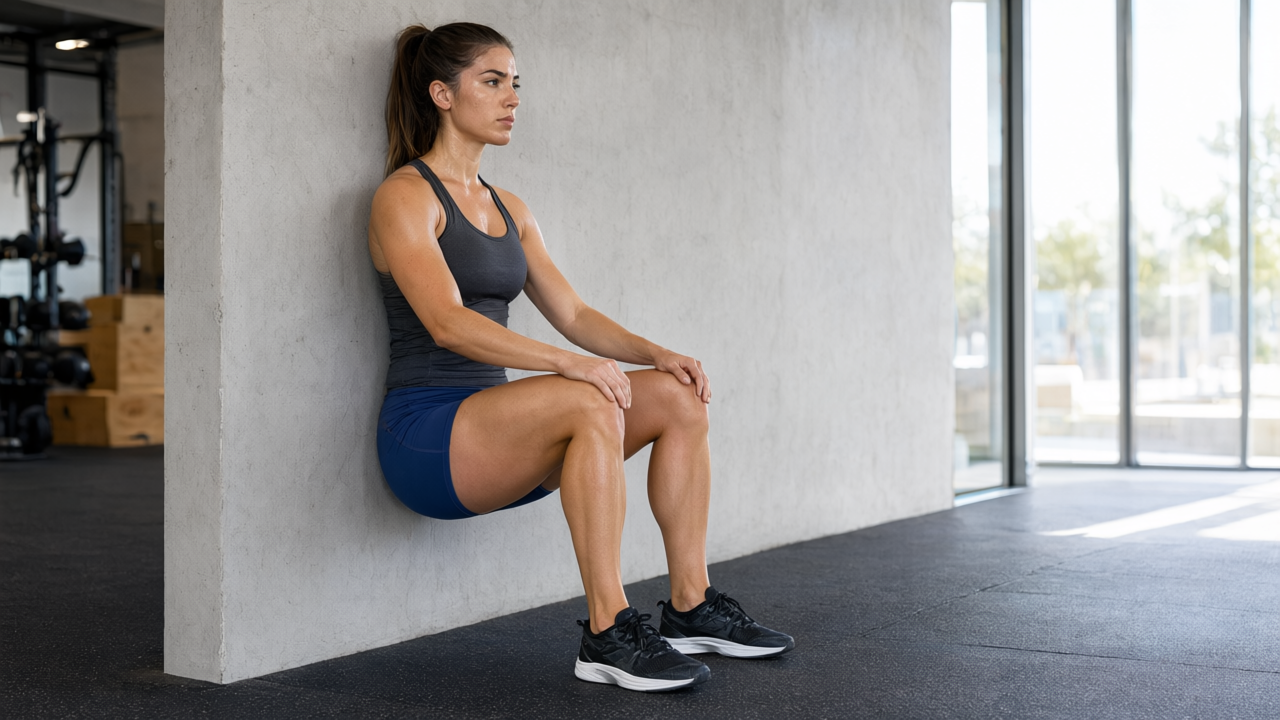
Wall Sit
wall-sit
Let op bij
- caution · Uncontrolled hypertension — An isometric hold raises blood pressure more than the same effort done through a range of motion, because the working muscle squeezes the vessels shut and the reflex response climbs the whole time you hold — and people hold their breath through the last third, which pushes it higher still. Keep breathing continuously and audibly, hold for shorter periods at a shallower angle, and avoid until your pressure is controlled and cleared. Stop on headache, dizziness or unusual breathlessness.
- modify · Acute knee injury — This is a sustained deep knee bend under bodyweight with no movement to judge it by, which is exactly the pattern that aggravates an irritated knee — and a held position hides how much load the joint is taking until it is already sore. Slide up the wall so the knees bend less; a shallow hold done long is more training than a deep one you have to escape. Keep the knees over the ankles, not past them, and never let them fall inward. Stop at sharp pain inside the joint, as opposed to the burning in the thighs that means it is working.
- modify · Acute lower back injury — Once the legs tire the pelvis usually tilts and the lower back presses harder into the wall to keep you up, which is a sustained extension load on a reactive spine. Slide up to a shallower angle, keep the ribs stacked rather than flared, and end the set while the position is still neutral. If the back is the first thing to complain, substitute Glute Bridge, which trains the legs and hip with the spine supported and free to rest flat.
- modify · Pregnancy — The wall does your balance for you, which makes this one of the more usable leg holds as pregnancy continues — but sustained bearing down and holding the breath drive pressure down onto the pelvic floor, and the deep squat angle gets uncomfortable on its own terms. Take a shallower angle, breathe continuously, and stop well before failure. Stop if you feel coning along the midline, pelvic heaviness, or any leaking, and raise those with your midwife or obstetric team.
When you nail a wall sit, you’ll feel a steady, burning heat building across your front thighs while your core locks in like a steel plate. It’s not about speed; it’s about unwavering tension and controlled breathing. I want you to embrace that quiet fire, keeping your spine flush against the wall and your knees tracking safely over your toes. Hold it steady, trust the burn, and finish each rep with quiet confidence.
Als je hiermee begint
Focus on keeping your lower back pressed flat against the wall throughout the entire hold. If you feel a sharp pinch in your knees or lower back, ease your descent slightly until you find a comfortable, sustainable angle. The burn will build steadily in your quads, and that’s exactly where you want it. True failure arrives when your knees start drifting inward, your heels lift off the floor, or your breathing becomes ragged and uncontrolled. Stop the set the moment your form breaks down, not when the discomfort peaks. Breathe deeply into your belly to keep your heart rate steady, and avoid locking your knees into a rigid position. Remember, consistency beats duration every single time. You’ll build remarkable lower-body resilience by stacking clean, controlled holds week after week. Trust the process, honor your limits, and let your muscles adapt at their own steady pace.
Verder gaan
Once you can hold a clean parallel position for sixty seconds across three sets, the standard wall sit has done its job. To keep progressing, place a plate across your thighs or shift to a single-leg variation by extending one foot off the floor, which doubles the demand on the working quad without adding external load. For tempo, experiment with a slow five-second descent into the hold and a deliberate two-second pause just above parallel before settling fully; this builds control at the joint angles where tension usually drops. Rep ranges here mean time under tension rather than repetitions, so aim for holds of forty-five to ninety seconds depending on whether you prioritise endurance or strength. When ninety seconds feels manageable at an RPE of eight, add weight before adding more time. If you eventually outgrow loaded wall sits entirely, move on to goblet squats or barbell back squats to train the same pattern through a full range of motion.
Veelgemaakte fouten
Most people let their knees drift past their toes or cave inward under fatigue, which shifts dangerous torque into the joint capsule and sabotages the movement. Others arch their lower back away from the wall, disengaging the core and turning a quad builder into a lower-back stressor. Breathing often becomes shallow and rushed as the burn intensifies, which spikes tension in the shoulders and neck prematurely. Finally, many beginners set up with their feet too close or too wide, preventing the shins from staying vertical and compromising the mechanical advantage. Keep your spine glued to the wall, track your knees over your midfoot, and maintain a slow, steady breathing rhythm to get the most out of every second.
Routine
- Sets
- 3
- Reps
- 30-60s hold
- Rest
- 90s
- RPE
- 8
- Per set
- ~90s
- Frequentie
- 2-3x/week
Add a 5-second hold each week or place a light plate across your thighs to increase resistance.
Cues
Spieren
- Quadriceps
- Glutes
- Abs
- Calves
Keukengerei
- Bodyweight
- 1
Stand with your back flat against a sturdy wall, feet hip-width apart and about two feet away from the baseboard.
- 2
Slide your spine down the wall until your thighs run parallel to the floor and your shins stay vertical.
- 3
Plant your feet firmly, ensuring your knees align directly over your ankles without caving inward.
- 4
Inhale deeply through your nose, brace your core, and exhale slowly while maintaining steady pressure through your heels.
- 5
Hold the position with unwavering focus, breathing rhythmically and keeping your shoulders relaxed against the wall.
- 6
Push through your heels to return to a standing position once your target duration ends.
- 7
Shake out your legs gently, reset your posture, and prepare for your next hold.