
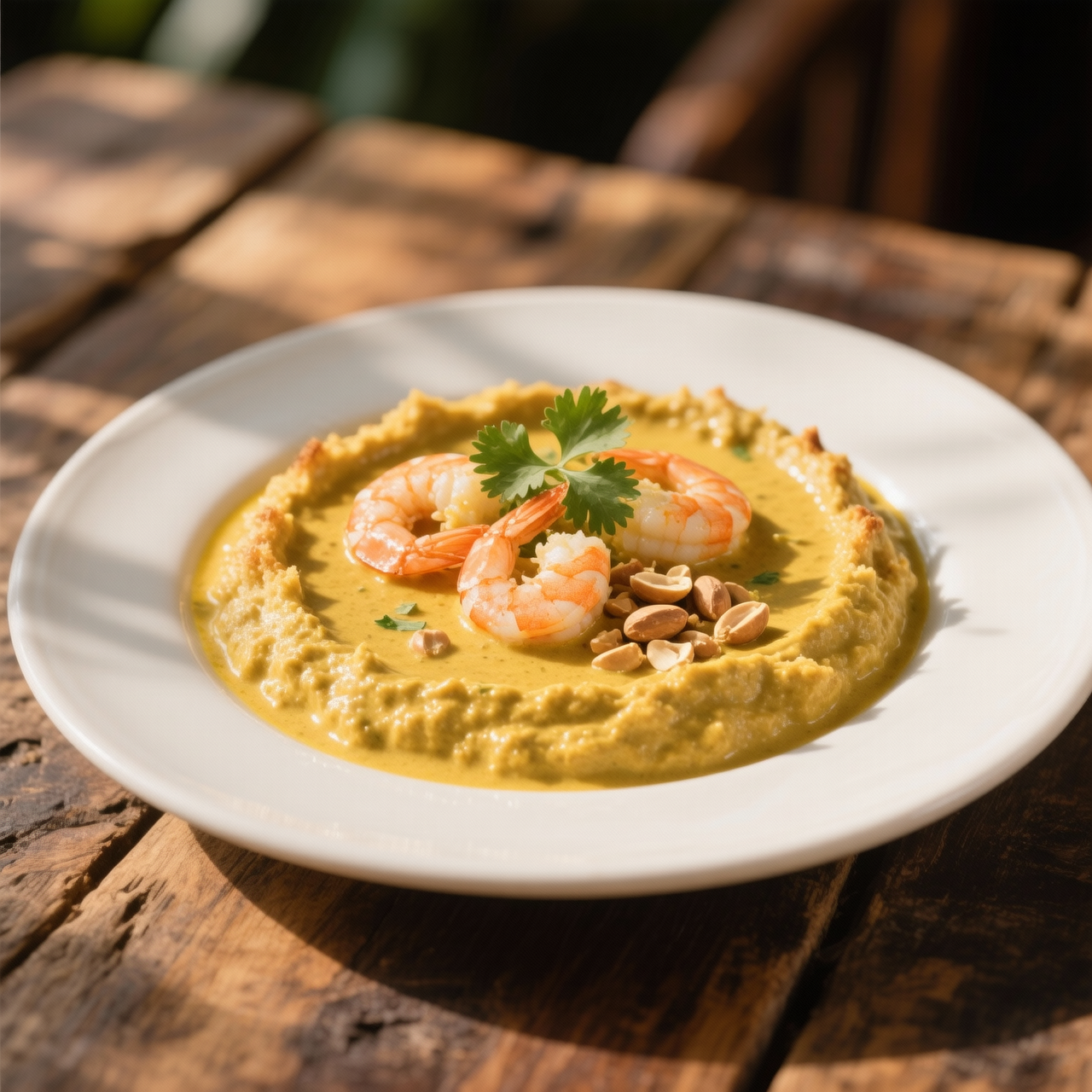
Vatapá Paste
When I think of Vatapá, my mind immediately drifts to the vibrant, sun-drenched streets of Salvador da Bahia. This isn't just a sauce; it is a profound culinary testament to Brazil’s Afro-Brazilian heritage, born from the ingenuity of enslaved Africans who transformed humble, available ingredients into a dish of staggering complexity. As a pescatarian, I find Vatapá to be an absolute revelation. It relies on a luscious, velvety base of soaked bread, peanuts, and cashews, enriched with coconut milk and the unmistakable, briny sweetness of fresh shrimp. What makes this paste so deeply meaningful to me is its ability to weave together textures and flavors that speak to a history of resilience and cultural synthesis. However, achieving that signature silky consistency is where many cooks stumble. The most common pitfall I see is rushing the bread-soaking process or failing to blend the nuts and bread into an absolutely smooth purée before cooking, which results in a gritty, unpleasant texture. Another frequent misstep is adding the shrimp too early; they must be folded in at the very end, just long enough to poach gently in the residual heat, otherwise they turn rubbery and rob the sauce of its delicate seafood sweetness. Finally, never underestimate the power of dendê oil. It must be added off the heat at the final stage to preserve its vivid orange hue and distinct, peppery aroma without breaking the emulsion. Mastering this paste is about patience and respect for the ingredients, yielding a sauce that is as historically rich as it is gastronomically satisfying.
영양 정보
| 1 인분 기준 | calories | protein | carbs | fat | satFat | fibre | sugar | sodium |
|---|---|---|---|---|---|---|---|---|
| beginner | 695kcal | 29g | 40g | 50g | 29g | 4g | 9g | 1328mg |
| intermediate | 695kcal | 29g | 40g | 50g | 29g | 4g | 9g | 1328mg |
| expert | 695kcal | 29g | 40g | 50g | 29g | 4g | 9g | 1328mg |
1 인분 기준 · Ava 추정치 — 참고용이며 임상 수치가 아닙니다.
- 200 gwhite bread— stale, crusts removed
- 15 gginger
- 400 mlcoconut milk— full-fat
- 300 gshrimp— raw, peeled and deveined
- 100 gpeanut— roasted and unsalted
- 1 pieceonion— medium, roughly chopped
- 3 piecegarlic clove— peeled
- 50 mldendê oil— red palm oil
- 30 gfresh cilantro— leaves and tender stems
- 30 mllime juice— freshly squeezed
- 10 gsalt— fine sea salt
This beginner-friendly version of traditional Bahian Vatapá removes the intimidation of the classic technique by utilizing a high-quality jarred vatapá paste as the foundation, allowing you to achieve that authentic bread-shrimp-peanut flavor profile in a fraction of the time. While purists might insist on soaking and grinding stale bread, raw peanuts, and dried shrimp from scratch, this shortcut method simply requires you to rehydrate and enrich the store-bought base with creamy coconut milk and fresh shrimp. The primary thing to watch for is the heat management when working with dendê (red palm) oil; it has a low smoke point and can turn bitter if overheated, so always keep it at a gentle medium-low. Additionally, be careful not to overcook the fresh shrimp during the final simmer, as they can quickly become rubbery. This streamlined approach guarantees a confident, delicious first attempt at this rich, aromatic, and deeply comforting Brazilian sauce, perfect for serving over rice or with warm crusty bread.
Equipment
- Heavy-bottomed pan— non-stick is fine, but stainless steel helps with fond
- Wooden spoon— for stirring the thick paste
- Whisk(optional)— to ensure the jarred paste blends smoothly with the coconut milk
Method
- 1
Warm the dendê oil in a heavy-bottomed pan over medium-low heat until it shimmers.
Do not let the oil smoke, or it will turn bitter.
blooming~ 2 minTricky bit - 2
Stir in the jarred vatapá paste and coconut milk, whisking constantly until the mixture is completely smooth and bubbling gently.
Scrape the bottom of the pan to prevent the thick paste from scorching.
simmering~ 8 min - 3
Add the peeled shrimp to the sauce, stirring gently to coat them evenly.
Ensure the shrimp are in a single layer for even cooking.
folding~ 1 min - 4
Cover the pan and let the shrimp poach in the sauce for 4 to 6 minutes, or until they are opaque and pink throughout.
Shrimp cook very quickly; remove from heat immediately once done to avoid rubberiness.
poaching~ 6 minTricky bit - 5
Taste the sauce and adjust the seasoning with a pinch of salt or a dash of hot sauce if desired before serving.
The jarred paste is already quite salty, so taste before adding any extra salt.
seasoning~ 1 min
냉동 상태 조리
Thaw overnight in the fridge and reheat gently over low heat, whisking vigorously to re-emulsify the coconut and oils.
보관 기간은 참고용입니다 — 항상 판단에 따라 안전하게 보관하세요.