
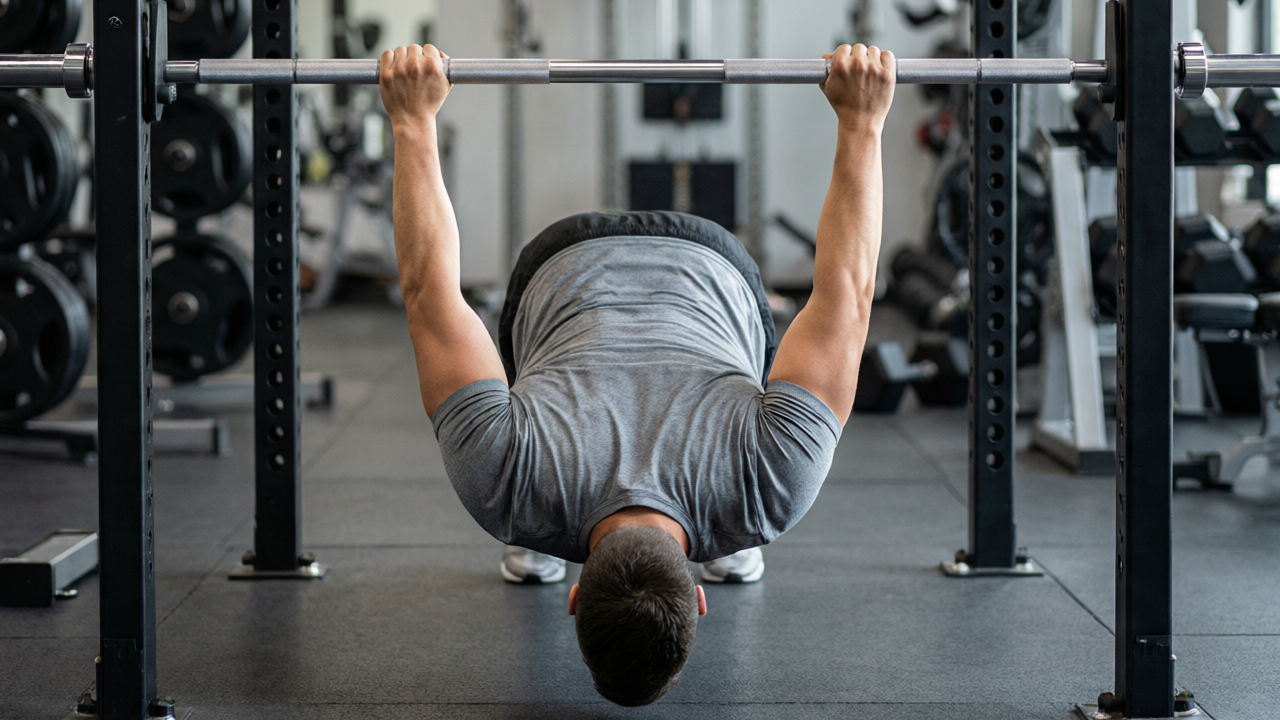
Inverted Row
inverted-row
Perhatikan
- caution · Rotator cuff tear — The cuff has to stabilise a fully-extended, loaded arm for every second you hang under the bar, which is a demanding job for healing tissue. Raise the bar to reduce how much of your bodyweight you are pulling, or substitute Cable Row with the feet on the floor so the arm never starts behind the body under load.
- caution · Shoulder impingement — Pulling with the elbows flared wide and the shoulders shrugged toward the ears narrows the space the tendons pass through. Pack the shoulders down before the first rep as step 5 says, keep the elbows nearer the ribs, and stop short of the point where the front of the shoulder catches. Substitute Doorway Row, where the torso stays upright and the arm finishes beside the hip.
- modify · Acute lower back injury — Step 4 exists because the hips sag first when the set gets long, and a sagging hinge puts the load onto the lumbar spine instead of the shoulder blades. Shorten the lever by walking the feet further under the bar, and stop the set the moment the line breaks. If the back is the thing that gives out, substitute Chest-Supported Row, which takes the whole holding demand away.
When you nail this horizontal pull, your back does all the talking. I want you to feel a deep squeeze between your shoulder blades with every rep, while your core stays tight to keep your body straight. Skip the swinging and focus on smooth tension that travels from your lats to your arms. Keep your shoulders packed and your grip steady. That steady burn across your upper back tells you everything you need to know.
Jika Anda Pemula
Start with your body positioned more upright to reduce the load, then gradually walk your feet forward as your back and arms grow stronger. Focus on keeping your glutes and abdominal wall tightly engaged to prevent your hips from sagging or hiking upward during the pull. If you feel your lower back arching excessively or your shoulders creeping toward your ears, pause immediately and reset your posture. True muscular failure here arrives as a sudden loss of control in the shoulder blades or a sharp, localized tremor in the mid-back, not a joint ache. Stop the set the moment your form breaks down or your chest cannot reach the anchor without compensating. Avoid shrugging your shoulders at the top or yanking with your arms, as these shortcuts bypass the back muscles entirely. I want you to prioritize smooth, controlled range of motion over adding extra repetitions. Breathe consistently, keep your neck neutral, and trust that consistent practice will naturally lower your body angle while keeping your spine perfectly aligned.
Melangkah Lebih Jauh
Extend that one-second pause at the top to a full two or three seconds, forcing your mid-back to hold peak contraction under load. Keep the pull itself brisk but controlled, and lower yourself over a deliberate three-second count. The 8–12 rep range builds muscle; once you manage three clean sets of 12 with a horizontal body position, add a weighted vest rather than chasing higher reps. If you are using TRX straps, "harder" means walking your feet further forward until your torso is nearly parallel to the floor, maximising the leverage disadvantage. When a weighted vest at a flat angle no longer challenges you in this rep range, progress to front lever raises or tuck rows on rings. Switching from the pull-up bar to TRX straps introduces instability, demanding more from your rotator cuff and core. An underhand grip shifts emphasis toward the biceps and lower lats while keeping the movement pattern identical.
Kesalahan Umum
Many lifters allow their hips to sag toward the floor, turning a horizontal pull into a fragmented chain movement that overloads the lumbar spine. Others rush the descent, dropping their bodyweight instead of controlling it through the eccentric phase, which strips away valuable time under tension. A frequent error is initiating the pull with the arms rather than the shoulder blades, leaving the upper back under-stimulated while the biceps take over the workload. Finally, excessive neck extension or chin-jutting disrupts spinal alignment and creates unnecessary tension across the cervical spine. Keep your torso rigid, move deliberately, and let your scapulae drive the motion.
Rutinitas
- Sets
- 3
- Reps
- 8-12
- Rest
- 90s
- Tempo
- 2-1-1-0
- RPE
- 7
- Per set
- ~90s
- Frekuensi
- 2-3x/week
Lower the bar or elevate your feet to increase the lean angle, then add a weighted vest once you consistently exceed the top rep target.
Cues
Otot
- Upper back
- Lats
- Biceps
- Forearms
- Abs
Peralatan
- Bodyweight
- TRX / suspension straps
- Pull-up bar
- 1
Position yourself directly beneath a waist-height bar or suspended rings.
- 2
Grip the handles shoulder-width apart with palms facing each other.
- 3
Walk your feet forward until your arms extend fully and your body forms a straight diagonal line.
- 4
Brace your core, squeeze your glutes, and lock your knees to prevent sagging at the hips.
- 5
Inhale deeply to brace your midsection and pack your shoulders down.
- 6
Exhale as you pull your sternum toward the handles by driving your elbows backward.
- 7
Squeeze your shoulder blades together at the top and hold for a one-second count.
- 8
Inhale slowly while lowering your torso back to the start with controlled, straight arms.
- 9
Step your feet backward, release the grip completely, and return to a standing position to reset.