
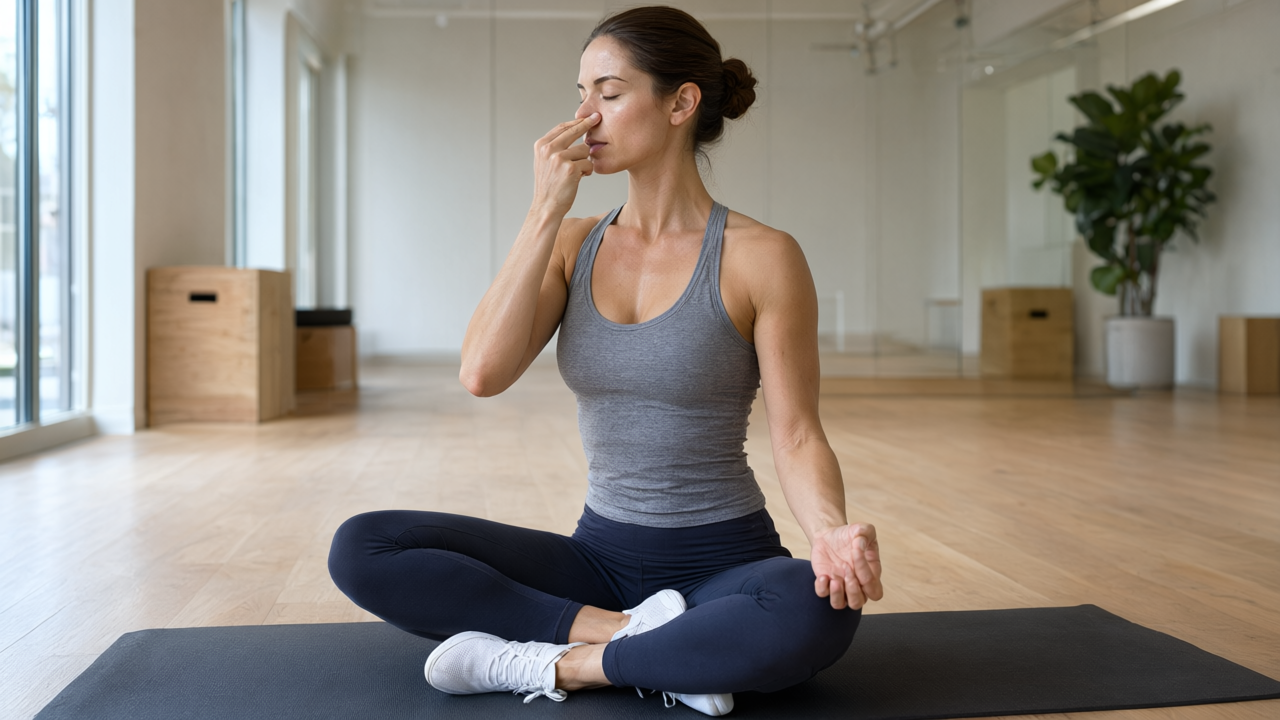
Alternate Nostril Breathing
alternate-nostril-breathing
I want you to feel an immediate wave of calm settle through your nervous system as you begin. Each balanced inhale and exhale should feel smooth, rhythmic, and effortlessly controlled, like drawing water from a still well. When performed correctly, your mind clears, your shoulders drop, and your breath naturally deepens without strain. This practice isn’t about forcing air; it’s about finding quiet symmetry and letting your body’s natural parasympathetic rhythm take over completely.
If you’re new to this
Keep your posture relaxed but upright; slouching compresses the diaphragm and restricts airflow. Focus on drawing air smoothly without audible hissing or snorting, which signals unnecessary tension in the nasal passages or throat. If you feel lightheaded, dizzy, or experience a racing heartbeat, pause immediately and return to normal breathing. Beginners often press too hard against the septum or overextend the neck while reaching for the face. Keep your touch feather-light and let your wrist stay loose. It is completely normal to feel slightly uncoordinated at first. Your nervous system is learning a new rhythm, so prioritize consistency over speed. If one nostril feels naturally more congested, do not force air through it; simply adjust your pressure slightly or take a gentler breath. Trust the process, and the symmetry will emerge naturally.
Going further
Once six-second phases feel effortless, extend each inhale and exhale to eight or ten seconds. Harder here means duration and control rather than load; you are lengthening time under tension for the diaphragm and intercostals while keeping airflow completely silent. A two- to three-second pause after each exhale, before switching nostrils, deepens the parasympathetic response without introducing strain. Aim for twelve to fifteen cycles per set at this pace, practising daily if your schedule allows. When you can sustain ten-second phases across all sets without lightheadedness or audible breath, introduce a retention hold between the inhale and exhale, starting at four seconds and building gradually. This shifts the practice from simple balancing into deliberate breath capacity work. For variation, try performing the entire sequence whilst walking slowly, which challenges your ability to maintain diaphragmatic rhythm against movement, or pair it with a gentle seated spinal twist to explore how torso position alters nasal resistance.
Common mistakes
Practitioners frequently apply excessive pressure with the fingers, which collapses the nasal valve and creates artificial resistance. Many also rush the transition between sides, turning a calming practice into a frantic exercise that spikes the heart rate. Another common error involves shallow chest breathing instead of allowing the diaphragm to descend fully, which limits oxygen exchange and defeats the parasympathetic intent. Finally, holding the breath at the top of each cycle disrupts the natural flow and introduces unnecessary tension. Focus instead on seamless transitions, gentle finger placement, and uninterrupted, diaphragmatic airflow to maximize the restorative benefits.
Routine
- Sets
- 3
- Reps
- 8-12
- Rest
- 90s
- RPE
- 2
- Per set
- ~120s
- Frequency
- 3-5x/week
Gradually extend each cycle to six seconds per inhale and exhale while maintaining complete nasal silence.
Cues
Muscles
- Cardiovascular
Equipment
- Bodyweight
- 1
Sit comfortably with your spine tall and shoulders relaxed.
- 2
Rest your left hand gently in your lap, palm facing upward.
- 3
Bring your right hand toward your face, folding your index and middle fingers toward your palm.
- 4
Use your right thumb to gently close your right nostril and inhale slowly through your left nostril.
- 5
Close your left nostril with your ring finger, release your right nostril, and exhale completely through the right side.
- 6
Inhale through the right nostril while keeping the left closed.
- 7
Close the right nostril with your thumb, release the left, and exhale fully through the left side.
- 8
Repeat this alternating cycle for eight to twelve complete rounds, maintaining a steady, unforced pace.
- 9
Lower your right hand to your lap and breathe naturally through both nostrils for three quiet cycles to reset.