
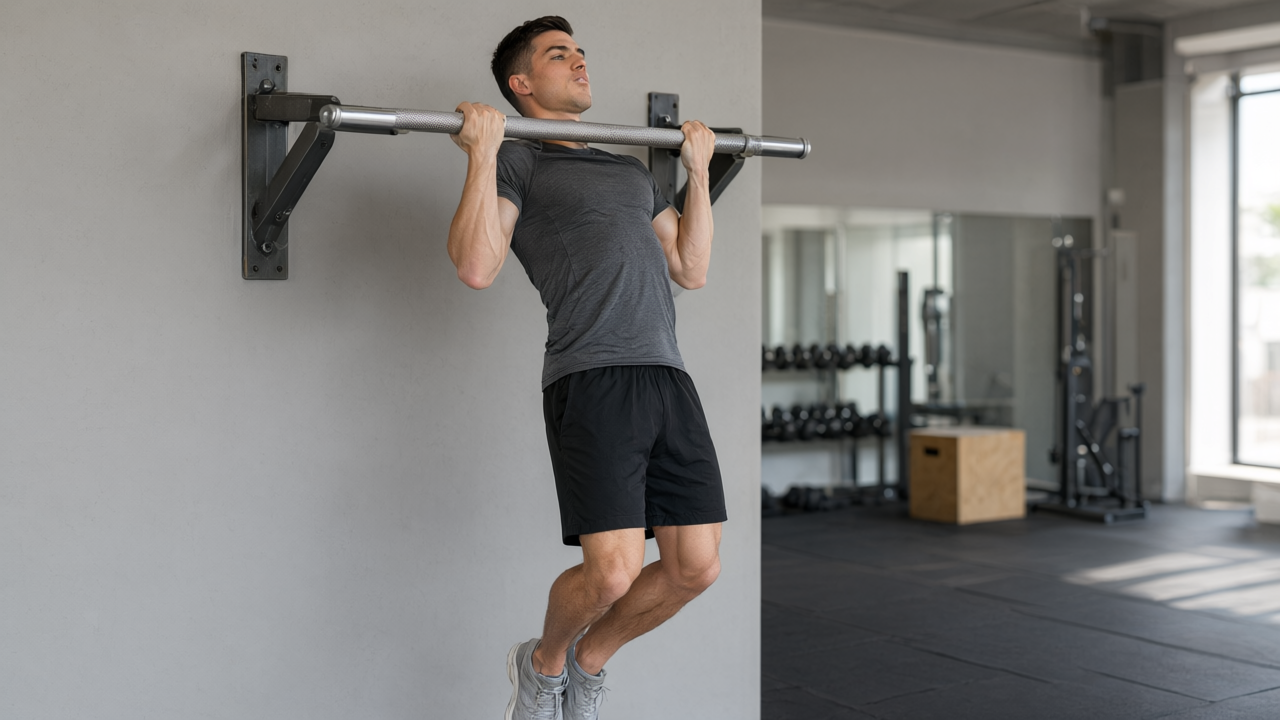
Chin-Up
chin-up
انتبه عند
- avoid · Rotator cuff tear — Hanging bodyweight and overhead pulling place extreme tensile stress on a healing rotator cuff. Instead, perform lat pulldowns with light resistance to train vertical pulling without full bodyweight load.
- avoid · Uncontrolled hypertension — Forceful exhalation against a braced core during heavy pulling creates dangerous spikes in blood pressure. Instead, perform seated cable rows with continuous breathing to train the back safely.
- caution · Shoulder impingement — The underhand grip internally rotates the humerus, narrowing the subacromial space during the pull. Instead, switch to a neutral-grip pull-up or lat pulldown to keep the shoulder joint open.
When I pull my chin past the bar, I feel a deep, controlled burn across my lats and biceps that tells me I’m moving with purpose. Good reps feel smooth, never jerky, with a steady tension from the dead hang to the top squeeze. My shoulders stay packed, my core stays braced, and each descent is slow and deliberate. That rhythmic, full-body connection is what turns a simple vertical pull into a true strength builder.
إذا كنت جديدًا على هذا
If you cannot yet complete a full chin-up, begin with dead hangs, scapular pulls, or assisted band variations to build foundational strength. Focus on keeping your ribs tucked and your lower back neutral throughout the movement. As you fatigue, you will notice your shoulders creeping toward your ears and your body beginning to swing or kip. When you can no longer pull your chest within a few inches of the bar or your form collapses into a frantic, jerking motion, it is time to stop. Do not force partial reps with compromised posture, as this shifts the load onto your neck and rotator cuffs. Instead, step down, reset your grip, and return to your baseline variation. Strength builds in the spaces where you maintain control, so celebrate the reps that feel deliberate and smooth. Use a box or resistance band to support your descent, emphasizing the eccentric phase to train your muscles for the upward drive. Consistency and patience will carry you to that first clean repetition.
المضي قدماً
Slowing the lowering phase to three or four seconds increases time under tension and builds connective tissue resilience, while a brief one-second pause at the dead hang eliminates any residual stretch reflex. Pulling up should remain brisk but controlled. The eight-to-twelve rep range suits hypertrophy well; if you can complete three sets of twelve cleanly, add load via a dipping belt rather than chasing higher reps, as sets beyond fifteen tend to test endurance more than strength. Once weighted chin-ups feel settled, shift into lower rep ranges of five to eight with heavier loads to prioritise maximal strength. When you are working with significant added weight comfortably, consider the archer chin-up, which shifts leverage towards one arm and serves as a bridge to the one-arm variation. A narrow underhand grip places greater demand on the biceps and inner lats, whilst a shoulder-width grip distributes effort more evenly across the back.
أخطاء شائعة
Most lifters compromise the chin-up by initiating the pull with their biceps instead of their back, which drastically limits leverage and overworks the forearms. Another frequent error is allowing the shoulders to shrug upward at the top of the movement, stripping the scapulae of their stabilizing role and placing unnecessary strain on the rotator cuffs. Many also sacrifice the bottom position by cutting the dead hang short or bouncing off the bottom stop, which eliminates the crucial stretch and resets your rhythm. Finally, excessive leg swinging and kipping turn a controlled strength movement into momentum-driven chaos, reducing muscular tension and increasing injury risk. Keep your torso still, initiate from the shoulder blades, and move through the full range of motion with deliberate control.
الروتين
- Sets
- 3
- Reps
- 8-12
- Rest
- 90s
- Tempo
- 2-0-1-0
- RPE
- 9
- Per set
- ~180s
- التكرار
- 2-3x/week
Add weight with a belt once you can complete all sets at the top of the rep range with strict form.
Cues
العضلات
- Lats
- Biceps
- Upper back
- Forearms
- Abs
المعدات
- Bodyweight
- Pull-up bar
- 1
Grasp the pull-up bar with an underhand grip, positioning your hands shoulder-width apart with palms facing your body.
- 2
Hang with straight arms, depress your shoulder blades, and cross your ankles to stabilize your lower body.
- 3
Inhale deeply to brace your core, then exhale forcefully as you bend your elbows and drive your chest toward the bar.
- 4
Continue pulling until your chin clears the bar, keeping your elbows tucked and avoiding swinging.
- 5
Hold the top position briefly while maintaining back tension, then prepare for a controlled descent.
- 6
Inhale slowly as you lower yourself under strict control, fully extending your arms before reaching the bottom.
- 7
Release the bar carefully, land softly on the floor, and reset your posture before the next repetition.