
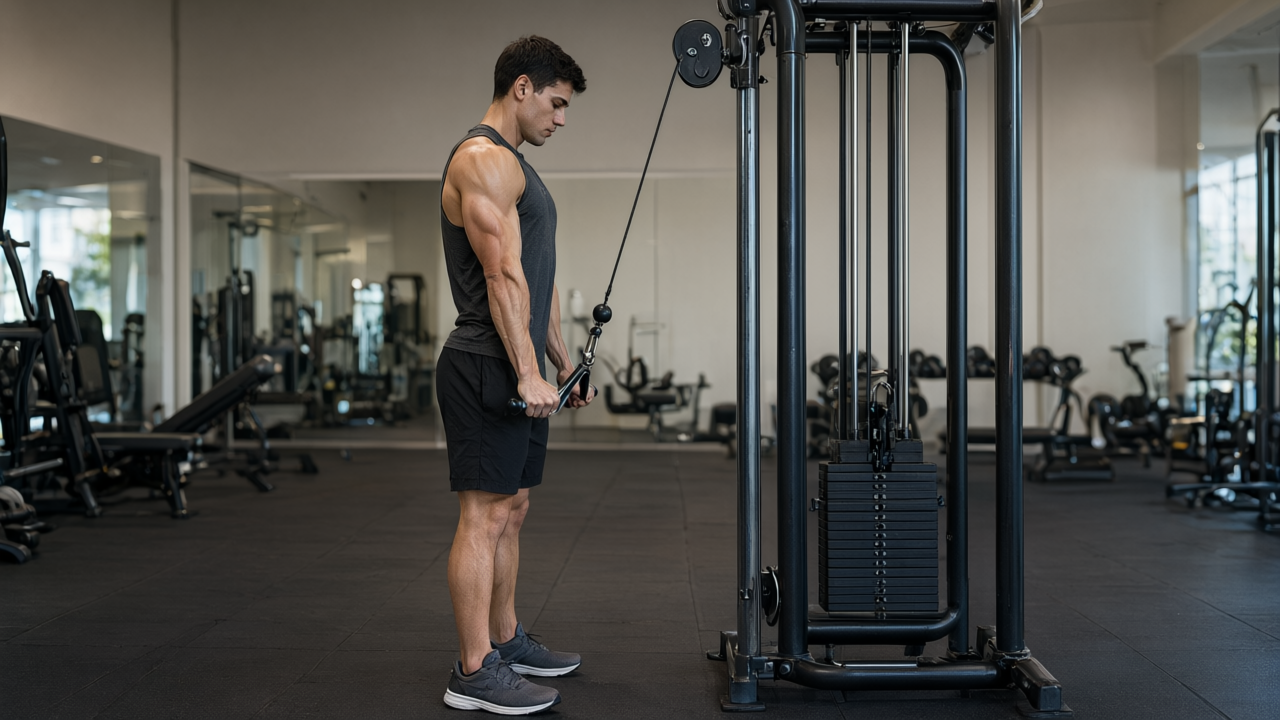
Tricep Pushdown
tricep-pushdown
注意
- caution · Rotator cuff tear — Standing at a cable with the elbows pinned to the ribs asks the cuff to hold the ball in the socket isometrically for the whole set while the triceps do the work, and a fatigued cuff lets the shoulder ride forward into the shrug that step 7 warns about. Lighten the stack, set the shoulder blades down before the first rep, and end the set while the position is still being held honestly. Substitute Tricep Kickback, where the upper arm rests against the side and the shoulder does no stabilising at all, or Bench Press if the goal is simply to load the arm. Pain that arrives deep in the shoulder rather than behind the elbow is a reason to have the cuff assessed before loading it again.
- caution · Shoulder impingement — Letting the shoulders roll forward or shrug under load compresses the subacromial space, so keep the range short — do not drive the hands past the hips — and set the shoulder blades down before the first rep. Do NOT substitute overhead cable tricep extensions: reaching the arm overhead into flexion is the position most likely to pinch an irritable shoulder. Instead take the arm behind the body with tricep kickbacks, or hold the pushdown at a lighter load and a shorter range. If pain arrives in the first few reps, stop loading it and have the shoulder looked at.
I want you to feel a clean, focused burn along the back of your arms with every controlled descent and powerful extension. Good reps feel smooth and deliberate, keeping tension locked on your triceps while your shoulders stay completely relaxed. Focus on driving the weight down with pure elbow extension, pausing at full contraction, and resisting the urge to rush. Breathe steadily, stay tight, and let each rep build a sharper, stronger mind-muscle connection.
如果您是新手
As you learn this movement, prioritize control over heavy weight. Your elbows should act like fixed hinges, pinned comfortably to your sides throughout every single rep. If you feel your shoulders creeping up toward your ears or your torso leaning forward to push the weight down, lighten the stack immediately. True muscle failure here means your triceps simply cannot extend your elbows further without your shoulders taking over, not a sudden joint ache. Stop the set the moment your form breaks or you feel sharp elbow discomfort. Beginners often compensate by using momentum or letting the cable pull them upward too quickly. Keep your chest proud, brace your midsection lightly, and move with deliberate rhythm. Trust that lighter loads moved with perfect isolation will build lasting strength far faster than heavy, sloppy repetitions. Focus on the squeeze, respect the eccentric phase, and your arms will respond quickly.
進一步探索
To push this movement further, extend the eccentric phase to three or four seconds and add a deliberate two-second hold at full extension. This extra time under tension forces the triceps to work harder without adding plates. The eight-to-twelve rep range suits hypertrophy well, but sets of fifteen to twenty with a shorter rest expose any endurance gaps. Add weight only when you can complete every rep in your target range with that extended lowering phase intact. Once the straight bar feels limiting, switch to the rope attachment; spreading the rope apart at the bottom increases the range of motion and places greater demand on the lateral head. If you have outgrown bilateral pushdowns entirely, move to single-arm cable pushdowns. Working one arm at a time removes any strength imbalance between sides and lets you rotate slightly at the shoulder to achieve a deeper contraction.
常見錯誤
Most lifters sabotage their progress by allowing their shoulders to roll forward or shrug upward, which instantly shifts the workload away from the triceps and onto the anterior delts. Another frequent error is flaring the elbows outward instead of keeping them tucked close to the ribcage, creating unnecessary joint stress and reducing mechanical advantage. Many also rely on body momentum by leaning heavily into the machine or swinging their hips to drive the weight down, which completely breaks the isolation. Finally, rushing the upward phase and letting the cable snap the arms back eliminates valuable time under tension and increases the risk of tendon irritation.
訓練計劃
- Sets
- 3
- Reps
- 8-12
- Rest
- 90s
- Tempo
- 2-0-2-0
- RPE
- 8
- Per set
- ~90s
- 頻率
- 2-3x/week
Gradually increase the cable stack by one or two plates once you can comfortably complete all sets with strict form.
Cues
肌肉
- Triceps
- Forearms
廚具
- Cable machine
- 1
Stand facing the cable machine with your feet shoulder-width apart and a slight bend in your knees.
- 2
Grip the straight bar or rope attachment with an overhand grip, palms facing down, and pull your elbows tight into your ribs.
- 3
Keep your shoulders packed down and your torso upright as you inhale to stabilize your core.
- 4
Exhale while driving the attachment down in a controlled arc until your elbows are fully locked.
- 5
Hold the bottom position for a brief second, squeezing your triceps hard to maximize tension.
- 6
Inhale and slowly reverse the motion, allowing your forearms to rise until they are parallel to the floor.
- 7
Maintain constant tension by stopping just before your shoulders begin to roll forward or shrug.
- 8
Reset your posture, check your elbow alignment, and repeat for the target number of repetitions.