
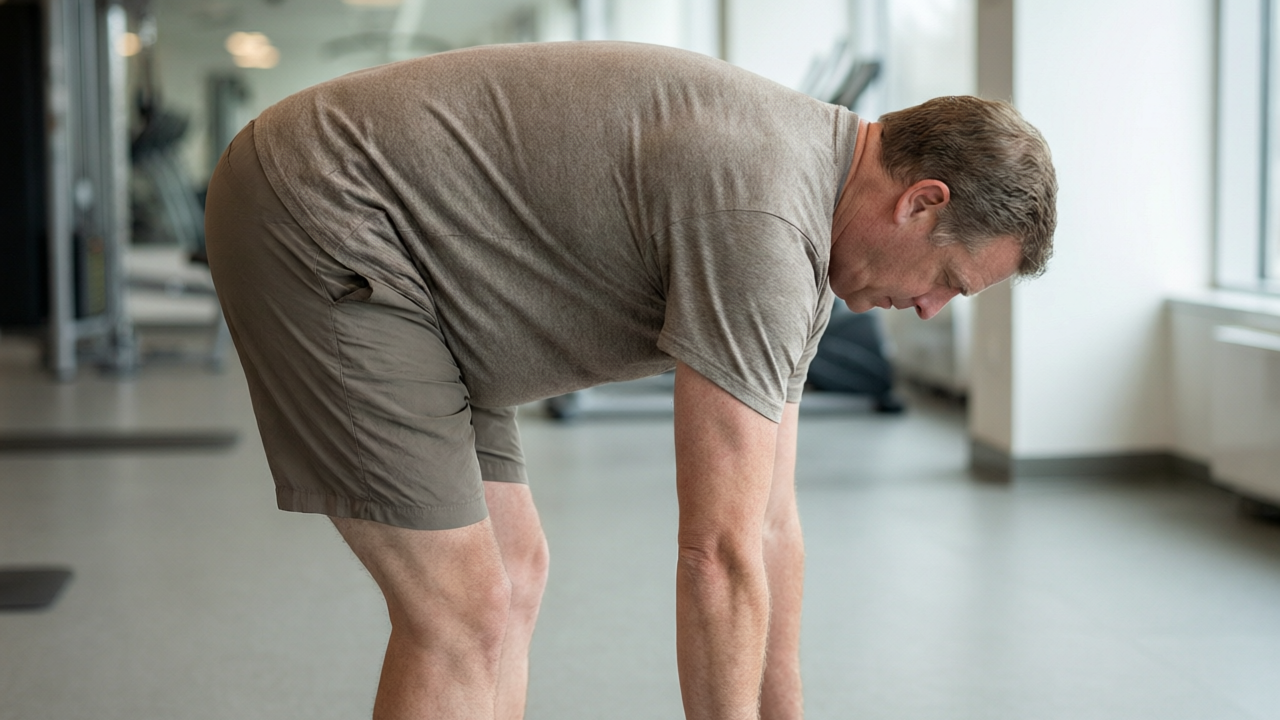
Forward Fold
forward-fold
When I hinge forward, I feel a steady, warm release traveling down my hamstrings and lower back. There is no sharp tension, just a gentle surrender to gravity as my spine lengthens and my breath naturally deepens. Each repetition feels like a quiet reset for my nervous system, leaving me grounded and noticeably lighter. You will recognize that satisfying stretch without strain, just smooth, mindful mobility.
如果您是新手
If you are new to this movement, start by standing with your back against a wall to feel a true hip hinge before stepping away. Bend your knees generously at first; the goal is a gentle stretch along the backs of your legs, not a test of flexibility. You will know you have reached your working limit when the tension becomes a steady, manageable pull rather than a sharp strain or a burning sensation in your lower back. Stop immediately if you feel any pinching in your lumbar spine or dizziness from blood rushing to your head. A very common compensation is rounding your upper back aggressively to force your hands closer to the ground. Instead, keep your chest open, let your head hang heavy, and trust that consistent practice will gradually increase your range. Focus on breathing deeply into your belly and ribs to signal your nervous system that it is safe to relax. You can always place your hands on a sturdy chair or yoga blocks to bridge the gap to the floor while you build strength and tissue tolerance.
進一步探索
To get more from this fold, slow the descent to four or five seconds and pause at your deepest comfortable point for two full breath cycles before rising. That extended time under tension teaches the hamstrings to yield rather than guard. Progress by adding five seconds to each hold weekly, working towards sixty-second sets. Making it harder here means increasing duration, deepening the hinge through active core engagement, or shifting your weight slightly forward onto the balls of your feet to intensify the stretch without bouncing. Once you can hold a flat-backed fold comfortably for three sets of sixty seconds with straighter legs, progress to a single-leg variation, folding over one planted foot while extending the other behind you. You might also try the seated version on the floor, which removes the balance demand and isolates the posterior chain further. Both shift the leverage and require greater hamstring length.
常見錯誤
Most practitioners rush the descent by bending at the waist instead of hinging at the hips, which dumps excessive compressive load into the lumbar spine rather than loading the hamstrings. Another frequent error is locking the knees completely straight, which bypasses the muscular tissue and places unnecessary shear force on the posterior joint capsule. Many also hold their breath or tense their shoulders and jaw while trying to reach the floor, which triggers a protective stretch reflex that actually shortens the muscles you are trying to lengthen. Finally, people often bounce aggressively to gain depth, which risks micro-tears in the connective tissue and defeats the purpose of a controlled, parasympathetic stretch.
訓練計劃
- Sets
- 3
- Reps
- 20-30s
- Rest
- 30s
- RPE
- 3
- Per set
- ~60s
- 頻率
- 4-5x/week
Increase hold duration by 5 seconds each week or deepen the range of motion by actively engaging the core and relaxing the posterior chain.
Cues
肌肉
- Hamstrings
- Lower back
- Glutes
- Calves
廚具
- Bodyweight
- 1
Plant your feet hip-width apart with a slight bend in the knees to protect the lower back.
- 2
Inhale deeply while drawing the belly toward the spine to stabilize the core.
- 3
Hinge forward from the hips on a controlled exhale, keeping the back flat as long as comfortable.
- 4
Lower the torso until a gentle stretch forms along the back of the legs and lower back.
- 5
Release the head and neck completely, allowing the arms to hang heavy toward the floor.
- 6
Maintain the folded position for three steady breaths, relaxing deeper with each exhale.
- 7
Inhale to activate the leg muscles, then slowly roll the spine upward one vertebra at a time.
- 8
Finish in a tall standing posture with the shoulders relaxed and weight evenly distributed.