
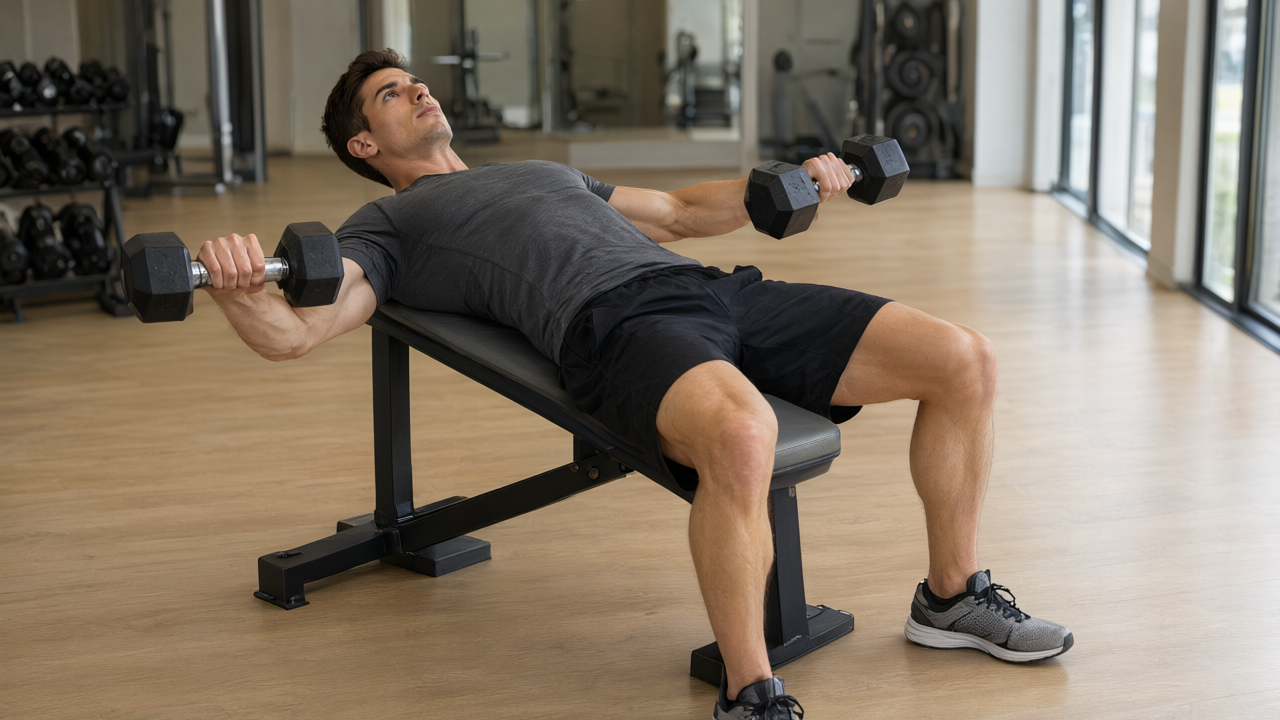
Dumbbell Fly
dumbbell-fly
注意
- avoid · Rotator cuff tear — Lowering dumbbells in a wide arc creates dangerous tensile load directly across a healing or compromised rotator cuff. Instead, use cable crossovers with light resistance to train the chest without stressing the torn tissue.
- avoid · Shoulder impingement — The wide arc places extreme shear stress on the shoulder capsule and can pinch the rotator cuff tendons. Instead, perform floor presses to limit range of motion while still targeting the chest safely.
- caution · Pregnancy — Lying supine on a flat bench can compress the vena cava and reduce blood flow during later stages of pregnancy. Instead, perform incline dumbbell flyes at a thirty-degree angle to keep the torso elevated while maintaining the chest stretch.
I want you to feel a deep, controlled stretch across the front of your shoulders and upper chest as your arms open wide, followed by a smooth, tension-filled squeeze that brings the weights back together. Good reps prioritize a gentle arc over heavy lifting, keeping your core braced and your shoulder blades anchored. Focus on the mind-muscle connection, letting your chest fibers do the work while your joints stay safe and supported throughout the entire range.
如果您是新手
As a beginner, prioritize control over weight. Your elbows should maintain a soft, fixed bend throughout the movement, roughly 10 to 20 degrees, to protect your shoulder joints. You should feel the stretch primarily in your chest, not your shoulders. If you experience sharp pinching in the front deltoid or upper chest, you have gone too deep; shorten your range slightly. True muscular failure here feels like a heavy, burning fatigue across your sternum that prevents you from completing the upward arc with control, not joint pain or shaking instability. Stop immediately if your shoulders roll forward excessively or your lower back arches off the bench, as these compensations shift tension away from your chest and into vulnerable joints. Keep your ribcage down and your core engaged to maintain a stable base. Trust that lighter weights with flawless technique will build a stronger, more resilient foundation far faster than struggling with heavy loads.
進一步探索
Lengthen the lowering phase to three or four seconds and add a distinct two-second pause at the bottom of the arc. This extended stretch under load is where the fly does its best work, so treat it as the priority rather than rushing back up. The eight-to-twelve rep range suits this movement well; if you can complete all sets with a controlled tempo and full stretch, increase the dumbbell weight by the smallest available increment. Because the lever arm is long and the shoulder joint is vulnerable, chasing heavier loads matters far less than accumulating time under tension. Once you handle your working weight for three sets of twelve with a deliberate three-second descent and a paused stretch, move on to the incline dumbbell fly to bias the upper chest fibres. You might also try alternating arms, pressing one dumbbell up while the other remains in the stretched position, which demands considerably more stability from your ribcage and core.
常見錯誤
The most frequent error is treating this exercise like a heavy press by lowering the weights too far or locking out the elbows at the bottom, which places dangerous shear stress on the shoulder capsule. Many lifters also rush the descent, losing the constant tension that makes flyes effective, while others compensate by excessively arching the lower back to gain momentum. Additionally, flaring the wrists backward instead of keeping them neutral and aligned with the forearms disrupts the proper loading pathway and shifts the strain away from the pectorals. Focus on a slow, deliberate tempo and let the chest dictate the movement rather than relying on momentum or excessive range of motion.
訓練計劃
- Sets
- 3
- Reps
- 8-12
- Rest
- 90s
- Tempo
- 2-0-2-0
- RPE
- 7
- Per set
- ~90s
- 頻率
- 2-3x/week
Gradually increase the dumbbell weight by 2.5 to 5 pounds once you can complete all sets with perfect control and full range of motion.
Cues
肌肉
- Chest
- Shoulders
- Abs
廚具
- Dumbbells
- Bench
- 1
Sit on the edge of a flat bench and plant your feet firmly on the floor, shoulder-width apart.
- 2
Pick up a pair of dumbbells and carefully lie back, positioning the weights directly over your shoulders with palms facing inward.
- 3
Press the dumbbells straight up until your arms are nearly locked, then lower your shoulder blades flat against the bench.
- 4
Inhale deeply as you slowly lower the weights outward in a wide, controlled arc, stopping when your elbows reach chest height or you feel a firm stretch.
- 5
Exhale smoothly while reversing the arc, keeping a slight bend in your elbows, and guide the dumbbells back to the starting position over your chest.
- 6
Squeeze your pectoral muscles at the top for one second before immediately beginning the next repetition.
- 7
After completing your final rep, lower the weights to your thighs, sit up, and place them securely on the floor.