
Butt Kicks
butt-kicks
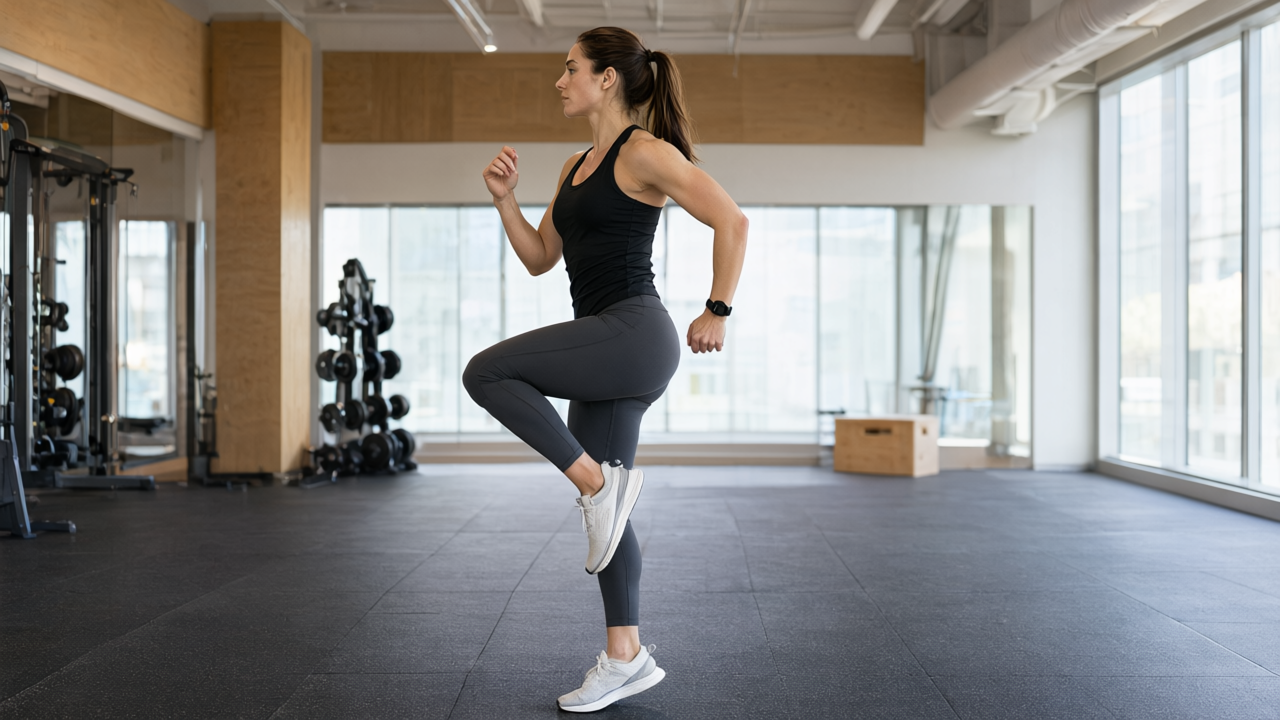
When I cue you into butt kicks, I want you to feel that light, rhythmic snap as your heels brush your glutes without forcing the motion. Good reps flow with a steady cadence, keeping your torso tall and your core quietly engaged. Focus on the quick, elastic recoil of your calves and hamstrings rather than grinding out height. It should feel like a brisk, controlled bounce that leaves your legs warm and your breathing steady.
如果您是新手
As a beginner, prioritize rhythm over speed or height. Keep your torso upright and avoid leaning forward, which shifts stress to your lower back and disrupts your balance. Good form feels like a light, bouncing skip where your heels naturally graze your glutes without you actively pulling them up. If you feel tightness behind your knees, a sharp calf cramp, or notice your lower back arching excessively, pause immediately and reset your posture. Common compensations include overstriding, slouching your shoulders, or letting your knees splay outward. Instead, keep a slight bend in your standing leg, engage your core gently, and let the movement originate from the ankle and knee. Start slow to build neuromuscular coordination, and only add pace once you can maintain a quiet upper body for the full duration. Consistency here builds the elastic leg mechanics needed for more intense running drills later.
進一步探索
To get more from butt kicks, manipulate your tempo deliberately. Spend a few sets working at a slower cadence with a distinct pause on the ball of the foot before each heel strike to build ankle stiffness and proprioception, then shift to rapid-fire sets where ground contact is as brief as possible to train elastic recoil. For bodyweight cardio drills like this, harder means increasing pace, extending time under tension beyond 45 seconds, or reducing your rest intervals rather than adding load. Once you can sustain 60 seconds at a high cadence without your torso shifting or your heels missing their target, progress to travelling butt kicks, moving forward across the floor to integrate horizontal force production. You might also try the single-leg version, performing all repetitions on one side before switching, which exposes asymmetries in hamstring speed and ankle stability that alternating reps often mask.
常見錯誤
Most practitioners sabotage this drill by turning it into a frantic sprint, which breaks posture and sacrifices the intended neuromuscular rhythm. Leaning forward from the waist is another frequent error, as it overloads the lumbar spine and forces the hips into an inefficient forward drive. Many also overcompensate by actively pulling the heel upward with the hamstrings rather than allowing a quick, elastic rebound from the ankle. Finally, letting the arms swing wildly across the torso disrupts balance and wastes energy that should remain focused on light, precise foot placement. Keeping the movement contained and upright preserves the drill’s true purpose.
訓練計劃
- Sets
- 3
- Reps
- 30-45 seconds
- Rest
- 90s
- RPE
- 3
- Per set
- ~60s
- 頻率
- 2-3x/week
Increase your cadence or extend each set by ten seconds while maintaining strict form.
Cues
肌肉
- Hamstrings
- Calves
- Hip flexors
- Quadriceps
廚具
- Bodyweight
- 1
Stand tall on a flat surface with your feet hip-width apart and arms relaxed at your sides.
- 2
Inhale deeply to brace your core, then shift your weight onto your left leg while lifting your right knee slightly.
- 3
Exhale sharply as you quickly kick your right heel toward your right glute, keeping the movement controlled and rhythmic.
- 4
Land softly on the ball of your right foot and immediately transition your weight back to your left leg.
- 5
Inhale briefly, then repeat the quick heel kick with your left leg while maintaining an upright posture.
- 6
Continue alternating legs at a steady, brisk pace for your target duration or rep count.
- 7
Exhale fully as you slow your cadence, plant both feet firmly, and return to your starting stance.