
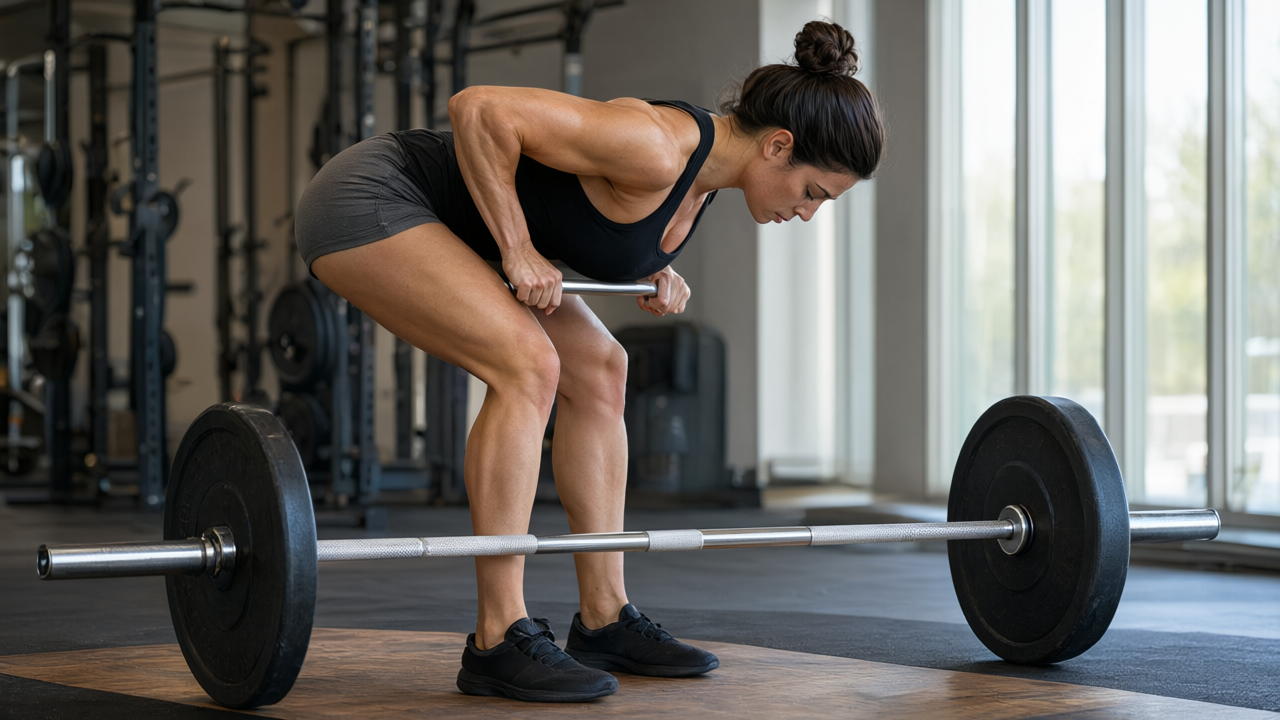
Pendlay Row
pendlay-row
注意
- avoid · Uncontrolled hypertension — Explosive pulls from a dead stop combined with maximal breath-holding bracing cause rapid blood-pressure spikes. Instead, perform lighter dumbbell rows with continuous breathing to reduce cardiovascular strain.
- avoid · Acute lower back injury — The deep hip hinge and heavy spinal bracing place dangerous shear forces on a compromised lumbar spine. Instead, perform chest-supported rows to train horizontal pulling without loading the lower back.
- avoid · Herniated disc — Rounding the lower back under load or failing to brace properly creates compressive and shear stress that can worsen disc herniation. Instead, use seated cable rows with an upright torso to protect the spine.
- caution · Pregnancy — Deep forward hinging and intense core bracing increase intra-abdominal pressure against the growing belly. Instead, perform incline bench rows to maintain horizontal pulling strength without compressing the abdomen.
When I lock into a proper Pendlay row, every rep feels like a crisp, explosive reset from the floor. I feel my lats fire instantly, dragging the bar straight to my lower ribs without cheating or spinal rounding. That dead stop at the bottom forces me to generate raw tension from absolute zero, making each pull brutally honest. I love how my entire posterior chain wakes up, delivering pure, unadulterated horizontal power with zero wasted momentum.
はじめての方へ
When you first attempt this, start with an empty barbell to master the hinge. Focus on keeping your lower back flat and your knees only slightly bent. If you feel your spine rounding or your lower back burning intensely, stop immediately and reduce the weight. True failure here arrives when you can no longer maintain a rigid torso or you must use your hips to swing the weight upward. Common compensations include shrugging your shoulders toward your ears or letting the bar drift away from your body, which shifts the tension away from your target muscles. I encourage you to treat the floor reset as your moment to recalibrate. Breathe deliberately, lock your core, and pull only as fast as your form allows. Consistency with lighter loads will rapidly build the posterior chain endurance you need for heavier training.
さらに先へ
The dead stop is the defining feature here, so treat it as a deliberate pause rather than a brief rest. Let the bar settle completely on the floor for one to two seconds between reps, then pull with maximum intent. That contrast between stillness and speed builds genuine starting strength. Sets of six to eight suit heavy loading best, while eight to ten reps develop muscular endurance across the upper back. Add 2.5 kg to the barbell only when you complete every prescribed rep across all sets without your torso rising above parallel. If you consistently hit the top of your rep range with strict form, you are ready to progress toward heavier Pendlay rows or transition into barbell bent-over rows for continuous tension work. For variation, try a wider grip to shift emphasis toward the rear deltoids and mid-traps, or use lifting straps when your grip fails before your back does.
よくあるミス
Most lifters ruin the movement by failing to reset the bar on the floor, turning it into a momentum-driven bent-over row. Others round their lower back under heavy loads, which places dangerous shear forces on the lumbar spine and compromises stability. A third frequent error involves pulling the bar with the arms instead of driving through the elbows, which drastically reduces upper back engagement. Finally, many athletes allow their hips to rise during the pull, shifting the workload toward the quads and breaking the strict horizontal pulling plane.
ルーティン
- Sets
- 3
- Reps
- 6-10
- Rest
- 90s
- Tempo
- 2-0-1-0
- RPE
- 8
- Per set
- ~180s
- 頻度
- 2-3x/week
Add 2.5-5 lbs to the bar once you complete the upper rep target with strict form across all sets.
Cues
筋肉
- Upper back
- Lats
- Biceps
- Shoulders
- Lower back
- Hamstrings
道具
- Barbell
- 1
Position a loaded barbell flat on the floor directly in front of your shins.
- 2
Stand with feet shoulder-width apart and toes pointed slightly outward.
- 3
Hinge at the hips until your torso is parallel to the floor, maintaining a flat back.
- 4
Grip the barbell just outside your knees with a firm overhand grip.
- 5
Inhale deeply and brace your core to stabilize your spine.
- 6
Pull the bar explosively toward your lower sternum by driving your elbows straight back.
- 7
Squeeze your shoulder blades together at the top of the movement.
- 8
Lower the bar under control until it comes to a complete dead stop on the floor.
- 9
Reset your posture, release the core brace, and prepare for the next repetition.