
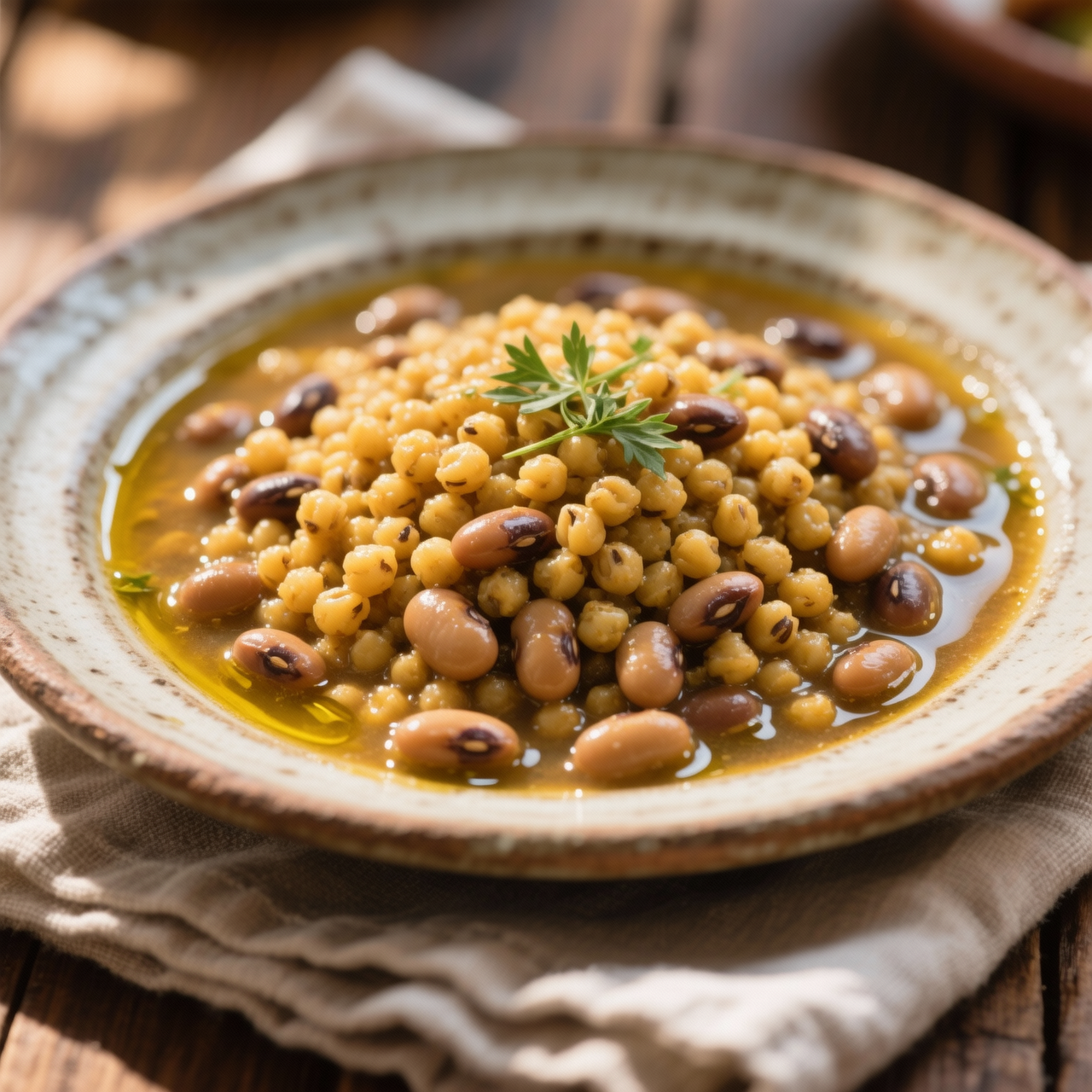
Umngqusho (samp and beans)
Umngqusho is the quiet heartbeat of South African home cooking, a slow-simmered union of crushed dried corn and sugar beans that has sustained generations. I first learned its rhythms from my grandmother’s heavy cast-iron pot, where patience wasn’t just a virtue but a requirement. This dish matters because it transforms humble, pantry-stable legumes into something profoundly comforting and deeply nourishing, all while remaining naturally plant-based. Historically rooted in Xhosa and Zulu traditions, it became a national symbol of resilience, famously favored by Nelson Mandela during his long years of activism. Yet, despite its cultural weight, modern shortcuts have diluted it. You will find canned versions or dehydrated instant mixes on supermarket shelves for around forty rand a tin, but they are typically drowned in sodium, thickened with artificial stabilizers, and stripped of the earthy, nutty sweetness that defines the real thing. The texture is either suspiciously uniform or unpleasantly mushy, completely bypassing the soulful alchemy of time. When you cook it from scratch, the most common pitfalls are rushing the soak, salting the water before the kernels soften, or letting the pot scorch as the starch settles. The secret is a long, gentle simmer, topped up with plain water, and a final vigorous mash with a wooden spoon that coaxes the starches into a velvety, cohesive sauce. It is a batch cook's dream, and once you taste the honest depth of properly coaxed corn and beans, no shop-bought shortcut will ever compare.
Nutrition
| Per serving | Calories | Protein | Carbs | Fat | Sat fat | Fibre | Sugar | Sodium |
|---|---|---|---|---|---|---|---|---|
| beginner | 724kcal | 24g | 127g | 13g | 2g | 13g | 8g | 2929mg |
| intermediate | 729kcal | 24g | 128g | 14g | 2g | 14g | 7g | 2930mg |
| expert | 738kcal | 24g | 131g | 13g | 2g | 14g | 9g | 2932mg |
Per serving · Ava-estimated — a guide, not a clinical figure.
- 400 gsamp— Dried, rinsed thoroughly until water runs clear
- 250 gsugar bean— Dried, sorted to remove stones or debris, then rinsed
- 1 mediumonion— Finely diced
- 4 piecegarlic clove— Minced
- 45 mlvegetable oil— Sunflower or canola oil preferred
- 2000 mlvegetable stock— Low-sodium, room temperature or cold
- 2 piecebay leaf(optional)— Dried, for aromatic depth
- 12 gsalt— Fine sea salt, add only after legumes soften
- 5 gblack pepper— Freshly ground
- 2 piecetomato
- 10 gcoriander seeds
- 200 gtomatoes
- 30 gginger
- 400 mlcrushed tomatoes
- 5 gthyme
This beginner-friendly Umngqusho strips away the guesswork of traditional slow-cooking while keeping every ingredient entirely from scratch. Unlike the £8–10 frozen or tinned ready-meals sold in supermarkets—which often rely on heavy sodium, artificial thickeners, and over-processed maize that turns to mush—this version builds a rich, comforting texture using whole dried samp and sugar beans simmered gently with fresh aromatics. The key difference here is the simplified one-pot method and forgiving visual cues instead of strict timers. You will soak the grains overnight, then let them simmer slowly until tender, adding a quick pan-fried tomato and onion base halfway through. Watch closely during the final thirty minutes: the liquid should reduce to a thick, glossy coating that clings to each grain, not a dry crumble or a soupy puddle. Stir occasionally to prevent sticking, and rely on a taste test for doneness; the beans should yield easily to a spoon without collapsing. This approach guarantees a deeply savoury, fibre-rich main dish that reheats beautifully and costs pennies per portion. Freeze leftovers in single servings for effortless weekday meals that actually taste like home cooking, not factory production.
Equipment
- Heavy-bottomed Dutch oven— essential for even heat during long simmer
- Colander— for rinsing soaked beans and samp
- Wooden spoon— gentle stirring to avoid crushing grains
Method
- 1
Rinse the soaked samp and sugar beans thoroughly, then place them in a heavy pot with fresh cold water and bring to a boil.
Use three times the volume of water to the grains.
initial boil~ 10 min - 2
Reduce the heat to low, cover partially, and simmer until the samp splits and the beans soften.
Add a splash of boiling water if the pot looks dry.
gentle simmer~ 90 minTricky bit - 3
Heat vegetable oil in a separate pan and cook diced onion, grated tomato, and crushed garlic until the mixture thickens into a coarse paste.
Stir frequently to prevent the tomato from scorching on the edges.
sweating~ 10 min - 4
Fold the aromatic paste and salt into the simmering beans, then cook uncovered until the liquid reduces to a glossy coating.
The dish is ready when a spoon dragged through the bottom leaves a clear trail that slowly fills back in.
reduction~ 15 min
Cooking from frozen
Thaw overnight in the fridge, then gently reheat in a heavy pot with a splash of water to restore the creamy consistency.
Storage times are a guide — always use your judgement and store food safely.