
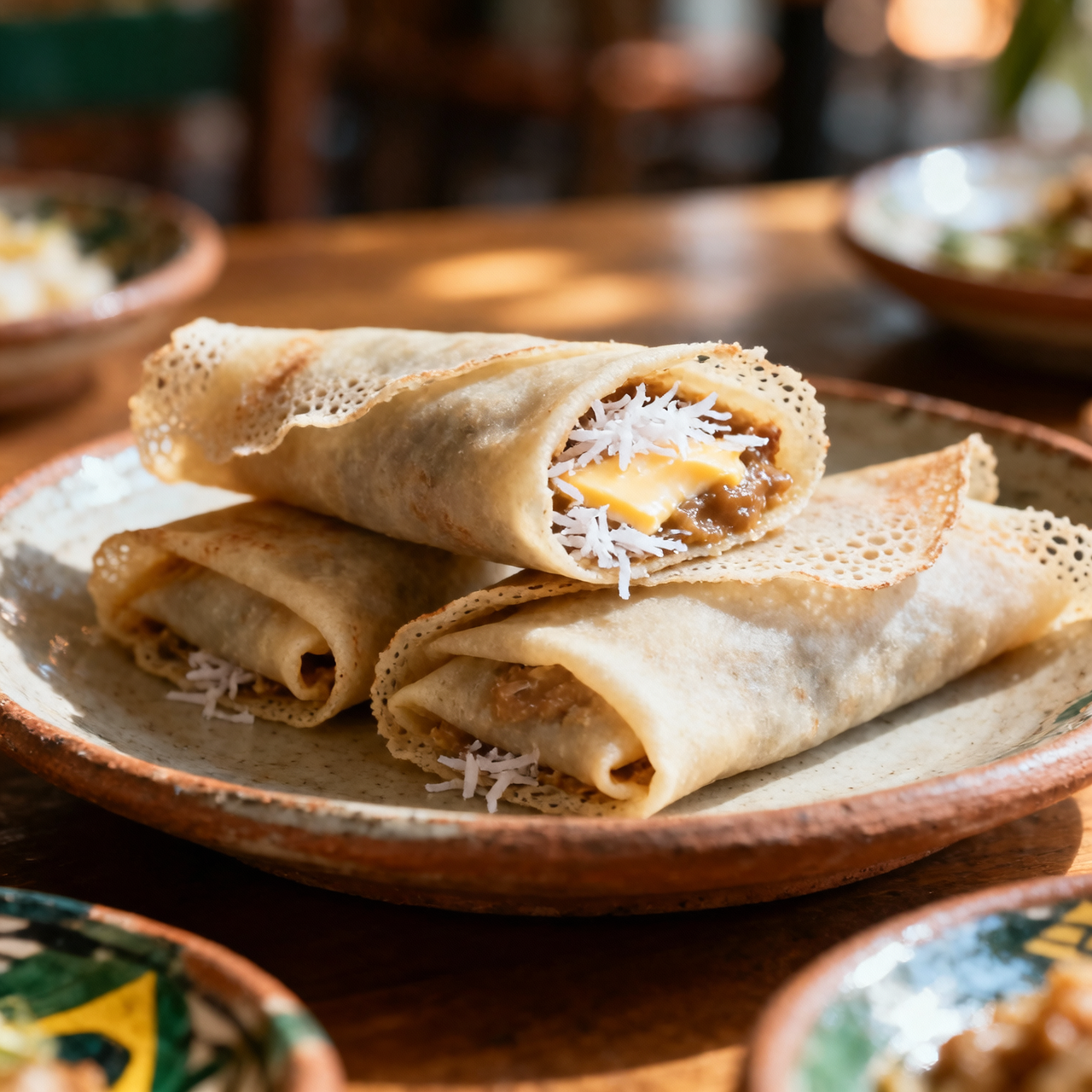
Tapioca Crepes (Beiju)
Beiju, or tapioca crepes, holds a deeply cherished place in Brazilian breakfast culture, originating from the Indigenous Tupi people who first cultivated and processed cassava. For me, making beiju is about honoring that ancient, beautifully simple alchemy of turning a humble root into something magical. When you hydrate tapioca starch and let it hit a hot griddle, it instantly fuses into a delicate, chewy, and naturally gluten-free crepe without needing a single binder or egg. This from-scratch approach is a massive win over the shop-bought alternatives. Pre-packaged gluten-free breakfast wraps or frozen tapioca crepes you find in the supermarket are not only shockingly expensive—often costing three times as much per serving as pure starch—but they are also riddled with stabilizers, gums, and preservatives that leave them with a sad, gummy texture and a bland, starchy aftertaste. By making it yourself, you get a pristine, ingredient-label-free delight that costs pennies. The most common pitfall I see is using the wrong type of starch or over-hydrating it. You must use hydrated tapioca starch, not the fine, dry powder meant for puddings, and you must sprinkle it evenly without pressing it down. If you compress it, you lose that signature lacy, melt-in-the-mouth texture. Another mistake is cooking it too slowly; it needs a hot pan to steam and bind instantly. Once you master this, you have a versatile, vegan canvas ready for anything from melted vegan cheese to fresh fruit, completely bypassing the processed aisle.
Nutrition
| Per serving | Calories | Protein | Carbs | Fat | Sat fat | Fibre | Sugar | Sodium |
|---|---|---|---|---|---|---|---|---|
| beginner | 179kcal | 0g | 44g | 0g | 0g | 1g | 0g | 102mg |
| intermediate | 179kcal | 0g | 44g | 0g | 0g | 1g | 0g | 102mg |
| expert | 419kcal | 2g | 102g | 1g | 0g | 3g | 3g | 123mg |
Per serving · Ava-estimated — a guide, not a clinical figure.
- 200 gtapioca starch— hydrated (goma de tapioca) or dry tapioca flour hydrated with water and sifted
- 1 gsalt(optional)— fine sea salt
- 600 gfresh cassava root
This beginner approach to Beiju focuses on the simplest from-scratch method: hydrating pure tapioca starch with water to create the crepe batter, bypassing the need for pre-packaged frozen crepes or commercial pre-hydrated mixes. Store-bought frozen or pre-packaged tapioca crepes often cost $5 to $8 for a tiny portion of four, and they are frequently loaded with preservatives to extend shelf life. Worse, they lose their signature delicate, chewy texture when reheated, turning rubbery or brittle. By making them fresh from just starch, water, and a pinch of salt, you get a superior, naturally gluten-free and vegan crepe with a perfect lacy texture. Watch for the moment the starch hydrates; it should look like wet sand before you press it into the pan. The pan must be properly heated but not smoking, as tapioca burns quickly. Work swiftly to spread the hydrate into a thin, even layer, and watch for the edges to lift naturally, signaling it is ready to flip or fold.
Equipment
- Non-stick skillet— A heavy-bottomed pan works, but non-stick is much more forgiving for beginners.
- Fine-mesh sieve— Essential for achieving the signature lacy, clump-free texture of the crepe.
- Thin spatula— A flexible metal or silicone spatula helps cleanly lift the delicate edges.
Method
- 1
Whisk together tapioca starch, water, and a pinch of salt in a bowl until a crumbly, wet-sand consistency forms.
The mixture should clump together when squeezed but break apart easily.
hydrating~ 5 min - 2
Let the hydrated starch rest for ten minutes, then push it through a fine-mesh sieve to break up any lumps.
Do not press hard; let the sieve do the work to keep the texture light.
sifting~ 10 minTricky bit - 3
Heat a non-stick skillet over medium-low heat until evenly warm but not smoking.
Too hot and the tapioca will scorch before it binds.
preheating~ 3 min - 4
Sprinkle a thin, even layer of the sifted starch across the pan and cook until it fuses into a single lacy sheet.
Watch for the edges to lift naturally; this usually takes about sixty seconds.
griddling~ 2 minTricky bit - 5
Slide a thin spatula underneath to loosen, flip the crepe for ten seconds, then fold it in half and transfer to a plate.
Serve immediately for the best chewy texture.
folding~ 1 min
Cooking from frozen
Reheat directly in a hot, dry skillet until pliable; do not microwave.
Storage times are a guide — always use your judgement and store food safely.