
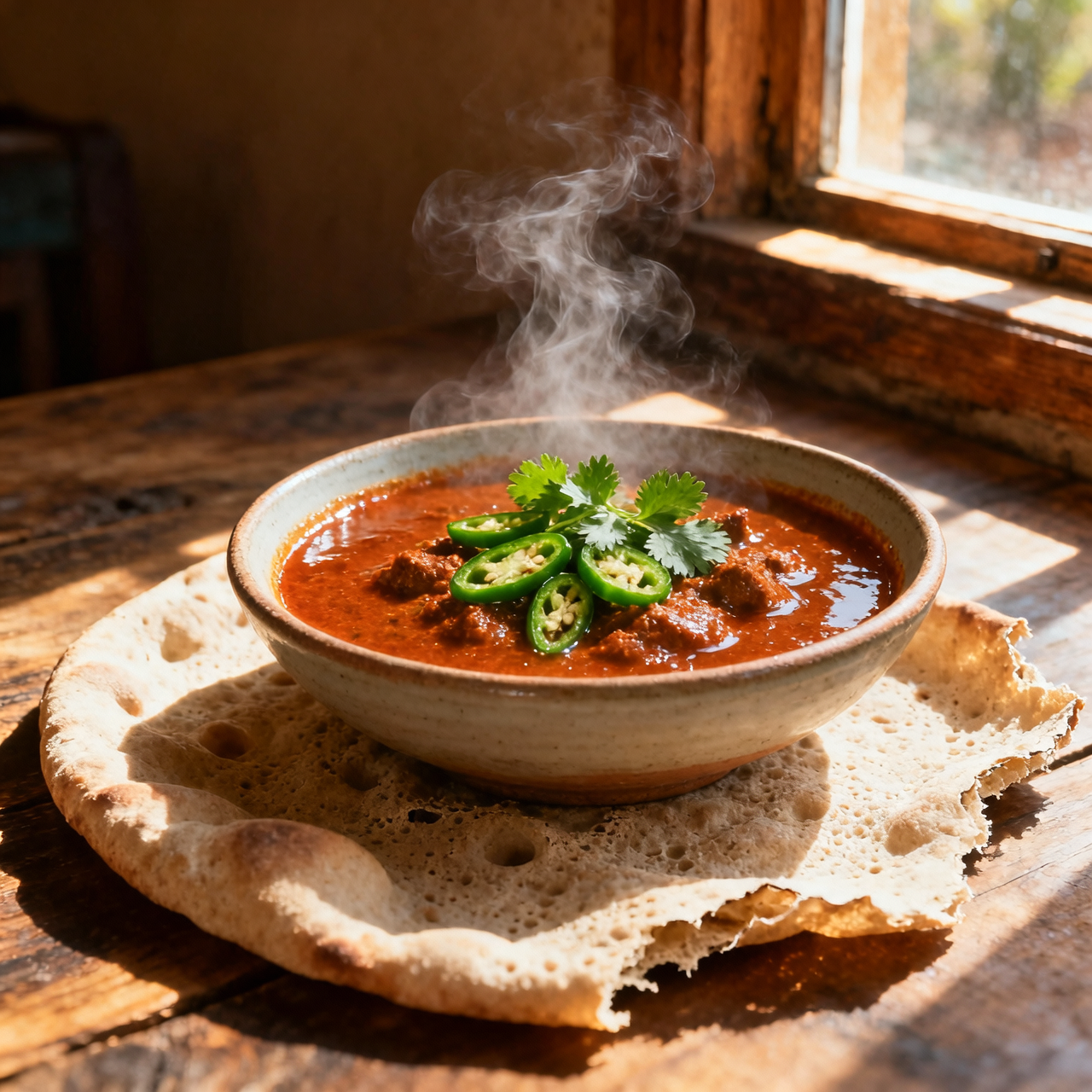
Shiro
I first encountered shiro not in a bustling Addis Ababa restaurant, but in a quiet diaspora kitchen where the scent of toasted chickpeas and berbere felt like a quiet anchor. At its core, shiro is a masterclass in Ethiopian culinary economy—a humble legume flour transformed through slow simmering into something profoundly comforting. Traditionally crafted from ground chickpeas or broad beans, this dish has sustained families through fasting seasons, proving that vegan cooking here isn’t a trend but a centuries-old rhythm tied to Orthodox fasting calendars and communal resilience. What makes shiro so vital to Ethiopian food culture is its adaptability; it serves as both canvas and centerpiece, absorbing the warmth of garlic, ginger, and oil while remaining entirely plant-based. Yet, it’s deceptively simple, and that simplicity is where most cooks stumble. The most common pitfall is rushing the roux-like base. Shiro powder burns easily if the heat is too high or if it isn’t whisked constantly into the oil. Another frequent mistake is under-seasoning the liquid or adding water too quickly, which creates a chalky, separated texture rather than a velvety stew. I’ve learned to treat shiro like a conversation: you must listen to the pan, let the spices bloom before the flour touches the heat, and simmer patiently until it thickens into that signature, spoon-coating consistency. When done right, it’s a quiet triumph of patience and precision.
Nutrition
| Per serving | Calories | Protein | Carbs | Fat | Sat fat | Fibre | Sugar | Sodium |
|---|---|---|---|---|---|---|---|---|
| beginner | 350kcal | 12g | 36g | 18g | 2g | 7g | 8g | 497mg |
| intermediate | 350kcal | 12g | 36g | 18g | 2g | 7g | 8g | 497mg |
| expert | 359kcal | 13g | 38g | 18g | 2g | 8g | 9g | 499mg |
Per serving · Ava-estimated — a guide, not a clinical figure.
- 200 gChickpea flour— finely sifted, traditionally labeled shiro powder
- 150 gYellow onion— finely minced
- 4 countGarlic clove— minced
- 15 gFresh ginger— peeled and finely grated
- 30 gTomato paste— concentrated
- 12 gBerbere spice blend— aromatic, not overly salty
- 60 mlNeutral cooking oil— sunflower or avocado oil
- 750 mlWater— room temperature, divided
- 5 gFine sea salt— to taste
- 15 mlLemon— freshly squeezed juice
- 2 pieceshallots
This version removes the guesswork by leaning on reliable shortcuts without sacrificing the soul of the dish. You will use a pre-blended shiro powder that already contains balanced aromatics, paired with a ready-made tomato and berbere paste. The goal here is confidence. You will learn to control heat and hydration, which are the only two variables that truly matter when cooking legume-based stews. Watch the edges of the pan closely as the oil and spices combine; you want a fragrant sizzle, not a smoky burn. When adding the flour, whisk continuously until the mixture resembles wet sand before introducing liquid. Pour water in slow, steady streams, allowing each addition to fully absorb before adding more. If the surface develops a skin or the texture feels stiff, simply lower the heat and stir in a splash of warm water. Do not rush the simmer. A gentle, uncovered cook of twenty minutes will eliminate any raw flour taste and coax out a naturally creamy finish. This approach guarantees a smooth, cohesive stew on your first try. Once you master this rhythm, you will instinctively know when to graduate to whole spices and from-scratch blending.
Equipment
- Medium saucepan— non-stick or enameled
- Silicone spatula— heat-resistant
- Balloon whisk— stainless steel
Method
- 1
Heat oil in a saucepan over medium heat until it shimmers.
Do not let it smoke.
heating~ 1 min - 2
Sauté onion, garlic, and ginger until softened and fragrant.
Keep heat at medium to prevent browning.
sautéing~ 5 min - 3
Stir in tomato paste and berbere paste, blooming the spices for one minute.
The kitchen should smell intensely aromatic.
blooming~ 1 min - 4
Whisk in shiro powder gradually, then stream in water while stirring constantly to prevent lumps.
Add liquid slowly and keep the whisk moving.
hydrating~ 3 minTricky bit - 5
Simmer uncovered, stirring occasionally until thickened to a creamy, velvety consistency.
Lower heat to low once bubbles form.
simmering~ 20 min - 6
Remove from heat and stir in salt and lemon juice.
Taste and adjust seasoning before serving.
finishing~ 1 min