
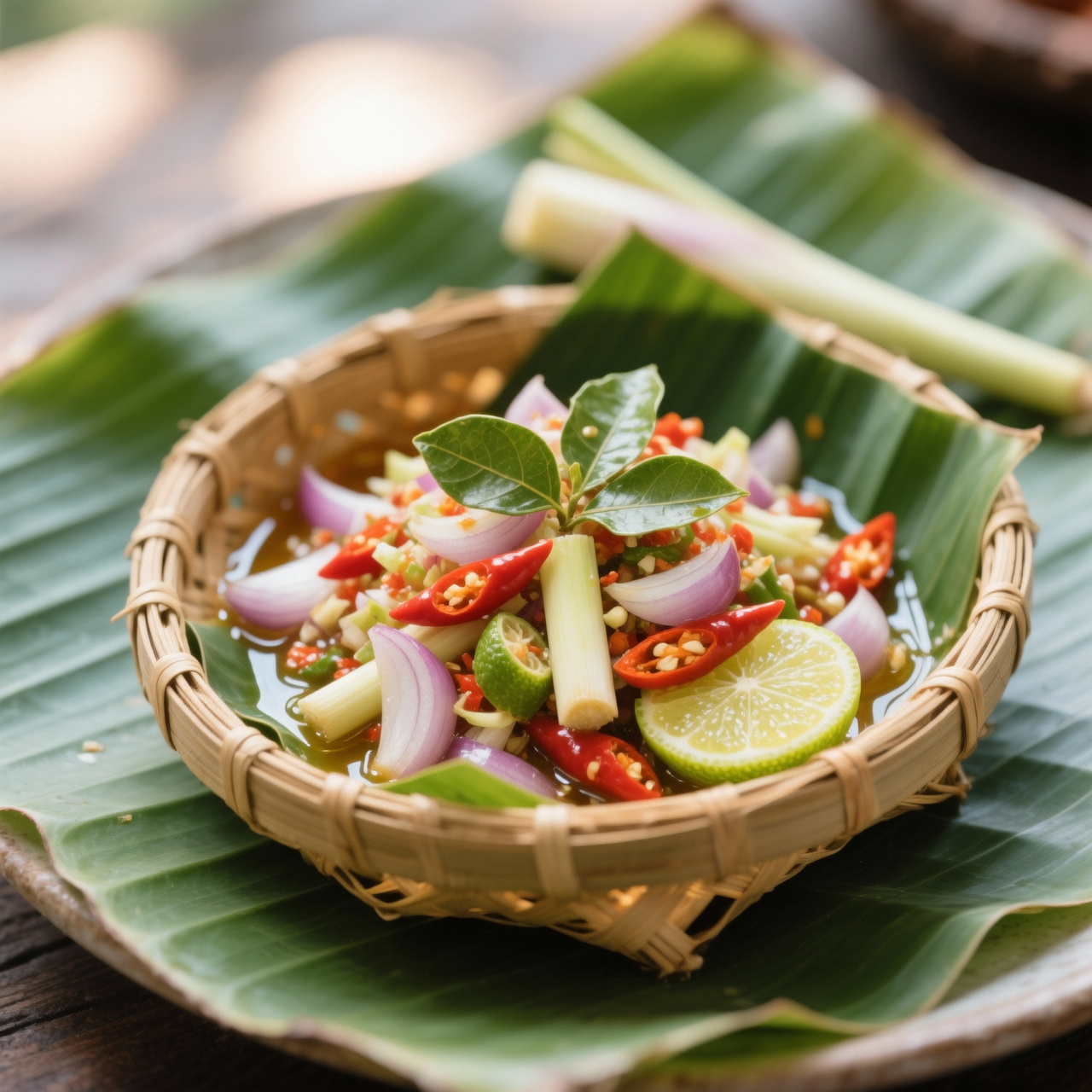
Sambal Matah
I first encountered sambal matah in a quiet warung tucked behind the rice terraces of Bali, where the air was thick with the scent of crushed lemongrass and toasted coconut. Unlike its cooked, fiery cousins across the archipelago, this raw condiment thrives on restraint and freshness, relying on the sharp bite of thinly sliced shallots, the citrusy punch of lemongrass, and the gentle heat of bird’s eye chilies to awaken rather than overwhelm the palate. It matters because it captures a fundamental Indonesian philosophy: that balance isn’t achieved through heavy cooking, but through the careful layering of raw aromatics married by warm oil and a touch of lime. Yet, its simplicity is a double-edged sword, and I’ve watched countless home cooks ruin it by rushing the process. The most common pitfall is neglecting to properly bruise and thinly slice the lemongrass, leaving behind fibrous, woody pieces that are impossible to chew. Another is pouring the hot oil directly onto the shallots without letting them macerate first, which turns their delicate crunch into a soggy, bitter mess. Salt must be rubbed into the aromatics by hand to coax out their moisture, and the oil should be infused with a hint of galangal or kept strictly vegan with just a whisper of kaffir lime. When done right, sambal matah is a bright, aromatic revelation that elevates everything from grilled fish to plain steamed rice. It demands patience, but rewards you with a living, breathing condiment that tastes like the island itself.
Nutrition
| Per serving | Calories | Protein | Carbs | Fat | Sat fat | Fibre | Sugar | Sodium |
|---|---|---|---|---|---|---|---|---|
| beginner | 184kcal | 2g | 16g | 14g | 11g | 2g | 6g | 492mg |
| intermediate | 182kcal | 2g | 16g | 14g | 11g | 2g | 6g | 491mg |
| expert | 182kcal | 2g | 16g | 14g | 11g | 2g | 6g | 491mg |
Per serving · Ava-estimated — a guide, not a clinical figure.
- 150 gShallot— Peel and slice into very thin half-moons
- 80 gLemongrass stalk— Trim outer layers and use only the tender pale lower third, sliced paper-thin
- 30 gBirds eye chili— Finely chopped, adjust amount to desired heat level
- 10 gKaffir lime leaf— Remove tough central vein and slice into hair-thin strips
- 45 mlLime juice— Freshly squeezed from calamansi or regular limes
- 60 mlCoconut oil— Heat until shimmering but not smoking before pouring over the mixture
- 5 gSea salt— Fine grain preferred for even distribution
- 10 gPalm sugar(optional)— Finely grated to dissolve quickly in lime juice
- 4 piecered chilies
This beginner-friendly approach strips away the traditional knife work while preserving the bright, aromatic soul of Balinese sambal matah. Instead of spending twenty minutes mincing tough lemongrass and paper-thin shallots by hand, you will use convenient pre-sliced or jarred aromatics that deliver consistent texture without the risk of tears or uneven cuts. The raw preparation remains intact, meaning no simmering or long reductions are required. Your only cooking step involves gently warming a neutral oil in a small saucepan before pouring it over the chopped vegetables. This quick heat transfer softens the sharp bite of raw chilies and shallots just enough to make them approachable, while coaxing out the essential oils from the citrus leaves. Watch closely during the oil pour; if the oil smokes or splatters aggressively, it is too hot and will cook the vegetables instead of wilting them. Let the mixture rest for at least ten minutes before tasting, as the resting period allows the lime juice and salt to penetrate the aromatics evenly. This shortcut method guarantees a confident first attempt with restaurant-style brightness, perfect for beginners who want authentic flavor without mastering advanced knife skills.
Equipment
- Small saucepan— lightweight aluminum works best for quick heating
- Heatproof mixing bowl— glass or ceramic holds heat safely during the oil pour
Method
- 1
Combine the pre-sliced shallots, jarred lemongrass, thinly sliced red chilies, and torn kaffir lime leaves in a large heatproof bowl.
Use a microplane if the jarred lemongrass is too fibrous.
combining~ 2 min - 2
Drizzle fresh lime juice over the aromatics and sprinkle evenly with sea salt.
Toss gently with clean hands or tongs until the salt begins to draw out moisture.
seasoning~ 1 min - 3
Heat a neutral oil in a small saucepan over medium-low heat until it just begins to shimmer around the edges.
Do not let it smoke or you will cook the vegetables prematurely.
blooming~ 3 minTricky bit - 4
Carefully pour the warm oil directly over the seasoned vegetables and toss immediately until everything glistens.
Stand back slightly to avoid steam burns during the initial contact.
tempering~ 1 minTricky bit - 5
Allow the mixture to sit undisturbed at room temperature for ten minutes before serving.
This resting period is non-negotiable for mellowing the raw bite.
resting~ 10 min
Storage times are a guide — always use your judgement and store food safely.