
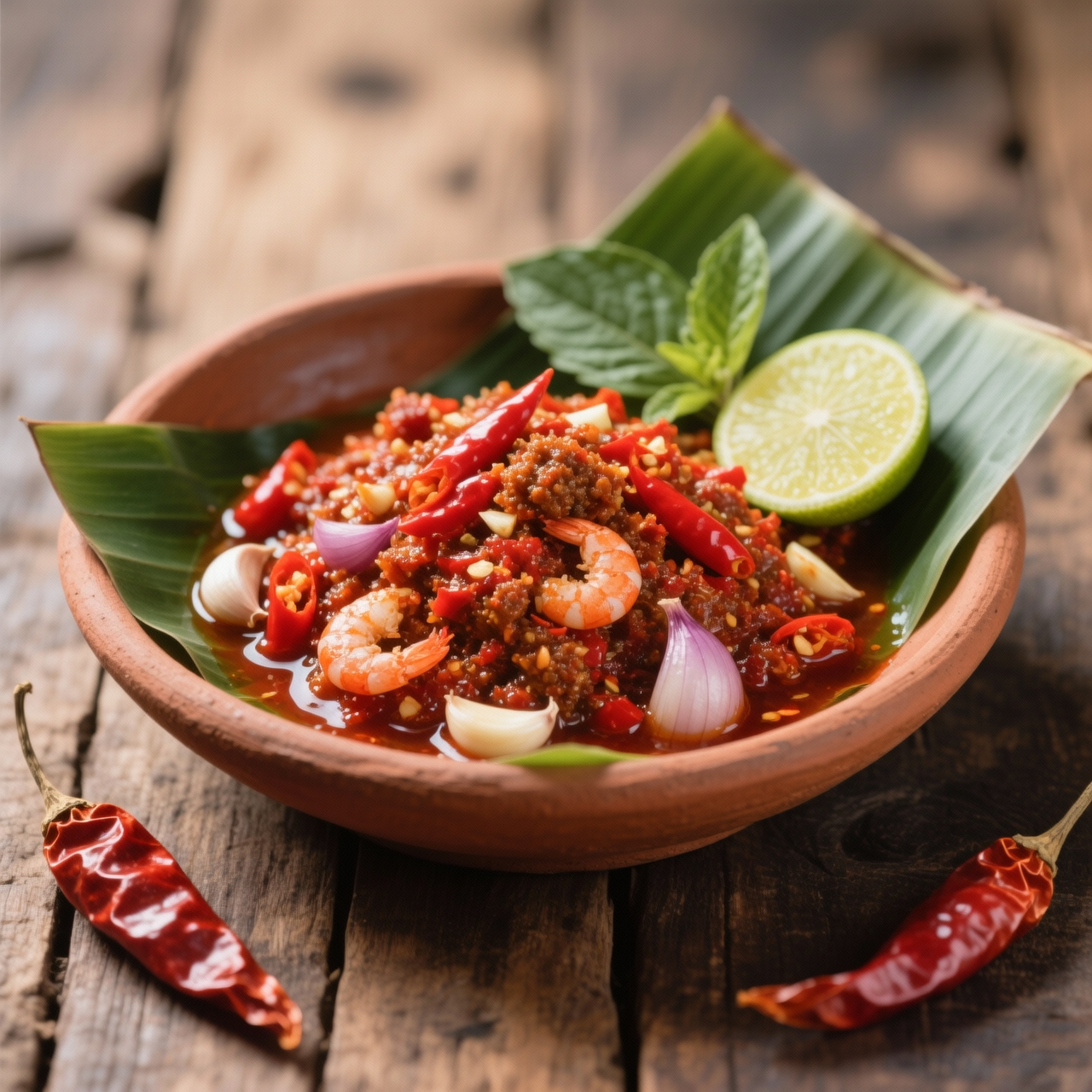
Sambal Bajak
When I first encountered sambal bajak on a quiet street in Yogyakarta, I was struck by how it defied the usual rules of heat. Unlike its raw, fiery cousins, this paste is gently fried until the chilies surrender their sharp edges to a deep, sweet-spicy caramelization. Its name, roughly translating to turned or plowed sambal, hints at the constant stirring required to coax out that complex, almost jam-like consistency. I have come to view it as the quiet backbone of an Indonesian pantry, a condiment that bridges the gap between a fiery accent and a comforting glaze. It matters because it teaches patience. You cannot rush the slow reduction of shallots, garlic, galangal, and palm sugar without risking a burnt, bitter finish. Too many cooks make the mistake of tossing everything into a hot wok at once, or worse, skipping the crucial step of toasting the spice paste until the oil separates. That separation is your only true indicator of doneness, signaling that the raw aromatics have properly bloomed and the moisture has evaporated. I always warn beginners to keep the flame low and stir with intention, because sambal bajak rewards those who respect the alchemy of time and heat. When done right, it becomes a versatile treasure, equally at home beside grilled fish, stirred into rice, or simply spread on warm crusty bread. Its longevity is legendary, but only if you honor the slow, deliberate process that transforms simple ingredients into something deeply resonant.
Nutrition
| Per serving | Calories | Protein | Carbs | Fat | Sat fat | Fibre | Sugar | Sodium |
|---|---|---|---|---|---|---|---|---|
| beginner | 361kcal | 3g | 28g | 28g | 4g | 2g | 19g | 554mg |
| intermediate | 361kcal | 3g | 28g | 28g | 4g | 2g | 19g | 554mg |
| expert | 250kcal | 3g | 30g | 15g | 2g | 4g | 19g | 556mg |
Per serving · Ava-estimated — a guide, not a clinical figure.
- 200 gRed chili— Stemmed and roughly chopped
- 30 ggalangal
- 100 gShallot— Peeled and halved
- 30 gGarlic— Peeled
- 100 gTomato— Cored and roughly chopped
- 50 gPalm sugar— Grated or finely shaved
- 15 gTamarind paste— Dissolved in 30 ml warm water
- 5 gShrimp paste— Dry-toasted
- 120 mlVegetable oil— For frying and simmering
- 5 gSalt— Adjust to taste
- 15 gdried chilies
This beginner-friendly approach to Sambal Bajak prioritizes confidence and consistency over traditional grinding techniques. Instead of pounding raw chilies, shallots, and shrimp paste by hand, we will rely on a high-quality store-bought chili paste to anchor the flavor. You will simply sauté aromatics until fragrant, fold in your shortcut paste, and simmer until the oil separates, a classic Indonesian technique that signals the paste is properly cooked and ready to jar. The main thing to watch for here is heat management; sambal scorches easily, so keep your flame at medium-low and stir frequently to prevent sticking. We will also streamline the sweet-and-sour balance by using readily available brown sugar and bottled tamarind concentrate. Do not rush the simmering stage; those extra minutes allow the raw edge to cook out and the flavors to meld into that signature sweet-spicy depth. Once cooled, it stores beautifully in sterilized jars for weeks. This method guarantees a foolproof first attempt while still delivering the bold, savory punch that makes sambal bajak a staple condiment.
Equipment
- Heavy-bottomed skillet— Distributes heat evenly to prevent scorching
- Glass storage jars— Sterilize before filling for longer shelf life
- Wooden spatula— Gentle on cookware and resists heat
Method
- 1
Heat the cooking oil in a heavy skillet over medium heat and add the minced garlic and shallots.
Keep stirring constantly; they should soften without browning.
sweating~ 4 min - 2
Stir the jarred chili paste and shrimp paste into the softened aromatics until fully incorporated.
Use a gentle folding motion to minimize hot oil splatters.
blooming~ 2 minTricky bit - 3
Reduce the heat to low and let the mixture bubble gently until the oil visibly separates from the solids.
This separation confirms that raw flavors have cooked out completely.
reducing~ 15 minTricky bit - 4
Dissolve the brown sugar and tamarind concentrate into the paste while stirring constantly.
Taste cautiously; the flavor should lean tangy before finishing sweet.
balancing~ 2 min - 5
Remove the pan from the heat and let the sambal cool completely before transferring it to storage jars.
Never cap a warm jar, as trapped steam encourages spoilage.
cooling~ 10 min
Cooking from frozen
Thaw overnight in the refrigerator, then warm gently on the stove while stirring to restore the emulsion.
Storage times are a guide — always use your judgement and store food safely.