
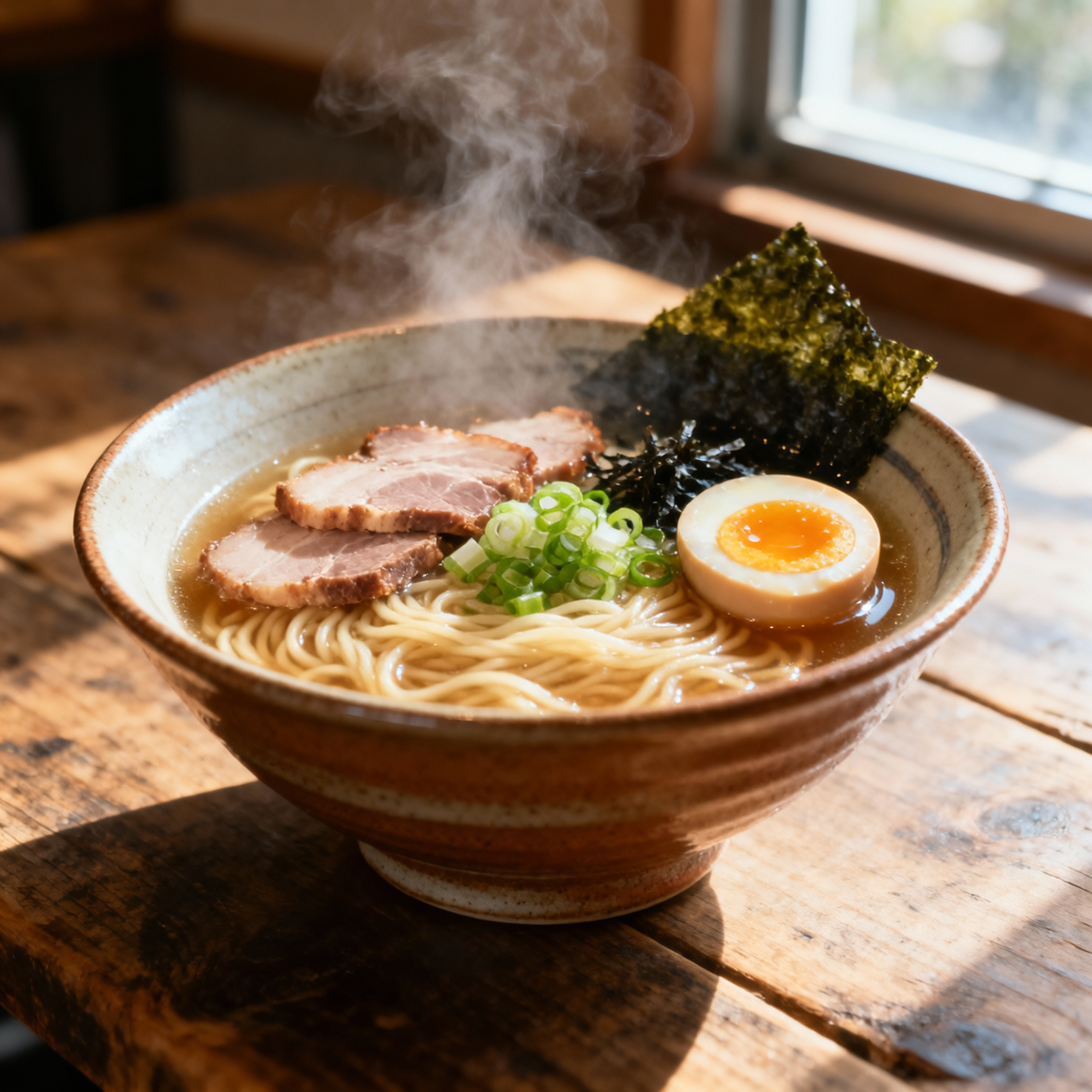
Ramen Noodles (Fresh)
I still remember the first time I traded those neon-wrapped instant bricks for a bowl of noodles I actually made myself, and I haven’t looked back since. A single shop-bought packet might only cost you fifty cents, but you’re really paying with your palate and your health. They’re loaded with sodium, rely on artificial thickeners and flavor enhancers, and inevitably turn into a soggy, one-dimensional mush. Making fresh alkaline ramen from scratch isn’t about chasing nostalgia; it’s about reclaiming texture and transparency. The tradition traces back to southern China before finding its permanent home in Japan, where bakers discovered that adding kansui—a naturally alkaline mineral solution—transforms plain wheat dough into something springy, translucent, and deeply satisfying. I bake my own baking soda to recreate that effect safely at home, keeping everything strictly plant-based without relying on hidden stabilizers or processed shortcuts. The real magic happens when you respect the hydration ratio and commit to the knead. The most common pitfall I see is rushing the rest period or adding too much water too quickly, which leaves you with a sticky, unmanageable mess. You have to work the dough until it feels firm and smooth, let it relax, then roll and cut with a sharp blade. It’s undeniably slower than tearing open a plastic sleeve, but that extra twenty minutes yields noodles that actually hold their shape in hot broth and carry a quiet, wheaty sweetness no factory line can replicate.
Nutrition
| Per serving | Calories | Protein | Carbs | Fat | Sat fat | Fibre | Sugar | Sodium |
|---|---|---|---|---|---|---|---|---|
| beginner | 245kcal | 8g | 50g | 1g | 0g | 2g | 0g | 550mg |
| intermediate | 226kcal | 8g | 45g | 1g | 0g | 2g | 0g | 550mg |
| expert | 226kcal | 8g | 45g | 1g | 0g | 2g | 0g | 550mg |
Per serving · Ava-estimated — a guide, not a clinical figure.
- 250 gbread flour— High-protein flour recommended for optimal noodle chew
- 1 gbaking soda
- 110 mlwater— Room temperature
- 5 gkansui powder— Alkaline mineral salt; baked baking soda is an acceptable substitute
- 3 gsalt— Fine sea salt
- 20 gcornstarch
Shop-bought instant ramen packets cost pennies per bowl but are loaded with fried palm oil, excessive sodium, and artificial stabilizers that leave you sluggish and bloated. This beginner version strips away the intimidation of traditional ramen making while keeping the process entirely from scratch. You will mix a simple alkaline brine using pantry baking soda, knead a sturdy dough, and roll it out with a standard rolling pin. The key difference at this level is a relaxed approach to hydration and resting, allowing the gluten to develop naturally without demanding exact weights or commercial kansui. Watch for the dough’s texture rather than rigid timers; it should feel firm and pliable, like modeling clay. Once cut, the noodles benefit from a light dusting of cornstarch to prevent clumping. You will end up with springy, restaurant-quality strands that cook in minutes and form a wholesome, transparent base for any broth you choose to pair them with.
Equipment
- Large mixing bowl— glass or stainless steel works best
- Rolling pin— heavy wooden type preferred
- Chef's knife— keep blade sharp for clean cuts
- Heavy-bottomed pot— at least 5-quart capacity
Method
- 1
Dissolve baking soda and salt into warm water until the liquid is completely clear.
Alkaline brine gives noodles their signature spring.
dissolving~ 1 min - 2
Pour the brine over the flour and stir vigorously until a shaggy, crumbly mass forms.
No dry patches should remain.
combining~ 2 min - 3
Knead the dough firmly on a clean surface for five minutes, wrap tightly, and rest at room temperature.
Gluten needs time to relax before rolling.
resting~ 30 min - 4
Roll the dough into a thin, uniform rectangle and dust generously with cornstarch.
Keep thickness consistent for even cooking.
rolling~ 5 minTricky bit - 5
Fold the sheet into thirds and slice evenly into quarter-inch strips with a sharp knife.
Unfold immediately after cutting.
cutting~ 3 min - 6
Bring a large pot of salted water to a rolling boil and cook noodles until al dente.
Fresh noodles cook much faster than dried.
boiling~ 3 min - 7
Drain the noodles immediately and rinse under cool water to halt the cooking process.
Prevents clumping and removes surface starch.
shocking~ 1 min
Cooking from frozen
Plunge frozen cooked noodles directly into simmering broth for one minute, then drain to restore elasticity.
Storage times are a guide — always use your judgement and store food safely.