
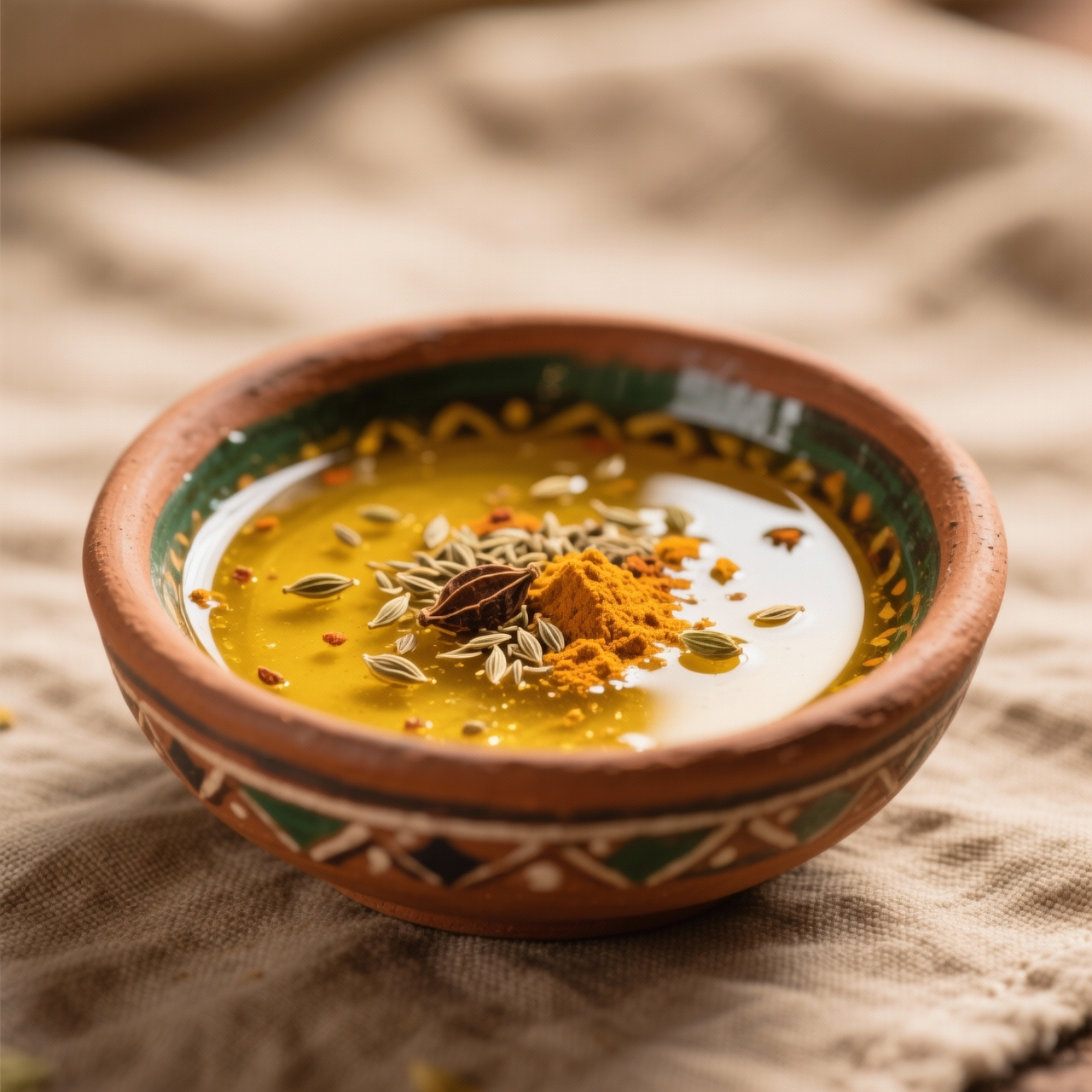
Niter kibbeh (spiced clarified butter)
I’ve spent countless mornings watching butter melt and sizzle, slowly coaxing out water until all that remains is liquid gold. Niter kibbeh is far more than a simple cooking fat in Ethiopian kitchens; it is the aromatic foundation upon which nearly every beloved dish is built. When I first learned to make it, I quickly realized that patience is the only true ingredient you cannot substitute. Traditionally, this spiced clarified butter carries the warmth of home, carrying forward generations of carefully balanced spice blends passed down through mothers and grandmothers. The slow infusion of onions, garlic, ginger, turmeric, and sometimes fenugreek or cardamom transforms simple dairy into a deeply fragrant, shelf-stable treasure. The magic lies entirely in the clarification process itself. You must skim the milk solids carefully, letting them toast gently without crossing into bitterness, then strain the liquid while it is still warm enough to capture every volatile aroma. One of the most common pitfalls I see is rushing the heat. High temperatures will scorch the spices and cloud the butter, ruining its delicate balance and drastically shortening its shelf life. Another frequent mistake is adding fresh herbs or raw aromatics too late in the process; they need ample time to meld with the fat, but if left in after straining, they can trap moisture that invites spoilage. When done right, this golden condiment elevates wots, stews, and even simple lentil dishes, bridging everyday meals with something profoundly comforting. It is a quiet testament to how time, temperature, and tradition can turn a humble pantry staple into the soul of a cuisine.
Nutrition
| Per serving | Calories | Protein | Carbs | Fat | Sat fat | Fibre | Sugar | Sodium |
|---|---|---|---|---|---|---|---|---|
| beginner | 842kcal | 2g | 8g | 92g | 58g | 2g | 2g | 308mg |
| intermediate | 842kcal | 2g | 8g | 92g | 58g | 2g | 2g | 308mg |
| expert | 842kcal | 2g | 8g | 92g | 58g | 2g | 2g | 308mg |
Per serving · Ava-estimated — a guide, not a clinical figure.
- 450 gunsalted butter— High-fat European style preferred for better clarification
- 150 gyellow onion— Finely chopped
- 15 ggarlic— Minced
- 10 gfresh ginger— Peeled and grated
- 3 gground turmeric
- 3 gfenugreek seed— Whole or lightly toasted
- 4 piecegreen cardamom pod— Lightly cracked
- 3 gcoriander seed— Whole
- 2 gcumin seed— Whole
- 3 gcinnamon stick— Broken into pieces
- 1 gwhole clove
- 3 gdried sacred basil— Besobela preferred; dried basil is an acceptable substitute
- 3 gkosher salt
- 2 gbesobela
- 1 gkorarima
This beginner-friendly approach streamlines traditional niter kibbeh by leveraging convenient shortcuts without sacrificing authentic flavor. Instead of toasting and grinding whole spices yourself, start with a high-quality, pre-ground Ethiopian spice blend or store-bought berbere to instantly build the complex, aromatic base. For the fat, using jarred ghee or pre-clarified butter eliminates the tedious initial separation step, letting you focus entirely on the infusion process. The key technique here is gentle, low-heat simmering, which slowly extracts the essential oils from the dried herbs and spices while preventing any risk of burning the delicate milk solids. Watch closely for the visual cue of rapid bubbling calming into a slow, steady simmer and the liquid turning a translucent, golden hue. This signals the water has evaporated and the flavors have fully melded. Avoid the temptation to increase the heat to speed things up, as scorched butter will taste bitter and ruin the batch. Once infused, a simple double-strain through a fine-mesh sieve lined with cheesecloth removes all particulate matter, yielding a pristine, shelf-stable condiment. With minimal hands-on time and forgiving steps, you will achieve a rich, aromatic spiced butter perfect for confidently elevating your Ethiopian dishes.
Equipment
- Heavy-bottomed pan— non-stick or stainless steel works well
- Fine-mesh strainer— line with cheesecloth or a paper coffee filter for clarity
- Heatproof storage jars— ensure completely dry before pouring hot liquid
Method
- 1
Melt the butter or ghee in a heavy-bottomed pan over medium-low heat.
Do not rush this step; high heat will scorch the solids before the spices can infuse.
melting~ 2 min - 2
Stir in the pre-ground spice blend, garlic powder, and dried herbs until evenly distributed.
Using a store-bought Ethiopian spice mix guarantees consistent flavor without extra prep.
infusing~ 1 min - 3
Reduce heat to low and simmer gently for fifteen minutes until the rapid bubbling subsides and the liquid turns clear and golden.
Watch closely at the end to prevent browning; the butter should smell deeply nutty and aromatic.
simmering~ 15 minTricky bit - 4
Remove the pan from the heat and carefully pour the liquid through a fine-mesh strainer lined with cheesecloth into a clean jar.
Let it drip naturally without squeezing to keep the final product crystal clear.
straining~ 5 min - 5
Allow the strained butter to cool completely at room temperature before sealing and transferring it to the refrigerator.
Properly cooled and sealed, this condiment will keep for months and can be portioned for freezing.
cooling~ 30 min
Cooking from frozen
Thaw overnight in the refrigerator or gently warm a portion in a heatproof bowl over low heat until fully liquid.
Storage times are a guide — always use your judgement and store food safely.