
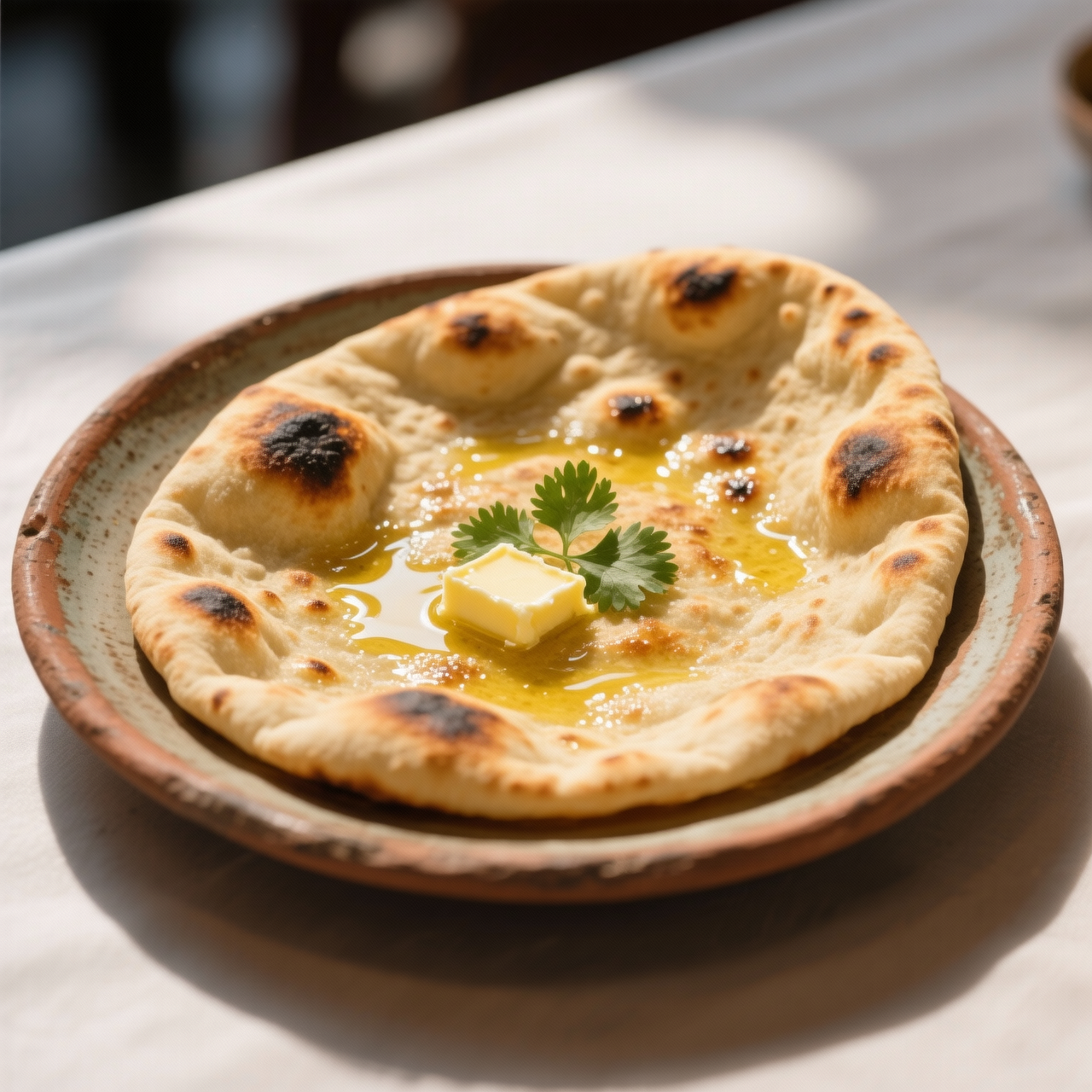
Naan
I’ve always found it strange that a bread born from the intense, radiant heat of a clay oven became so thoroughly domesticated into rubbery, supermarket packets. Naan traces its roots to the royal kitchens of the Mughal Empire, where leavened wheat dough was slapped against searing walls, emerging blistered, pillowy, and faintly charred. It is a bread that demands patience and heat, yet modern grocery aisles sell it as a quick convenience item. A standard six-pack of those mass-produced flatbreads usually runs around three dollars, but you pay a steep price in texture and flavor. They are loaded with chemical softeners, rolled impossibly thin, and baked on conveyor belts that strip away vital yeast fermentation. When I make naan at home, I am reclaiming that ancient alchemy. The process is surprisingly straightforward, but it is riddled with quiet pitfalls that trip up even experienced cooks. Overworking the dough develops too much gluten, turning what should be tender into chewy cardboard. Letting the dough rest too briefly means the gluten has not relaxed, making it fight back when you try to roll it out. Perhaps most critical, home ovens simply cannot replicate a tandoor’s blistering heat, which is why a screaming-hot cast-iron skillet or baking steel is non-negotiable. If you rush the proof, you will miss those characteristic air pockets; if you skip the dairy enrichment, you lose the signature softness. This recipe bridges that gap using a slow ferment to build complex flavor while keeping the technique forgiving. Embracing a little patience transforms a humble side into a fragrant, blistered centerpiece.
Nutrition
| Per serving | Calories | Protein | Carbs | Fat | Sat fat | Fibre | Sugar | Sodium |
|---|---|---|---|---|---|---|---|---|
| beginner | 701kcal | 17g | 103g | 24g | 11g | 4g | 7g | 882mg |
| intermediate | 685kcal | 16g | 102g | 23g | 11g | 4g | 6g | 872mg |
| expert | 683kcal | 15g | 102g | 23g | 11g | 4g | 5g | 865mg |
Per serving · Ava-estimated — a guide, not a clinical figure.
- 500 gall-purpose flour— sifted before measuring
- 30 gbutter
- 150 gplain yogurt— room temperature, full-fat preferred
- 180 mlwarm water— approximately 38°C to activate yeast
- 7 ginstant yeast— one standard sachet
- 10 gsugar— granulated
- 8 gfine salt
- 3 gbaking powder
- 30 mlneutral oil— added to dough for tenderness
- 30 gghee— melted, reserved for post-bake brushing
- 9 ggarlic(optional)— minced, optional flavoring
- 10 gfresh cilantro(optional)— finely chopped, optional garnish
- 150 gplain yoghurt
- 60 mlmilk
- 5 gnigella seeds
Shop-bought naan costs around £3–£5 for a pack of four and relies on preservatives, refined oils, and artificial softeners to mimic freshness, resulting in a gummy texture and flat flavour. This beginner version strips the process down to its essentials: a quick-yeast dough that skips the traditional tandoor in favour of a reliable stovetop method. You will mix, knead by hand until smooth, and let the dough rise just once before dividing and rolling. The key to success here is keeping your pan screaming hot before the bread hits it; this creates the signature blistered spots without needing a wood-fired oven. Watch the dough’s hydration closely—flour brands vary wildly, so add water a tablespoon at a time until the dough feels tacky but not sticky. Resist the urge to overwork it after the first knead, as gentle handling preserves those crucial air pockets. Par-bake the finished discs for a quick freeze, then finish them straight from the freezer with a thirty-second reheat. You will get restaurant-style chew and milky tang in under an hour, with ingredients you actually recognise.
Equipment
- Heavy-bottomed skillet— Cast iron or thick stainless steel holds heat best for blistering
- Rolling pin— A standard wooden pin works perfectly
- Pastry brush(optional)— For applying melted butter or ghee after cooking
Method
- 1
Dissolve the active dry yeast and sugar in warm water and let it sit until a frothy layer forms on top.
Water should be comfortably warm to the touch, around 40°C, not hot.
blooming~ 5 min - 2
Combine the bloomed yeast mixture with flour, plain yoghurt, salt, and a splash of oil in a large bowl until a shaggy dough comes together.
Add water one tablespoon at a time if the mixture feels too dry.
shaggy dough formation~ 2 min - 3
Turn the dough onto a lightly floured surface and knead firmly until it becomes smooth, elastic, and springs back when poked.
Aim for about six minutes of steady pressing and folding.
kneading~ 6 min - 4
Place the dough in a lightly oiled bowl, cover tightly with a damp cloth, and let it rest until it has visibly expanded.
A warm kitchen or turned-off oven with the light on speeds this up.
proofing~ 30 min - 5
Divide the rested dough into four equal pieces and roll each into a teardrop or oval roughly a quarter-inch thick.
Do not press too hard or you will deflate the trapped air pockets.
rolling~ 5 min - 6
Heat a dry heavy-bottomed skillet over high heat until it is nearly smoking, then cook each disc until large bubbles form and the underside is deeply spotted.
Flip only once when the edges lift naturally, then cook the second side for one minute.
dry frying~ 3 minTricky bit - 7
Brush the hot bread generously with melted ghee or butter, stack the finished pieces, and cover them immediately to trap steam.
This resting step keeps the interior soft and pliable for serving or freezing.
steaming~ 2 min
Cooking from frozen
Thaw at room temperature, then warm in a dry skillet until pliable and lightly charred.
Storage times are a guide — always use your judgement and store food safely.