
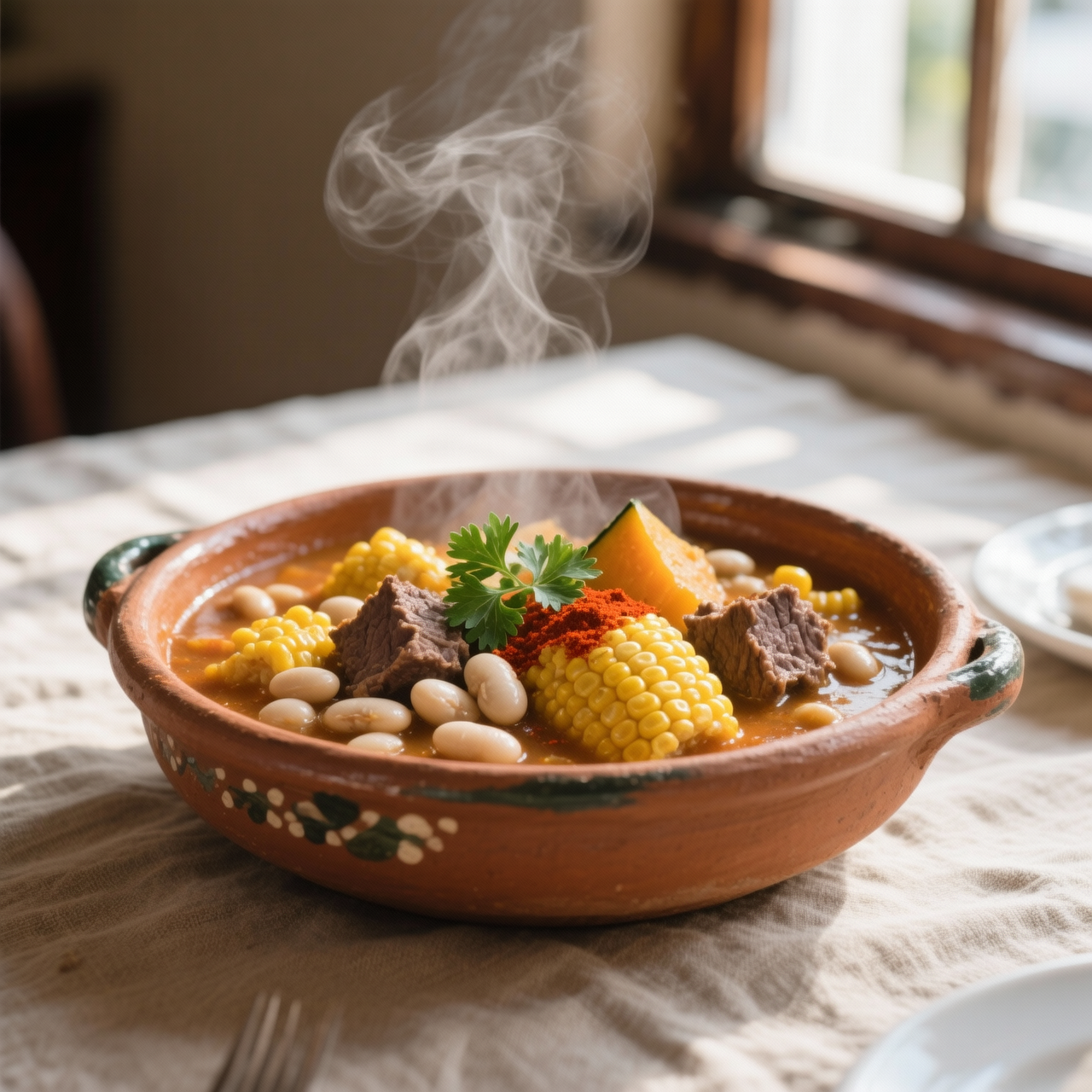
Locro
Locro is the very soul of Argentine winter, a deeply comforting, slow-simmered stew that traces its roots back to the indigenous peoples of the Andes, later embraced and adapted by Spanish colonizers. It is a dish of resilience, traditionally prepared for patriotic holidays like May 25th, bringing families together around a bubbling pot. While you can find tinned or instant packet locro mixes in the supermarket for about six or seven dollars, they are a tragic, salty sludge devoid of real texture, relying on artificial flavorings and preservatives instead of genuine, slow-cooked depth. Making it from scratch is a revelation. The magic lies in the humble trinity of white corn, beans, and squash, enriched with pork and beef that melt into the broth. The most common pitfall is impatience; if you do not soak your dried corn and beans adequately, or if you rush the braise, you will end up with crunchy, disjointed ingredients rather than a harmonious, thick embrace. Another frequent mistake is neglecting the finishing oils. A proper locro demands a vibrant, paprika-infused oil and a sharp, onion-heavy salsa criolla spooned over the top just before eating to cut through the richness. This stew is the ultimate batch hero. It deepens beautifully overnight and freezes exceptionally well, meaning your weekend effort yields weeks of soul-warming meals. By rejecting the processed tins and embracing the slow, from-scratch method, you are not just cooking dinner; you are honoring a centuries-old tradition of turning humble ingredients into liquid gold.
Nutrition
| Per serving | Calories | Protein | Carbs | Fat | Sat fat | Fibre | Sugar | Sodium |
|---|---|---|---|---|---|---|---|---|
| beginner | 1778kcal | 84g | 138g | 103g | 34g | 19g | 12g | 4692mg |
| intermediate | 1186kcal | 56g | 92g | 68g | 22g | 12g | 8g | 3128mg |
| expert | 1217kcal | 57g | 100g | 69g | 22g | 13g | 10g | 3138mg |
Per serving · Ava-estimated — a guide, not a clinical figure.
- 500 gdried white corn— soaked in water overnight
- 400 ghominy
- 300 gchorizo
- 800 gpork rib— cut into individual pieces
- 200 gbacon— diced
- 300 gpork sausage— sliced into thick rounds
- 1000 gbutternut squash— peeled, seeded, and cut into 2-inch cubes
- 2 wholeyellow onion— finely chopped
- 4 wholegarlic clove— minced
- 2 Lbeef broth— low sodium preferred
- 2 tbspsweet paprika
- 1 tspground cumin
- 1 tbspkosher salt— adjust to taste at the end
- 1 tspblack pepper— freshly ground
- 2 tbspvegetable oil— for searing the meat
- 15 mlvinegar
- 2 gdried oregano
- 2 pieceleeks
Shop-bought canned or packet locro costs around $6 for two servings but suffers from mushy textures, artificial meat flavors, and excessive sodium, completely missing the hearty, soul-warming depth of the real thing. This beginner version skips the processed cheats entirely, relying on real, recognizable ingredients but simplifying the technique. Instead of soaking and boiling dried corn for hours, we use high-quality canned hominy to cut prep time while maintaining that essential chew. The squash is pre-cubed to save knife work, and we build a straightforward, forgiving flavor base with pantry staples like sweet paprika and cumin. Watch for the liquid levels as the hominy and squash absorb moisture; you want a thick, porridge-like consistency, not a soup. Because this is a true batch hero, the flavors meld and deepen beautifully overnight in the fridge, and it freezes exceptionally well, making the initial effort highly rewarding for future meals.
Equipment
- Heavy-bottomed Dutch oven— Essential for even heat distribution during the long simmer.
- Wooden spoon— Best for scraping the fond without scratching the pot.
Method
- 1
Pat the pork shoulder chunks completely dry with paper towels and season generously with salt and black pepper.
Dry meat sears better; wet meat steams.
seasoning~ 2 min - 2
Heat the oil in a heavy-bottomed pot over medium-high heat and brown the pork pieces in batches until deeply caramelized on all sides.
Do not crowd the pan, or the meat will steam instead of sear.
searing~ 10 minTricky bit - 3
Reduce the heat to medium, add the diced onion, and sweat until translucent before stirring in the garlic, sweet paprika, and cumin.
Bloom the spices in the fat for exactly one minute until fragrant, but do not let them burn.
sweating~ 7 min - 4
Pour in the beef broth, scraping the bottom of the pot to release the fond, then add the hominy, white beans, and cubed squash.
The liquid should just barely cover the ingredients; add a splash of water if it looks too dry.
deglazing~ 2 min - 5
Bring the stew to a gentle boil, then immediately reduce the heat to low, cover, and simmer until the squash breaks down and the corn is tender.
Stir occasionally to prevent the squash from sticking to the bottom as it softens.
simmering~ 60 min - 6
Stir in the sliced chorizo during the final fifteen minutes of cooking to render its fat and infuse the broth with smoky flavor.
Adding it late prevents the chorizo from disintegrating into the stew.
rendering~ 15 min
Cooking from frozen
Thaw overnight in the fridge and reheat gently on the stove, adding a splash of water or broth if the corn has absorbed too much liquid.
Storage times are a guide — always use your judgement and store food safely.