
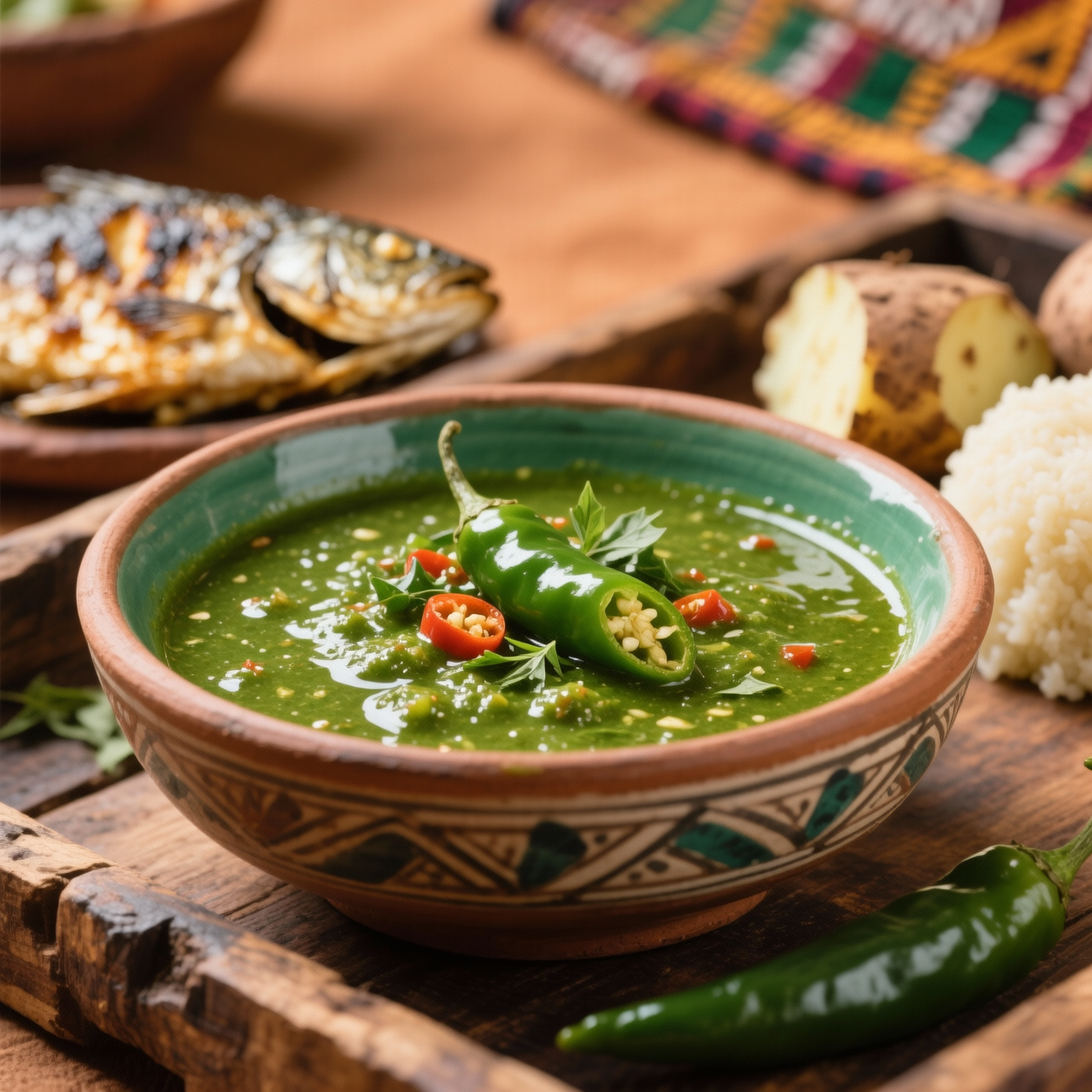
Kpakposhito green pepper sauce
When I first encountered kpakposhito in a bustling Accra market, I was immediately struck by its unapologetic vibrancy. This isn’t just a condiment; it’s a living, breathing testament to West Africa’s mastery of fresh heat and raw botanical intensity. Traditionally born from the everyday kitchens of Ghana, where home cooks sought a bright counterpoint to heavy starchy staples like fufu and banku, the sauce relies on the sharp, grassy punch of fresh green chilies, sweet onions, and ripe tomatoes, all crushed or briefly blended to preserve their cellular structure. What makes it so vital to the regional palate is its ability to cut through richness while simultaneously awakening tired taste buds with a clean, vegetal fire that lingers pleasantly. Yet, despite its simplicity, it’s remarkably easy to ruin. The most common mistake I see is treating it like a cooked reduction, simmering it until the delicate chlorophyll breaks down and the fresh bite turns dull and muddy. Another frequent misstep is adding water to ease the blender, which instantly dilutes the essential oils and transforms a potent condiment into a thin, watery afterthought. You must also guard against over-processing; the goal is a coarse, textured mash, not a homogenous purée. Finally, patience is non-negotiable. Letting the mixture rest for at least twenty minutes allows the sulfur compounds in the onions and the capsaicin in the peppers to harmonize, transforming a disjointed blend into a unified, deeply aromatic sauce that feels both ancient and entirely alive.
Nutrition
| Per serving | Calories | Protein | Carbs | Fat | Sat fat | Fibre | Sugar | Sodium |
|---|---|---|---|---|---|---|---|---|
| beginner | 140kcal | 2g | 11g | 11g | 1g | 2g | 6g | 491mg |
| intermediate | 140kcal | 2g | 11g | 11g | 1g | 2g | 6g | 491mg |
| expert | 140kcal | 2g | 11g | 11g | 1g | 2g | 6g | 491mg |
Per serving · Ava-estimated — a guide, not a clinical figure.
- 200 ggreen chilli— Scotch bonnet or similar, stems removed
- 300 gtomato— fresh, cored and roughly chopped
- 150 gonion— peeled and roughly chopped
- 45 mlvegetable oil— neutral oil such as groundnut or sunflower
- 5 gsalt— fine grain, adjust to taste
This beginner-friendly approach to Kpakposhito green pepper sauce prioritizes accessibility and confidence over traditional grinding methods. Instead of wrestling with fresh Scotch bonnets and a manual mortar, you will rely on a high-quality jarred green chilli paste or pre-washed, pre-chopped fresh peppers from the grocery store to build your base quickly and safely. The key is managing the moisture content; blending tomatoes and onions directly into a wet paste can make the final sauce soupy, so we will drain excess liquid before cooking and simmer gently to concentrate the flavors without burning. Watch your heat closely, as beginners often rush the reduction step, which leads to a raw, acidic taste. By using a steady medium-low heat and stirring frequently, you will coax out the sweet, vegetal notes of the peppers while mellowing the sharpness of the onions. This version is designed for your first successful attempt, yielding a bright, versatile sauce that is ready in under forty minutes. Once you master this streamlined process, you will feel confident adjusting heat levels, experimenting with different oils, or eventually transitioning to the traditional hand-ground method.
Equipment
- Blender or food processor— pulse setting is ideal to control texture
- Heavy-bottomed pan— wide surface area speeds evaporation
- Fine-mesh sieve— essential for removing excess water
Method
- 1
Combine the tomatoes, onions, and green chillies in a blender and pulse until coarsely chopped.
Avoid over-blending to prevent a watery consistency that delays thickening.
pulsing~ 1 min - 2
Pour the blended mixture into a fine-mesh sieve and press firmly to drain excess liquid.
Reserve the drained juice for soups or stews later.
straining~ 2 min - 3
Heat the oil in a heavy-bottomed pan over medium heat until it shimmers gently.
Test with a single onion piece; it should sizzle without smoking.
tempering~ 2 minTricky bit - 4
Add the drained vegetable mixture to the hot oil and stir constantly to coat evenly.
Listen for a steady simmer rather than aggressive splattering to avoid burns.
sautéing~ 5 min - 5
Reduce the heat to medium-low and simmer uncovered, stirring occasionally until the sauce thickens.
Scrape the bottom frequently to prevent sticking as moisture evaporates.
reducing~ 15 min - 6
Stir in salt and any desired seasonings, then remove the pan from the heat.
Taste carefully; flavors will intensify slightly as the sauce cools.
seasoning~ 1 min
Cooking from frozen
Thaw overnight in the refrigerator and whisk vigorously to recombine any separated liquid before serving.
Storage times are a guide — always use your judgement and store food safely.