
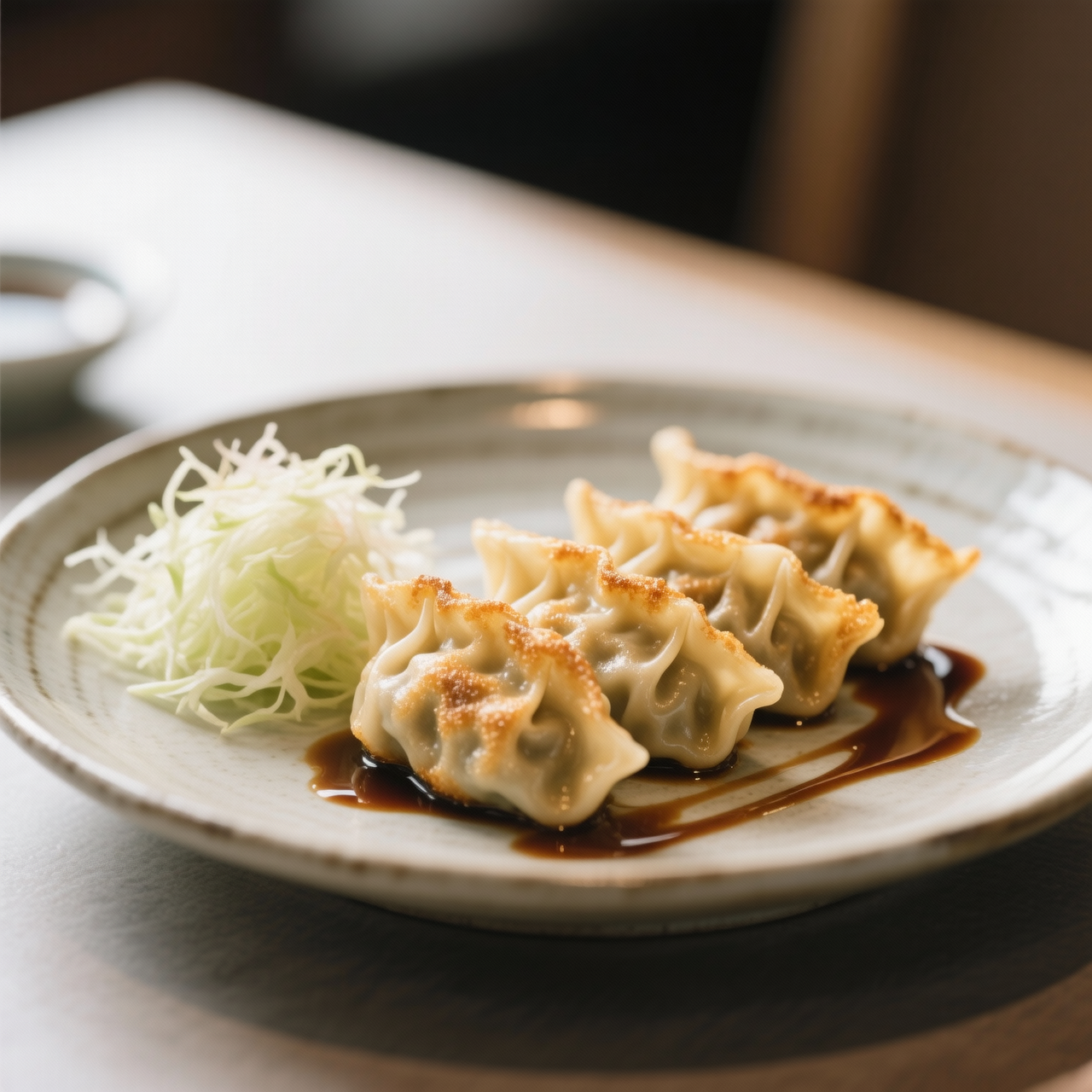
Gyoza
I first tasted gyoza in a cramped Tokyo izakaya, where the paper-thin wrappers shattered into a lacy, golden crust that gave way to a juicy, deeply seasoned pork and cabbage heart. While the dish traces its lineage to northern Chinese jiaozi, post-war Japan transformed it into a beloved staple through delicate pleating, a precise pan-steam-fry method, and a sharper, cleaner palate. Making them from scratch is a quiet rebellion against the supermarket aisle, where a five-dollar bag of mass-produced dumplings promises convenience but delivers a sad compromise: soggy, pre-steamed skins, a pasty filling bound with stabilizers, and a one-note salt punch that masks the absence of real garlic and ginger. When you build the wrapper and filling yourself, you control the hydration, the fat-to-lean ratio, and the umami balance, turning a quick bite into something genuinely restorative. The most common mistake I see is overworking the pork, which squeezes out its natural juices and leaves you with dense, rubbery meat. Another is rushing the fold; a loose pleat will split during the crucial steam phase, bleeding precious broth into the pan. Keep your hands light, chill the mixture before wrapping, and never crowd the skillet. The reward is a crisp, blistered base and a tender, succulent interior that justifies every careful crease. Once you master the rhythm of filling, folding, and sealing, you will never look back at the freezer aisle.
Nutrition
| Per serving | Calories | Protein | Carbs | Fat | Sat fat | Fibre | Sugar | Sodium |
|---|---|---|---|---|---|---|---|---|
| beginner | 479kcal | 22g | 48g | 21g | 6g | 3g | 2g | 1064mg |
| intermediate | 464kcal | 22g | 48g | 19g | 6g | 3g | 2g | 1064mg |
| expert | 660kcal | 28g | 84g | 21g | 7g | 4g | 2g | 1066mg |
Per serving · Ava-estimated — a guide, not a clinical figure.
- 300 gground pork— preferably 20% fat for juiciness
- 200 gnapa cabbage— finely chopped, salted, and squeezed completely dry
- 40 piecesgyoza wrapper— round, approximately 8 cm in diameter
- 10 ggarlic— finely minced
- 15 gginger— peeled and grated
- 30 ggreen onion— finely sliced, white and light green parts only
- 30 mlsoy sauce— regular or low-sodium
- 15 mlsesame oil— toasted
- 15 mlrice wine— sake or Shaoxing wine
- 2 gsalt— fine sea salt
- 1 gwhite pepper— freshly ground
- 200 gbread flour
This beginner-friendly approach strips away the intimidation of delicate dumpling pleats while keeping every ingredient whole and unprocessed. Unlike the £8–£10 frozen supermarket packs that rely on stabilisers, excess sodium, and heavily refined pork trimmings, this recipe gives you full control over fresh mince, crisp vegetables, and a golden base. You will mix the filling by hand, portion it simply with a spoon, and use a relaxed half-moon seal that actually holds steam better than overly tight pleats. Watch the water level during the steam-fry phase: too much and the wrappers tear, too little and they scorch before cooking through. The key is listening for the sizzle to return, which signals the water has evaporated and the starch crust is forming. This method prioritises a forgiving seal and a reliable pan technique, so your first batch emerges with a juicy interior and a shatteringly crisp bottom. Once mastered, you can easily fold extra raw gyoza on a parchment-lined tray and freeze them solid for future weeknight meals without compromising texture or flavour.
Equipment
- Large non-stick skillet with tight lid— essential for the steam-fry method
- Large mixing bowl— for combining filling
- Parchment-lined baking sheet— prevents raw dumplings from sticking during freezing
- Measuring spoons(optional)— ensures consistent filling portions
Method
- 1
Combine pork mince, finely chopped napa cabbage, grated ginger, minced garlic, soy sauce, and sesame oil in a large bowl, then mix vigorously until the meat becomes slightly tacky.
Tackiness ensures the filling binds and stays juicy during cooking.
emulsification~ 3 min - 2
Place a round gyoza wrapper flat on your palm, spoon one level tablespoon of filling into the centre, and dampen the entire outer edge with water.
Keep the filling away from the edges to guarantee a clean seal.
portioning~ 0 min - 3
Fold the wrapper into a simple half-moon, press the dampened edges firmly together, and squeeze gently to expel trapped air.
A relaxed seal holds steam better than a tightly pinched pleat.
sealing~ 0 minTricky bit - 4
Arrange the sealed dumplings flat-side down on a parchment-lined baking sheet, then freeze uncovered until completely solid.
Freezing raw prevents them from merging together during storage.
batching~ 1 min - 5
Heat one tablespoon of neutral oil in a large non-stick skillet over medium-high heat, then place the frozen or fresh dumplings flat-side down in a tight single layer.
Leaving a small gap between each prevents sticking as they expand.
pan-searing~ 2 min - 6
Pour 60ml of water into the pan, immediately cover with a tight-fitting lid, and reduce the heat to medium-low.
Listen for a steady hiss rather than a violent boil to control steam pressure.
steaming~ 6 minTricky bit - 7
Remove the lid once the wrappers turn translucent, then cook uncovered until all water evaporates and a crisp, golden starch crust forms on the bottoms.
Tilt the pan gently to redistribute residual oil before sliding them onto a plate.
reduction~ 3 min
Cooking from frozen
Cook straight from frozen in a covered skillet with a splash of water until the bottoms are crisp and the filling is piping hot.
Storage times are a guide — always use your judgement and store food safely.