
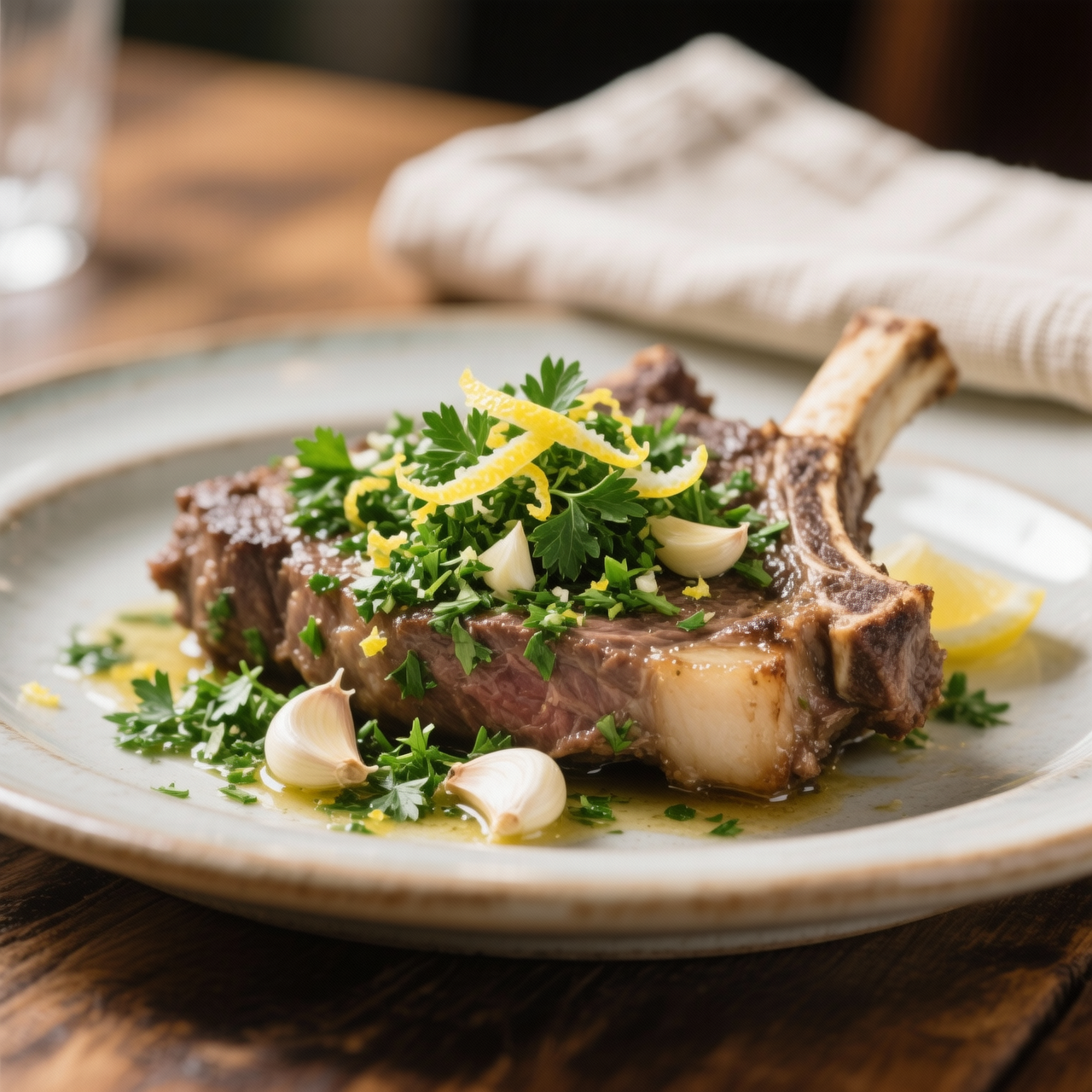
Gremolata
Gremolata is the quiet brilliance of Milanese cooking, a raw finishing condiment born in the trattorias of Lombardy where osso buco reigns supreme. Long before the modern obsession with complex sauces, Italian cooks understood that a bright, uncooked mixture of finely chopped flat-leaf parsley, lemon zest, and crushed garlic could cut through the deepest, most unctuous stews with surgical precision. I have always believed that gremolata matters precisely because it refuses to be cooked. Its magic lives in the volatile oils released the moment citrus peel meets aromatic herb, creating a top note that wakes up tired palates. Yet, it is astonishing how often home cooks ruin it. The most common pitfall is treating it like a cooked sauce or letting it sit too long before serving. When parsley oxidizes and lemon zest weeps its bitter pith oils, the condiment turns muddy and sharp. Another frequent mistake is chopping the garlic too aggressively or leaving it in large chunks, which overwhelms the delicate citrus instead of harmonizing with it. To get it right, you must use a sharp knife, not a food processor, and fold the ingredients together just minutes before plating. I always remind myself that gremolata is not a garnish meant to be forgotten on the plate; it is the final, essential brushstroke. When scattered over slow-braised shanks, it transforms heavy, gelatinous richness into something luminous and balanced. Respect its freshness, and it will repay you with every bite.
Nutrition
| Per serving | Calories | Protein | Carbs | Fat | Sat fat | Fibre | Sugar | Sodium |
|---|---|---|---|---|---|---|---|---|
| beginner | 82kcal | 1g | 6g | 7g | 1g | 2g | 1g | 6mg |
| intermediate | 82kcal | 1g | 6g | 7g | 1g | 2g | 1g | 6mg |
| expert | 21kcal | 1g | 6g | 0g | 0g | 2g | 1g | 6mg |
Per serving · Ava-estimated — a guide, not a clinical figure.
- 30 gflat-leaf parsley— Freshly washed and thoroughly dried
- 2 wholelemon— Organic or unwaxed preferred for zest
- 3 clovegarlic— Peeled
- 30 mlolive oil
- 30 mlextra virgin olive oil
This beginner-friendly version of traditional gremolata leans on convenient shortcuts without sacrificing that bright, zesty punch you need to cut through rich meats like osso buco. Instead of spending time perfecting your knife skills, you will use a mini food processor or pre-chopped fresh parsley from the produce aisle to get a consistent texture fast. We also recommend using high-quality jarred minced garlic or garlic paste to bypass the tedious peeling and chopping, while still delivering that essential savory kick. The key thing to watch for at this level is moisture control. Gremolata should be loose and fragrant, never a wet slurry. If you are using a mini processor, pulse in short, one-second bursts and stop frequently to check the texture. Over-processing will turn your fresh herbs into a bitter, muddy paste. Always pat your parsley completely dry before adding it, and fold in a light drizzle of olive oil at the very end just to bind everything together. This approach guarantees a confident first attempt with restaurant-quality flavor, ready to sprinkle generously right before serving.
Equipment
- Mini food processor(optional)— A sharp chef knife works if you prefer manual chopping
- Microplane zester— Standard box grater fine holes will also work
- Mixing bowl— Medium size, roughly 2-cup capacity
Method
- 1
Wash the fresh parsley and pat it completely dry with clean paper towels.
Any lingering water will make the condiment soggy and dilute the bright flavors.
drying~ 2 min - 2
Zest the whole lemon directly into a small mixing bowl using a fine grater.
Only grate the yellow outer layer to avoid the bitter white pith underneath.
zesting~ 1 min - 3
Scoop two tablespoons of jarred minced garlic into the bowl.
Using pre-minced garlic saves prep time while maintaining the traditional pungent backbone.
substituting~ 0 min - 4
Add the dried parsley, a generous pinch of salt, and one tablespoon of olive oil, then pulse until evenly combined.
Use short half-second bursts and scrape the sides to prevent turning the herbs into a bitter paste.
pulsing~ 1 minTricky bit
Storage times are a guide — always use your judgement and store food safely.