
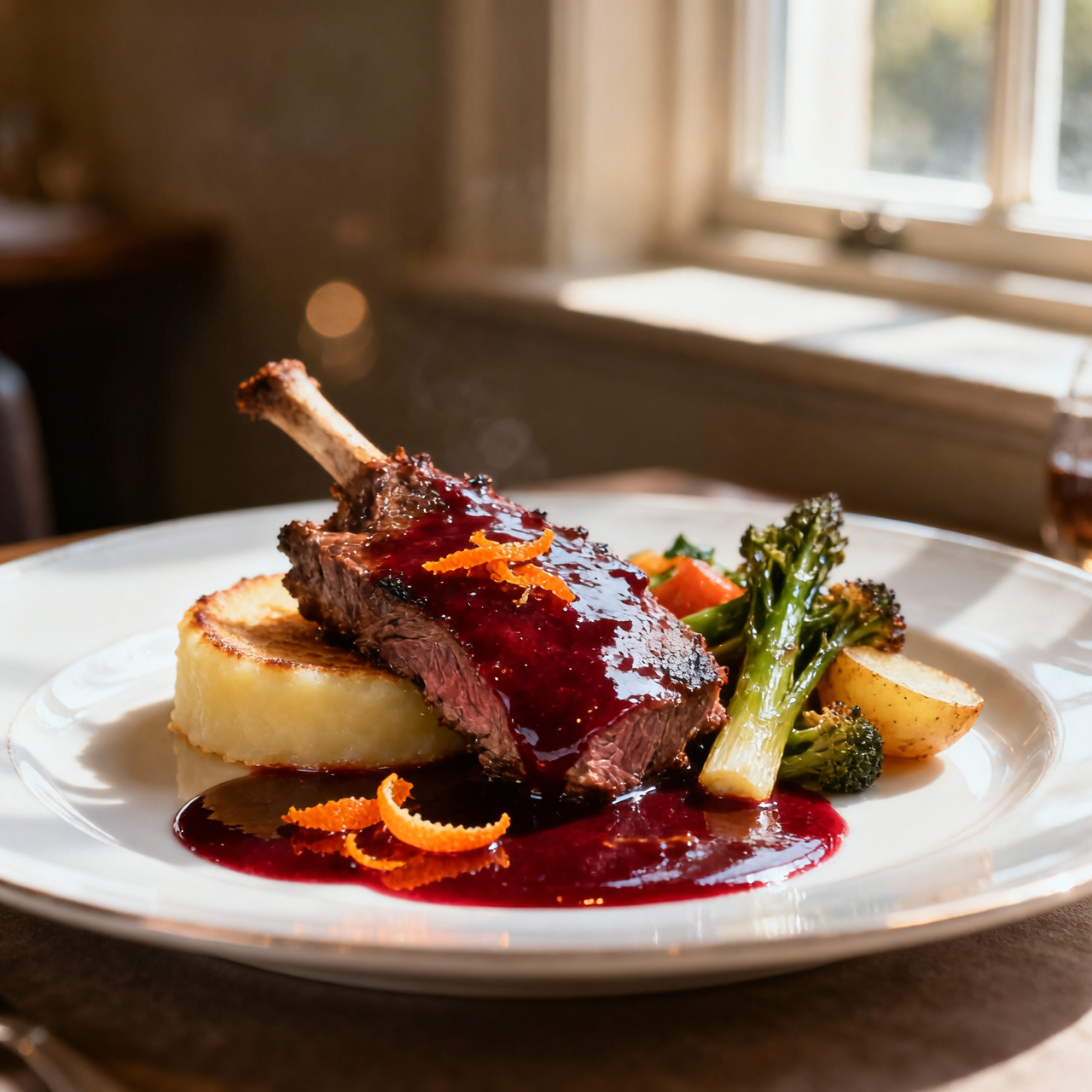
Cumberland sauce
As I look at the jewel-toned vibrancy of a properly set Cumberland sauce, I am reminded of its fascinating journey through British culinary history. Though its exact origins are sometimes debated—some say it was created for the Duke of Cumberland, while others trace its roots to a German sauce anglicized by French chefs like Escoffier—it has firmly cemented itself as a quintessential British condiment. This port-and-redcurrant masterpiece matters because it provides the perfect acidic and spicy counterpoint to the rich, fatty profile of cold cuts, pâtés, and game. The magic lies in the delicate balance of sweet, sharp, and warmly spiced notes. However, achieving this harmony is fraught with common pitfalls. The most frequent mistake I see is boiling the orange zest, which extracts a harsh, bitter pith oil that ruins the sauce's bright profile; you must only warm it gently. Another trap is relying on a low-quality, overly sweet redcurrant jelly, which flattens the complex depth that a good ruby port should provide. Since we are focusing on a vegan version here, you must also be vigilant about your ingredients. Many commercial redcurrant jellies use gelatin as a setting agent, and some ports are fined with animal products. Always check your labels to ensure your jelly is pectin-set and your port is vegan-friendly. When done right, the ginger and citrus zest sing through the rich port and tart berries, creating a glossy, sophisticated sauce that elevates a simple cold meat platter into a memorable feast.
Nutrition
| Per serving | Calories | Protein | Carbs | Fat | Sat fat | Fibre | Sugar | Sodium |
|---|---|---|---|---|---|---|---|---|
| beginner | 283kcal | 1g | 58g | 0g | 0g | 1g | 52g | 205mg |
| intermediate | 283kcal | 1g | 58g | 0g | 0g | 1g | 52g | 205mg |
| expert | 291kcal | 1g | 60g | 1g | 0g | 2g | 52g | 206mg |
Per serving · Ava-estimated — a guide, not a clinical figure.
- 300 gredcurrant jelly— ensure it is pectin-set to maintain vegan dietary requirements
- 150 mlport wine— ruby or tawny
- 100 mlorange juice— freshly squeezed
- 10 gorange zest— finely grated
- 30 mllemon juice— freshly squeezed
- 5 glemon zest— finely grated
- 5 gmustard powder— English mustard powder preferred
- 2 gground ginger
- 2 gsalt— fine sea salt
- 1 gblack pepper— freshly ground
- 10 gcoriander seeds
This beginner-friendly Cumberland sauce skips the time-consuming process of making redcurrant jelly from scratch, relying on high-quality store-bought jelly to deliver that essential tart-sweet base. The goal here is a confident first attempt at this classic British condiment, perfect for pairing with cold cuts, pâtés, or roasted meats. We will guide you through gently warming the port and orange juices to infuse the flavors without boiling off the alcohol too quickly, which is crucial for depth. Pay close attention when adding the jelly; you want it to melt smoothly into the liquid without sticking to the bottom of the pan. Keep the heat low and steady. The mustard and ginger provide the signature sharp, warming kick, so taste as you go and adjust to your preference. This shortcut method yields a glossy, vibrant sauce in under an hour, giving you a fantastic homemade result with minimal fuss. Once cooled, it will thicken beautifully, ready to elevate your charcuterie board or holiday buffet.
Equipment
- Heavy-bottomed saucepan— Stainless steel or enamel is best to prevent the sugar from scorching.
- Microplane or fine grater— Essential for getting fine zest without the bitter pith.
Method
- 1
Zest one large orange, ensuring you only capture the bright orange outer layer and avoid the bitter white pith.
The pith will make the sauce unpleasantly bitter.
zesting~ 1 min - 2
Juice the zested orange to yield about 60ml of fresh orange juice.
Roll the orange on the counter first to maximize yield.
juicing~ 1 min - 3
Pour the port wine and fresh orange juice into a heavy-bottomed saucepan and bring to a gentle simmer over medium heat.
Do not let it reach a rolling boil.
simmering~ 2 min - 4
Allow the liquid to simmer gently until reduced by about half, which should take 10 to 15 minutes.
This concentrates the flavor and cooks off the harsh alcohol edge.
reducing~ 12 min - 5
Lower the heat to low, then stir in the redcurrant jelly, mustard powder, ground ginger, and the reserved orange zest.
Keep the heat low to prevent the sugars from burning.
incorporating~ 1 min - 6
Stir continuously until the redcurrant jelly is completely melted and the sauce is smooth and glossy.
Scrape the bottom of the pan to ensure no jelly is stuck.
melting~ 3 minTricky bit - 7
Remove the pan from the heat, taste the sauce, and add a pinch of salt if needed, then let it cool completely before serving.
The sauce will thicken significantly as it cools.
seasoning~ 1 min
Cooking from frozen
Thaw overnight in the refrigerator and stir vigorously to recombine before serving cold.
Storage times are a guide — always use your judgement and store food safely.