
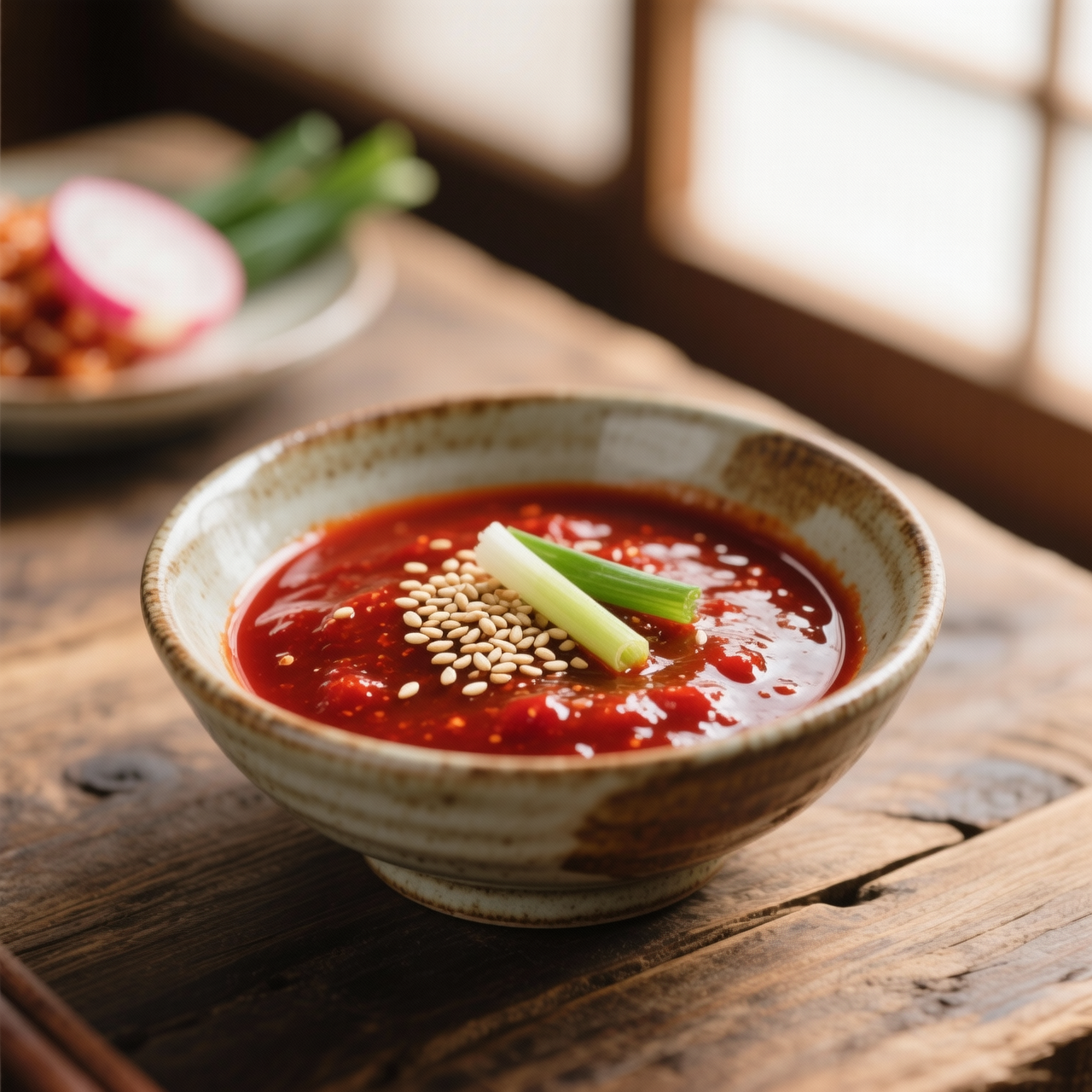
Cho-Gochujang (Sweet Vinegar Chili Sauce)
When I first learned to balance the deep, earthy fermentation of gochujang with a sharp, clean acidity, I realized Cho-Gochujang wasn’t just a sauce—it was the quiet architect of Korea’s cold-dish culture. Born in home kitchens where summer heat demanded refreshment, this sweet-and-sour chili emulsion was crafted to cut through the richness of raw fish and awaken tangled noodles. I’ve always loved how it bridges the gap between heavy fermentation and bright, immediate flavor. What makes it matter to me is its deceptive simplicity: a few pantry staples, whisked together, and suddenly you have the exact counterpoint needed for bibim noodles, hoe, or even a simple cucumber salad. But simplicity is where most cooks stumble. The biggest pitfall is rushing the emulsion, leaving stubborn gochujang lumps that never truly dissolve into a glossy, cohesive sauce. Another is miscalculating the sweet-to-sour ratio; lean too heavily on sugar and you’ll drown the chili’s natural depth, while skimping on vinegar leaves the palate flat. Many also overlook the resting period, not realizing that the sauce needs at least an hour in the fridge for the flavors to marry and the starches to fully hydrate. I always remind myself that authenticity lives in the ratios, not in expensive ingredients. A proper pour of Korean rice vinegar and a quality aged paste will yield a sauce that sings, while shortcuts leave it dull. Respect the resting time, whisk patiently, and you’ll unlock the true essence of this timeless condiment.
Nutrition
| Per serving | Calories | Protein | Carbs | Fat | Sat fat | Fibre | Sugar | Sodium |
|---|---|---|---|---|---|---|---|---|
| beginner | 146kcal | 2g | 22g | 6g | 1g | 1g | 16g | 551mg |
| intermediate | 146kcal | 2g | 22g | 6g | 1g | 1g | 16g | 551mg |
| expert | 167kcal | 3g | 26g | 6g | 1g | 3g | 16g | 553mg |
Per serving · Ava-estimated — a guide, not a clinical figure.
- 100 gGochujang— Verify vegan certification as some traditional brands contain fermented seafood
- 2 clovegarlic
- 60 mlRice vinegar— Use unseasoned variety for clean tanginess
- 50 gCane sugar— Fine granulated dissolves more readily in cold vinegar
- 15 mlSesame oil— Toasted variety provides traditional nutty depth
- 10 gSesame seed— Lightly toasted for aroma and texture
- 30 ggochugaru
- 60 mljujube syrup
This beginner-friendly approach to Cho-Gochujang strips away the traditional guesswork, giving you a foolproof, no-cook method that delivers consistent results every time. Instead of fermenting your own paste or balancing raw chilies by eye, we rely on reliable store-bought gochujang and rice vinegar as your foundation. The key here is precision in measuring and gentle, thorough whisking to fully dissolve the sweetener into the thick chili base before adding liquids. Watch closely as you incorporate the water; adding it one tablespoon at a time prevents the sauce from splitting or becoming too thin too quickly. Taste as you go, since brand-to-brand variations in gochujang saltiness and sweetness can shift the final profile. If the sauce leans too sharp, a half-teaspoon of sugar will round it out; if it feels heavy, a splash more vinegar will brighten it. Once smooth and glossy, transfer it straight to a clean, airtight jar. It needs zero resting time and is ready to toss with cold noodles, drizzle over salads, or serve alongside raw fish immediately. Keep it refrigerated, where it will maintain its vibrant color and balanced tang for up to three weeks.
Equipment
- Medium mixing bowl— wide rim prevents splatter during vigorous stirring
- Silicone spatula— better than a whisk for breaking up thick gochujang
- Airtight glass jar— wash thoroughly and dry completely before filling
Method
- 1
Scoop the gochujang, rice vinegar, sugar, soy sauce, and toasted sesame oil into your mixing bowl.
Measure the sugar level with the spoon to avoid packing it down.
combining~ 1 min - 2
Press and fold the mixture against the sides of the bowl until the sugar crystals are fully dissolved and the paste looks uniform.
Scrape the bottom corners where thick paste tends to hide.
dissolving~ 2 minTricky bit - 3
Slowly drizzle in cold water while continuously stirring until the sauce reaches a smooth, pourable consistency.
Stop adding liquid once it coats the back of a spoon.
diluting~ 1 min - 4
Taste a small drop on a neutral cracker, then adjust the balance with tiny pinches of sugar or vinegar drops as needed.
Acidity will soften slightly once the jar chills.
balancing~ 2 min
Cooking from frozen
Thaw overnight in the fridge and whisk thoroughly to recombine before serving.
Storage times are a guide — always use your judgement and store food safely.