
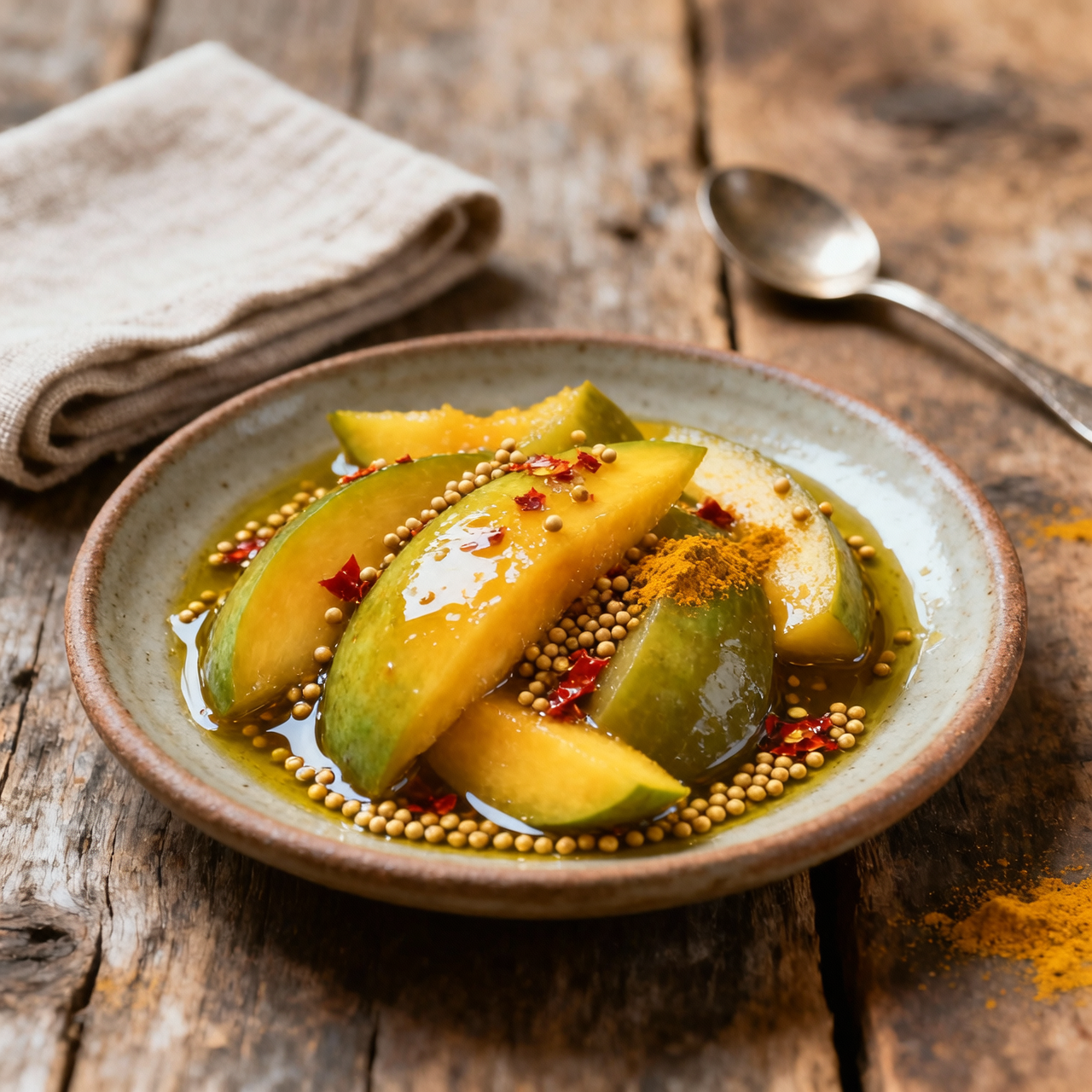
Atchar (mango pickle)
When I first learned to make atchar, I quickly understood that it isn’t merely a condiment; it’s a preserved memory of the Cape’s spice routes, born from the intersection of Malay, Indian, and Dutch culinary traditions. I love how this bright, oil-slicked pickle transforms the humble, unyielding green mango into something deeply complex, carrying that signature balance of sharp vinegar, earthy mustard seeds, and slow-building chili heat. In South Africa, it matters because it’s the quiet anchor of so many meals, cutting through the richness of braai meats or elevating simple rice and beans into something vibrant. Yet, making it well demands patience and precision. The most common mistake I see is reaching for fruit that’s already softening; you need those rock-hard, unripe mangoes that will hold their crunch through weeks of maceration. Another frequent misstep is skimping on the oil or skipping the jar-sterilizing ritual. Atchar relies on that thick, spiced oil layer to create an anaerobic seal, and any lapse in hygiene invites unwanted bacteria. I also warn against rushing the rest period. This pickle doesn’t peak on day one; it needs at least two weeks in a cool, dark place for the turmeric, ginger, and garlic to fully marry with the brine. When I finally crack open a jar after that quiet wait, the aroma alone tells me the balance is right, and I know it will keep faithfully through the seasons.
Nutrition
| Per serving | Calories | Protein | Carbs | Fat | Sat fat | Fibre | Sugar | Sodium |
|---|---|---|---|---|---|---|---|---|
| beginner | 686kcal | 5g | 99g | 31g | 3g | 7g | 78g | 1467mg |
| intermediate | 686kcal | 5g | 99g | 31g | 3g | 7g | 78g | 1467mg |
| expert | 561kcal | 5g | 100g | 17g | 2g | 7g | 78g | 1467mg |
Per serving · Ava-estimated — a guide, not a clinical figure.
- 1000 gGreen mango— Unripe, firm flesh peeled and cut into matchsticks
- 1 tspcumin
- 500 mlWhite vinegar— Standard 5 percent acidity
- 200 gGranulated sugar
- 125 mlSunflower oil— Used for tempering spices
- 15 gYellow mustard seed— Whole
- 10 gGround turmeric
- 5 gDried red chili flake— Adjust heat to preference
- 20 gGarlic— Finely minced
- 20 gFresh ginger— Peeled and grated
- 150 gOnion— Thinly sliced
- 15 gTable salt
- 5 gFenugreek seed(optional)— Lightly toasted before use
- 2 tbspready-made curry powder
- 1 tspcoriander
- 1 piecefennel
- 0.5 tspfennel seeds
This beginner-friendly version streamlines traditional South African atchar without sacrificing its signature sweet, sour, and spicy character. Instead of toasting and grinding whole spices from scratch, we rely on a ready-made curry powder or mild spice blend to build depth quickly. The mango is kept in manageable, pre-sliced strips rather than finely julienned, making prep approachable. You will simmer a simplified vinegar-sugar brine, then gently fold in the mango and a touch of neutral oil to create a glossy, shelf-stable pickle. Watch closely for the syrup stage: the liquid should coat the back of a spoon and the mango pieces will turn slightly translucent at the edges. Do not rush the cooling phase, as a slow temperature drop helps the flavors meld safely. Pack the warm mixture into sterilized jars, seal tightly, and store in a cool, dark place. Within a week, the sharp vinegar mellows into a complex, tangy condiment perfect alongside grilled meats, stews, or sandwiches. This shortcut method guarantees a confident first batch while teaching the essential brine-to-jar workflow.
Equipment
- Heavy-bottomed pan— non-stick is fine here
- Glass preserving jars— ensure lids are rust-free and clean
- Wooden spoon— prevents scratching the pan
Method
- 1
Combine white vinegar, sugar, salt, and ready-made curry powder in a heavy-bottomed pan.
Stir until the sugar dissolves completely before heating.
dissolving~ 2 min - 2
Bring the liquid to a gentle simmer over medium heat, then add sliced green mango.
Bubbles should just break the surface; avoid a rolling boil.
simmering~ 3 min - 3
Cook the mango until the edges soften and turn slightly translucent, stirring occasionally.
The fruit will absorb the brine and plump up.
braising~ 5 min - 4
Stir in vegetable oil and cook for two more minutes until the liquid coats a spoon.
Watch closely so the syrup does not scorch.
reducing~ 2 minTricky bit - 5
Pack the hot pickle into sterilized jars, wipe the rims clean, and screw on the lids.
Leave a quarter-inch headspace for safe sealing.
jarring~ 5 minTricky bit
Storage times are a guide — always use your judgement and store food safely.