
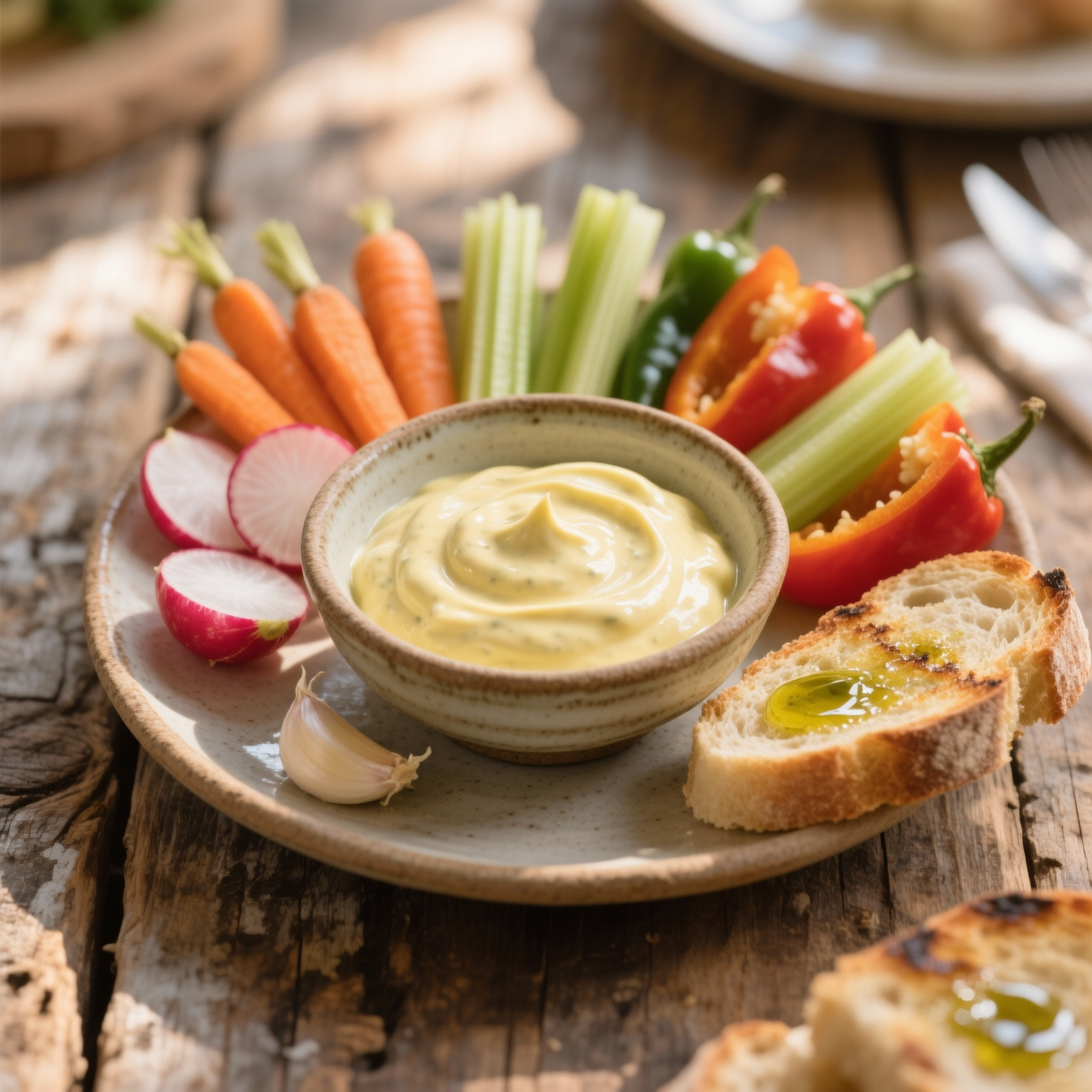
Aïoli
When I first learned to coax aïoli into being, I realized it wasn’t merely a sauce but a quiet lesson in patience and respect for raw ingredients. Born along the sun-baked coast of Provence, this garlic emulsion has anchored countless Mediterranean tables for centuries, long before modern food science explained the delicate dance between oil, water, and egg. I love aïoli because it strips cooking down to its essentials: a mortar, a pestle, and the steady rhythm of your own wrist. Yet that simplicity is exactly what trips up most beginners. The most common pitfall is rushing the oil. If you pour it too quickly, the emulsion breaks, leaving you with a slick, separated mess instead of that luxurious, velvety ribbon. Temperature matters just as much; ingredients that are too cold or too warm will fight against the bond you’re trying to forge. I always start with room-temperature eggs and crush the garlic into a near-paste with a pinch of salt before introducing the first drops of oil. Drop by drop, whisking relentlessly, you watch the magic happen. It’s a tactile reminder that some of the best things in cooking can’t be forced, only coaxed. When done right, aïoli becomes more than a condiment for crudités or boiled fish; it’s a living, breathing extension of the maker’s attention. Keep it chilled, use it within a few days, and never freeze it. The raw egg and fresh garlic simply won’t survive the thaw without losing their soul and their structure.
Nutrition
| Per serving | Calories | Protein | Carbs | Fat | Sat fat | Fibre | Sugar | Sodium |
|---|---|---|---|---|---|---|---|---|
| beginner | 528kcal | 1g | 2g | 59g | 8g | 0g | 0g | 198mg |
| intermediate | 531kcal | 1g | 2g | 59g | 8g | 0g | 0g | 239mg |
| expert | 528kcal | 1g | 2g | 59g | 8g | 0g | 0g | 198mg |
Per serving · Ava-estimated — a guide, not a clinical figure.
- 15 ggarlic— peeled and finely crushed
- 1 largeegg yolk— at room temperature
- 250 mlextra virgin olive oil— use a mild or robust variety based on preference
- 15 mllemon juice— freshly squeezed
- 2 gsalt— fine sea salt
- 15 gDijon mustard
This beginner-friendly approach transforms the classic French garlic emulsion into a stress-free, foolproof condiment perfect for first-time makers. Instead of the traditional mortar-and-pestle grind, we use a convenient jarred garlic paste and a quick whisk or stick blender to build the sauce reliably. The most critical step here is temperature control; ensure your egg yolk and oil sit at room temperature for twenty minutes before starting, as cold ingredients will instantly break the mixture. When adding the oil, patience is your best tool. Pour it in a slow, steady thread while whisking constantly. You are looking for a visual shift from translucent liquid to a thick, pale, and glossy paste. If the mixture suddenly thins or looks grainy, stop pouring immediately, add a teaspoon of warm water, and whisk vigorously to rescue it before continuing. This simplified method guarantees a silky, restaurant-style result in under fifteen minutes. Once finished, transfer to an airtight container and refrigerate. The emulsion will hold beautifully for up to four days, making it an ideal make-ahead dip for roasted vegetables or grilled seafood.
Equipment
- Medium mixing bowl— Wide bottom makes whisking easier
- Balloon whisk— Immersion blender works as a faster alternative
Method
- 1
Bring all ingredients to room temperature on the counter.
Cold egg or oil will instantly break the emulsion.
tempering~ 20 min - 2
Combine the jarred garlic paste, egg yolk, lemon juice, and salt in a medium bowl.
Whisk until smooth before adding any oil.
base_building~ 1 min - 3
Drizzle the oil in a slow, continuous stream while whisking constantly until the sauce thickens.
Stop and rescue with a teaspoon of warm water if it separates.
emulsifying~ 5 minTricky bit - 4
Taste and adjust seasoning, then transfer to a clean jar and refrigerate.
Let it rest for thirty minutes to meld the garlic flavor.
resting~ 1 min
Storage times are a guide — always use your judgement and store food safely.