
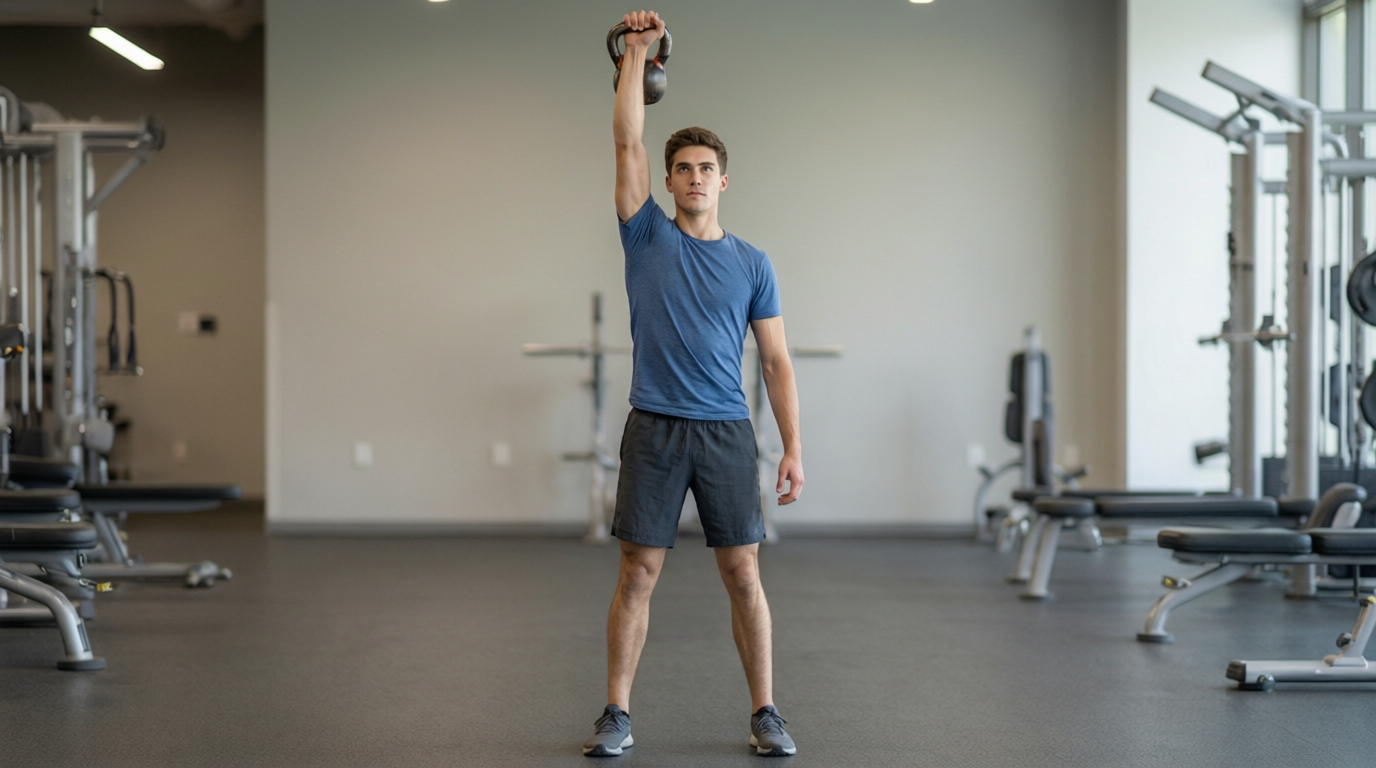
Kettlebell Windmill
kettlebell-windmill
Take care with
- avoid · Shoulder impingement — The overhead hold requires full shoulder flexion and stability under load. If this causes pain, switch to a side plank or a standing side bend without the overhead component.
A loaded side-bending movement that challenges shoulder stability, thoracic mobility, and hamstring flexibility simultaneously. The kettlebell is held overhead while you hinge to the side and reach toward the floor, creating a unique combination of stability and mobility demands.
If you're new to this
This is a technically complex movement. Start with a light kettlebell or even a dumbbell to learn the pattern. You should be comfortable holding a weight overhead with a locked elbow and good shoulder packing before attempting this. If you cannot overhead press 0.5x your bodyweight with control, build that capacity first. The movement comes from the hip hinge, not from bending at the waist.
Common mistakes
Bending the overhead arm — keep the elbow locked throughout. Letting the shoulders stack vertically instead of rotating — your chest should face forward at the bottom, not the side. Rushing the descent — this is a slow, controlled movement. Losing the overhead position as you descend — if the arm starts to drift, you've gone too far or the weight is too heavy.
Routine
- Sets
- 3
- Reps
- 3-5 per side
- Rest
- 90s
- Tempo
- 3-1-3
- RPE
- 6
Increase range of motion before increasing weight. When you can touch the floor with control, increase the load.
Cues
Easier, harder, instead
Muscles
- Obliques
- Shoulders
- Hamstrings
- Abs
- Upper back
- 1
Press a kettlebell overhead with one arm. Lock out the elbow and pack the shoulder down and back. Your eyes should be on the kettlebell.
- 2
Turn your feet at a 45-degree angle away from the working side. Your front foot points slightly toward the working side, your back foot points away.
- 3
Push your hips back toward the non-working side and hinge at the hip. Keep your eyes on the overhead kettlebell and your working arm locked out.
- 4
Lower your non-working hand down your non-working leg toward your foot. Your chest should rotate to face forward as you descend, not toward the side.
- 5
Descend until your hand reaches your shin, ankle, or the floor, depending on your mobility. The overhead arm stays locked out throughout.
- 6
Reverse the movement by driving your hips forward and returning to the standing position. Keep your eyes on the kettlebell and your arm locked out.