
Bench Press
bench-press
Take care with
- avoid · Rotator cuff tear — The horizontal pressing motion and heavy load place significant stress on the rotator cuff tendons, risking further tearing. Instead, perform isometric chest presses against a wall or use resistance bands for low-load internal/external rotation exercises to maintain stability without strain.
- modify · Shoulder impingement — Standard barbell bench press can compress the subacromial space, aggravating impingement. Instead, switch to dumbbell bench press with a neutral grip (palms facing each other) or use a floor press to limit range of motion and reduce shoulder extension.
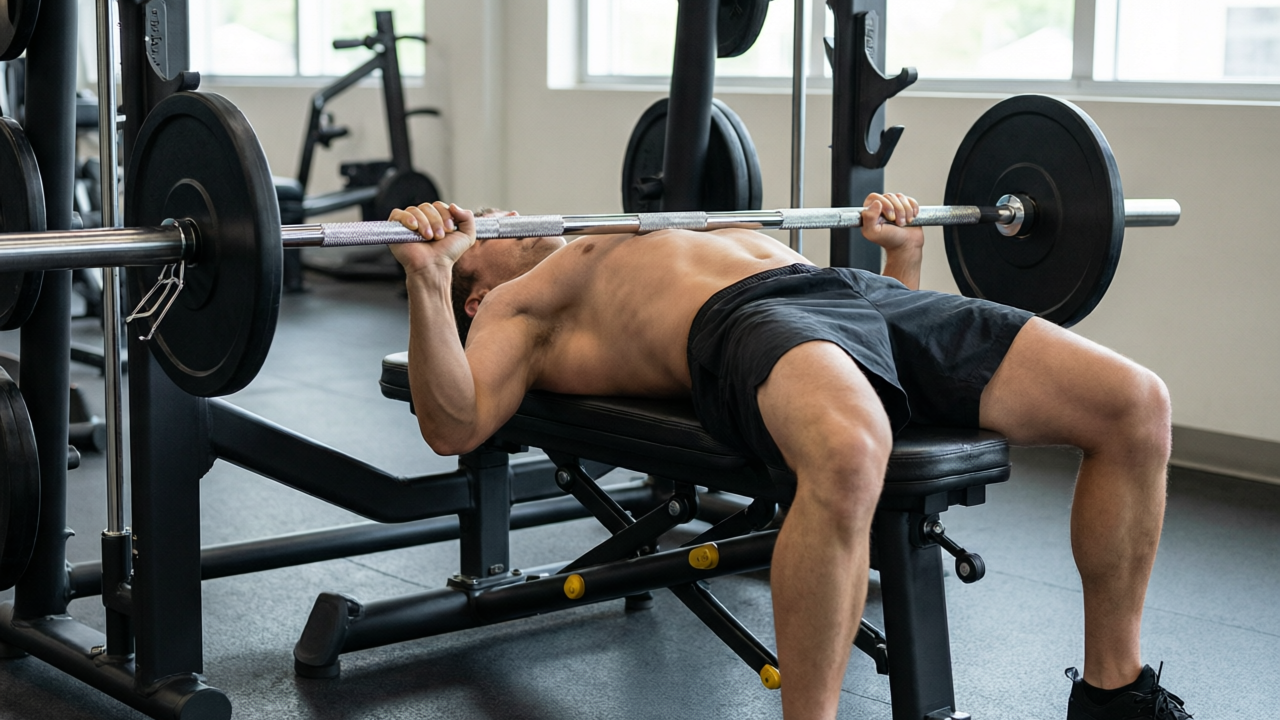
I want you to feel a solid, grounded connection to the bench as you drive through the entire foot. The weight should travel in a controlled, predictable arc, with your upper back locked into the pad and your elbows tracking naturally. Focus on squeezing the bar apart, keeping your wrists stacked, and breathing deliberately. A perfect rep feels stable, powerful, and completely under your command from unrack to lockout.
If you're new to this
Focus on building a solid foundation before chasing heavy loads. Keep your wrists straight and stacked directly over your elbows to transfer force efficiently. Your feet should remain planted throughout the entire movement, acting as an anchor for your drive. True muscular failure here feels like a sudden loss of bar control or your shoulders lifting off the pad, which is your cue to stop immediately. Avoid arching your lower back excessively or flaring your elbows out to ninety degrees, as both place unnecessary stress on your joints. If you feel sharp pain in your shoulders or wrists, lower the weight or reduce your range of motion until the movement feels smooth. Trust the process, prioritize consistent technique, and let your nervous system adapt gradually. You will build remarkable pressing strength simply by showing up and respecting the mechanics.
Common mistakes
Lifters frequently lose tension by allowing their shoulder blades to slide forward at the bottom of the rep, which destabilizes the entire movement. Many also flare their elbows out too wide, shifting excessive strain onto the anterior shoulder capsule instead of the chest. Another common error is bouncing the bar off the sternum to cheat the weight upward, which sacrifices muscle control and increases joint impact. Finally, beginners often forget to brace their core and plant their feet, leaving the bar to wobble unpredictably during the press. Correcting these habits by maintaining scapular retraction, keeping elbows tucked, lowering with control, and anchoring your lower body will instantly improve both safety and strength output.
Routine
- Sets
- 3
- Reps
- 8-12
- Rest
- 90s
- Tempo
- 2-0-2-0
- RPE
- 8
- Per set
- ~220s
- Frequency
- 2-3x/week
Add 2.5kg to 5kg to the bar once you can complete all sets with perfect form and one rep in reserve.
Muscles
- Chest
- Shoulders
- Triceps
Equipment
- Bench
- Barbell
- 1
Position yourself on the flat bench with your eyes directly under the barbell.
- 2
Plant your feet flat on the floor, shoulder-width apart, and drive them firmly into the ground.
- 3
Retract your shoulder blades together and down, then press your upper back into the bench to create a stable arch.
- 4
Grip the bar slightly wider than shoulder-width with your thumbs wrapped securely around it.
- 5
Inhale deeply, brace your core, and unrack the bar with straight arms, holding it steady over your mid-chest.
- 6
Lower the bar under control to your lower sternum, keeping your elbows at roughly a 45-degree angle.
- 7
Pause briefly when the bar lightly touches your chest, maintaining full body tension.
- 8
Exhale forcefully as you drive the bar upward in a slight diagonal path toward your eyes.
- 9
Lock out your arms without bouncing your shoulders, then reset your grip and brace before the next repetition.
- 10
Rack the bar securely by guiding it back to the hooks, ensuring it rests evenly before standing up.