The ceasefire signed in mid-June lasted less than four weeks. On Monday, President Trump declared it "over," formally notified Congress that fighting with Iran had resumed, and announced two moves at once: the US Navy would reimpose its blockade of Iranian ports, and the United States would charge a 20% fee on all cargo passing through the Strait of Hormuz.
The blockade is a return to a known position. The toll is not. In a single Truth Social post, Trump rebranded the US from belligerent in an active war to "guardian" of the world's most important oil chokepoint — and then sent the bill.
Iranian Foreign Minister Abbas Araghchi did not condemn the move. He undercut it. "Whoever provides secure and safe passage of commercial vessels through the Strait of Hormuz should be compensated for this service," Araghchi wrote on X. "Iran has always been the GUARDIAN of the Strait and will remain so FOREVER. 20% is of course too much." Tehran, he indicated, would charge a lower rate.
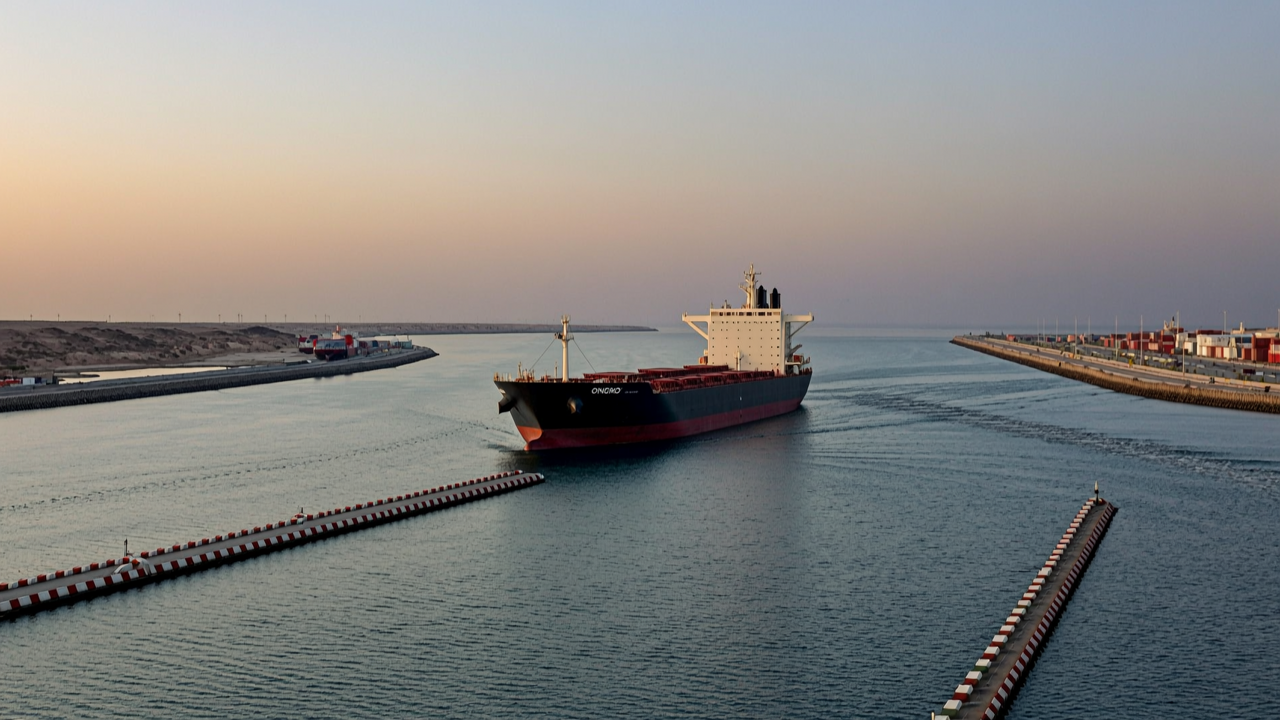
The two countries are now openly competing to be the power that charges other nations for passage through an international waterway. The Strait of Hormuz carries roughly one-fifth of the world's oil and natural gas exports. Before this war broke out in February, no one charged tolls there.
US Central Command said warships would begin enforcing the blockade at 4pm ET on Tuesday. Captain Tim Hawkins, a CENTCOM spokesman, said the military was "working out the details and coordination" of the reimposition.
The fee announcement caught even Trump's own administration off guard. Weeks earlier, Secretary of State Marco Rubio had warned Iran that "no country" could charge tolls in the strait. Vice President JD Vance had said the same. On Monday, their president declared the US would do exactly that. The New York Times reported the contradiction; neither Rubio nor Vance publicly walked it back.
The International Maritime Organization, the UN's shipping agency, responded within hours. "We have always been consistent on our stance on fees — IMO stands firmly against charging fees for passage through straits used for international navigation," the agency said in a statement. The Oman delegate to the IMO council had separately told the body that transit passage through straits used for international navigation is guaranteed under international law and does not permit the imposition of fees.
Oil prices surged more than 9% on the announcement, hitting their highest level in roughly a month, according to NBC News.
The mid-June memorandum of understanding had lifted the blockade as part of a 60-day extension of the ceasefire, creating space for talks on Iran's nuclear programme and sanctions relief. Those talks are now effectively dead. Trump said further diplomacy would be a "waste of time." Over the weekend, the US and Iran exchanged the heaviest fire since the ceasefire — US strikes hit dozens of targets inside Iran, and the IRGC struck US allies in Bahrain, Jordan, Kuwait and Oman.
Reporting from inside Iran describes a population living in what Deutsche Welle characterises as limbo between war and ceasefire, with repeated violations and contradictory political signals fuelling what it describes as exhaustion, anger and deep uncertainty among the public.
The Guardian reported that Europe is separately considering proposals to allow navigation fees in the strait — a sign that the toll-booth logic is spreading beyond the two belligerents.
The blockade itself is a familiar instrument of pressure. What is new is the framing: the United States, in the middle of a war it has not formally declared and whose ceasefire it has just abandoned, positioning itself not as a warring party but as a service provider — charging for safe passage through waters it is simultaneously bombarding.