A team of US-based astronomers has detected helium in the atmosphere of LHS 1140b, a rocky super-Earth 48 light-years from the Sun, orbiting within the habitable zone of a red dwarf star. The finding, published in Science, is the first confirmed atmosphere on a rocky exoplanet in the habitable zone — and the first direct identification of an atmospheric species on any rocky world beyond the solar system.
What was detected
LHS 1140b was discovered in 2017. It is larger and more massive than Earth — roughly 2.3 times Earth's radius and 5.6 times its mass — and orbits a small, cool red dwarf star called LHS 1140. The planet sits in what astronomers call the habitable zone: the range of orbital distances where a planet with a sufficient atmosphere could, in principle, maintain liquid water on its surface.
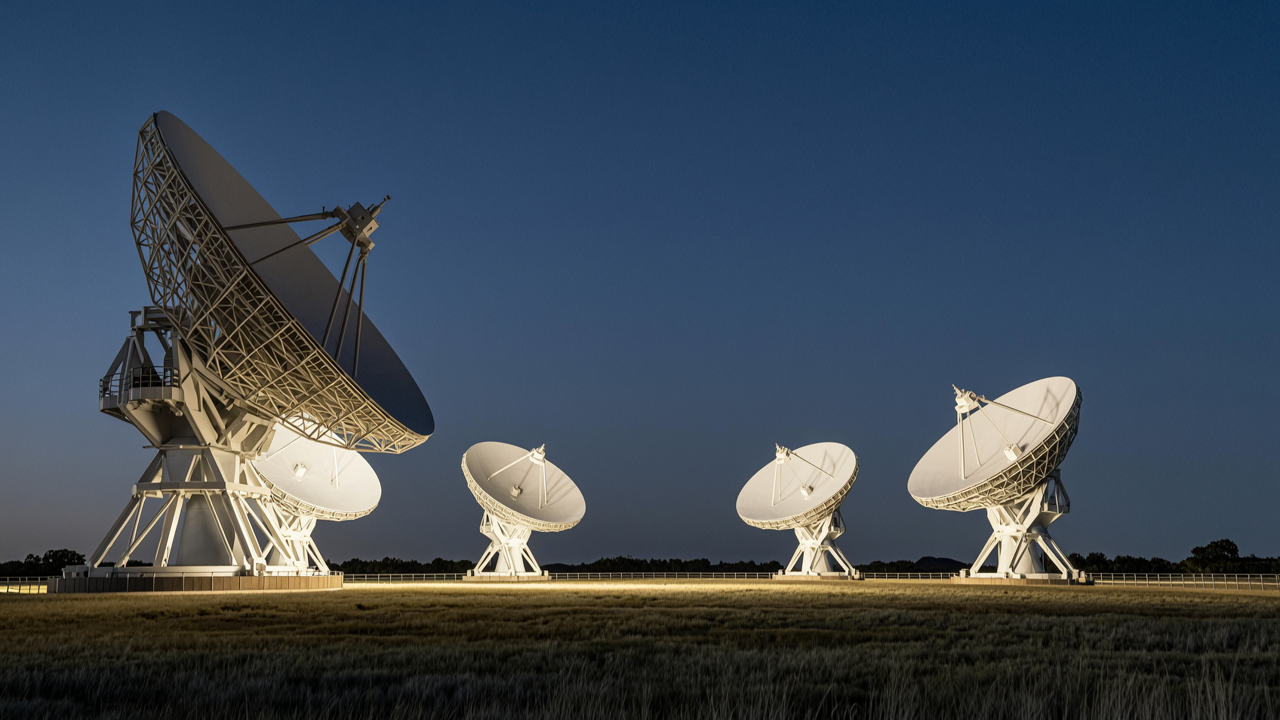
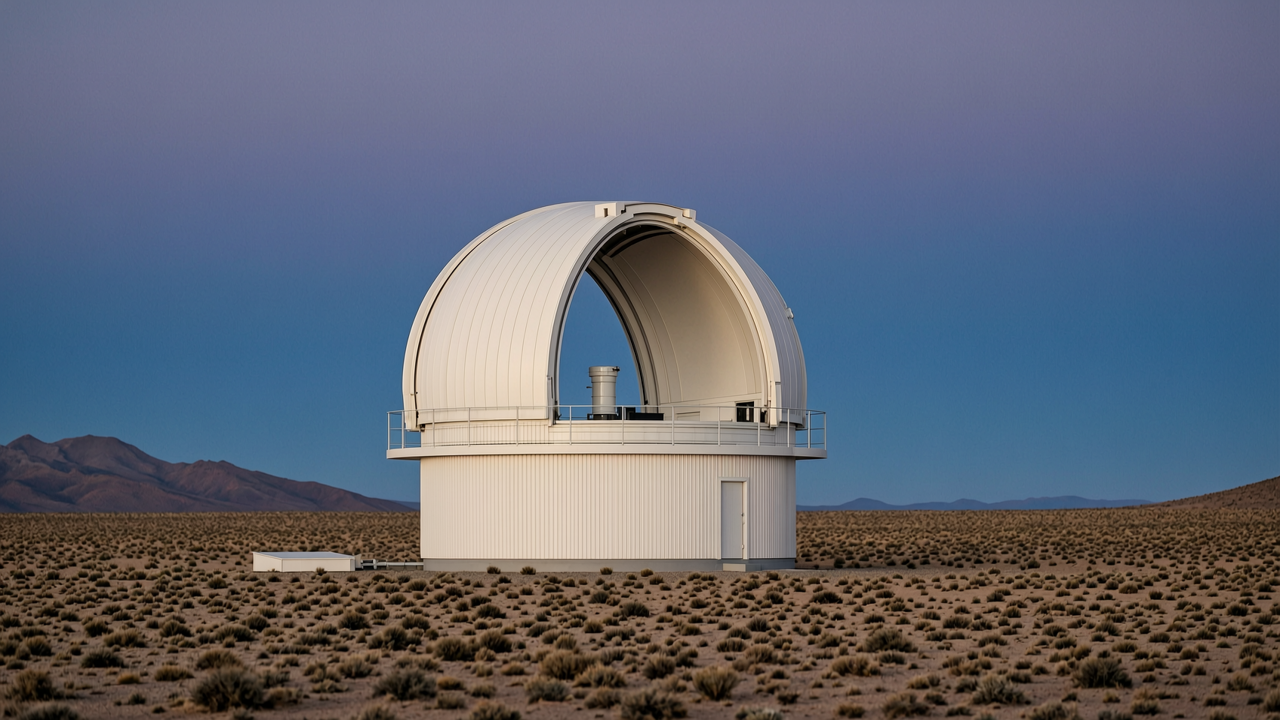
A research team led by Collin Cherubim of Johns Hopkins University used the Warm Infrared Echelle Spectrograph (WIRES) on the Magellan Clay telescope at Las Campanas Observatory in Chile to observe the planet as it transited its host star. During a transit, a sliver of starlight passes through the planet's atmosphere before reaching Earth. Different gases absorb that light at specific wavelengths, leaving a chemical fingerprint in the spectrum.
What they found was helium — specifically, helium escaping from the planet's upper atmosphere. The detection was confirmed using independent data from the NEID spectrograph on the 2.5-metre telescope at Penn State's observatory.
What it means — and what it doesn't
The detection of helium tells us that LHS 1140b has an atmosphere. That is the headline finding, and it is genuinely significant. Until now, atmospheres had been detected around gas giants and mini-Neptunes — large planets with thick gaseous envelopes. No rocky planet in the habitable zone had ever been shown to retain one. The assumption, based on models of red dwarf systems, was that the host star's violent flares and intense radiation would have stripped any primordial atmosphere from a world this close to its star.
LHS 1140b appears to have defied that assumption. It still has an atmosphere — or at least, it is still losing one, which amounts to the same proof of existence.
But helium is not oxygen. It is not water vapour, not methane, not carbon dioxide. It is the lightest noble gas, and the fact that it is being detected at all is precisely because it is so light: it rises to the top of the atmosphere, where the star's radiation can reach it and boil it off into space. The team's modelling, as reported by Science, suggests that lighter elements like hydrogen and helium drift upward and are the first to be stripped away. Heavier gases — nitrogen, oxygen, the ones that matter for life as we know it — would be held more tightly by the planet's gravity and sit lower in the atmosphere, below the reach of current instruments.
So the atmosphere may contain heavier gases. It may not. We do not know. What we know is that helium is there, and it is leaving.
The habitable zone is not a promise
Several outlets have framed this discovery in terms of habitability or even the likelihood of alien life. The German daily Die Zeit ran the headline "Aliens? Now significantly more likely." TIME called it "a planet with the most Earth-like conditions yet."
Neither framing is supported by what was actually found.
The habitable zone is a thermal definition. It describes the orbital distances where a planet could have the right temperature for liquid water — assuming it has an atmosphere of the right composition and thickness. It says nothing about whether the planet actually has such an atmosphere, whether it has water, whether it has a magnetic field to shield that atmosphere from stellar winds, or whether its surface conditions resemble anything a human could breathe.
LHS 1140b orbits a red dwarf — a small, cool, but notoriously active class of star. Red dwarfs are prone to powerful flares and intense X-ray and ultraviolet radiation, particularly in their early years. The fact that helium is being stripped from LHS 1140b today is direct evidence that the star is still eroding the planet's atmosphere. Whether anything substantial remains below the helium layer is an open question.
The planet is also likely tidally locked — one face permanently turned toward its star, the other in perpetual darkness. This creates extreme temperature gradients and weather patterns that have no analogue on Earth. "Habitable zone" does not mean "habitable." It means "not too hot and not too cold for water, if everything else lines up." On LHS 1140b, everything else remains unknown.
Why it matters anyway
The result is significant without the overselling. It demonstrates that rocky planets in red dwarf systems can retain atmospheres despite the hostile stellar environment — which revises our models of how common such atmospheres might be across the galaxy. Red dwarfs are the most common type of star in the Milky Way, and most of the rocky exoplanets we have found orbit them. If even one of them can hold on to its atmosphere, that changes the statistical picture.
It also validates the technique. Transit spectroscopy of small, rocky planets is extraordinarily difficult: the amount of starlight that passes through the atmosphere is tiny relative to the total light reaching Earth. Detecting helium on a world this size and this far away is a technical achievement, and it points the way toward future observations with more powerful instruments — including the James Webb Space Telescope — that may be able to reach deeper into the atmosphere and look for heavier molecules.
Ryan Cloutier, an exoplanet researcher not involved in the study, told Sci.News: "The next question was whether any of them had managed to keep an atmosphere. Now we know at least one has."
That is the story. A rocky planet in the habitable zone has an atmosphere. We know what one layer of it is made of. We do not yet know what lies beneath.